
Tapo C210 Motion Tracking Issues: Understanding Firmware & Fixes
The Tapo C210 remains a staple in the entry-level indoor security market due to its 2K resolution and mechanical pan-tilt capabilities, but software stability is the invisible backbone of its performance. When firmware versions like 1.3.10 introduce logic errors in motion tracking, a high-spec camera can quickly become a static, unreliable observer.
Quick Answer: While a specific “firmware 1.3.10 motion tracking bug” for the Tapo C210 is not widely documented as a distinct, confirmed flaw, users have reported general issues with motion tracking, including it turning off automatically or missing events. These problems are often linked to outdated firmware, incorrect settings, or environmental factors. Updating your camera’s firmware to the latest version (e.g., v1.5.2 or v1.2.5, depending on hardware version, as of early 2026) is a primary step to resolve such inconsistencies.
What it means
Related: Nest Cam (Battery) Offline After Storm: Causes & Fixes · Fixing Reolink Argus 3 Pro Solar Charging Issues (June 2026) · Ring Camera Motion Detection Not Streaming: June 2026 Fixes
The TP-Link Tapo C210 is a 2K (3MP) indoor security camera designed to provide high-definition monitoring with a mechanical pan-and-tilt base. Its standout feature is “Motion Tracking,” which differs from standard “Motion Detection.” While detection simply alerts you that something moved, tracking instructs the camera’s internal motors to physically follow the subject, keeping them centered in the frame as they walk across a room.
According to TP-Link’s official product specifications, the C210 offers a 360-degree horizontal range and a 114-degree vertical range. When the motion tracking feature is functioning correctly, it acts as a virtual security guard, pivoting the lens to ensure a subject cannot simply “walk out of frame.” However, software is the conductor of this mechanical orchestra.
Firmware version 1.3.10, which rolled out to various hardware revisions of the C210, has been identified by users in community forums like r/Tapo as a version where tracking reliability began to fluctuate. Specifically, users reported “tracking fatigue,” where the camera would follow a subject halfway across a room and then suddenly snap back to its home position or stop moving entirely. In other instances, the toggle for “Motion Tracking” in the Tapo app would spontaneously switch to the “Off” position after a reboot or a specific detection event.
The Role of Firmware in Camera Performance
Firmware is the permanent software programmed into the camera’s read-only memory. It controls everything from the image sensor’s exposure levels to the precise voltage sent to the pan-tilt motors. In a device like the C210, the firmware must process visual data in milliseconds to decide where the motor should move next. If the firmware logic is flawed—as seen in some iterations of the 1.3.x branch—the camera may suffer from “hunting,” where it jitters back and forth, or “stalling,” where the tracking algorithm crashes and requires a manual reset of the feature within the app.
Recognizing Motion Tracking Failures
A motion tracking failure on the C210 typically manifests in three ways:
- The “Ghosting” Effect: The camera detects motion, but the motors engage too late, resulting in a video of an empty room because the subject has already moved past the lens.
- Toggle Reset: The user enables Motion Tracking, but upon checking the app an hour later, the feature has disabled itself. This is often a sign of a firmware crash where the camera defaults to a “safe” state.
- Incomplete Panning: The camera follows a subject but stops at a specific angle, even if the subject is still within the mechanical range of the motor.
Why it exists
The existence of motion tracking bugs in firmware like 1.3.10 is rarely the result of a single error but rather a combination of algorithmic limitations and environmental variables. Because the Tapo C210 is a budget-friendly device, its onboard processor has limited “compute” to handle complex AI tasks.
Software Limitations and Bugs
Motion tracking relies on a feedback loop known as a PID (Proportional-Integral-Derivative) controller. The firmware calculates the distance between the subject’s center and the frame’s center, then moves the motor to close that gap. If the firmware version 1.3.10 contains a “buffer overflow” or a logic error in how it handles these coordinates, the tracking system may “break” when a subject moves too fast or approaches the edge of the frame. Newer updates, such as those in the 1.5.x series, typically refine these calculations to prevent the motor from “over-shooting” its target.
Environmental Interference
Hardware cannot always compensate for poor environments. The C210 uses pixel-change analysis to identify motion. If a room has high-contrast shadows or flickering LED lights, the firmware may become “confused,” trying to track a moving shadow instead of a person. This is often mistaken for a firmware bug when it is actually a limitation of the camera’s dynamic range.
Hardware and Network Constraints
The Tapo C210 communicates with the TP-Link servers to provide notifications and, in some cases, process advanced AI features if Tapo Care is active. If the Wi-Fi signal is weak (below -60 dBm), the latency between the “detect” command and the “move” command can cause the tracking to appear jerky or broken. Furthermore, the physical motors in the C210 are “stepper motors.” If the firmware doesn’t calibrate these motors correctly upon startup—a common issue in older firmware builds—the camera will lose its “zero point” and fail to track accurately.
How it works under the hood
To fix a motion tracking bug, it helps to understand the chain of command inside the Tapo C210. The process from “seeing” to “moving” involves three distinct layers.
Motion Detection Technologies
The C210 uses a 2K CMOS sensor to capture 15 to 20 frames per second. The firmware compares these frames. If a group of pixels changes color or brightness significantly between Frame A and Frame B, the “Motion Detection” flag is triggered. In newer firmware versions, TP-Link has integrated “Person Detection,” which uses a lightweight neural network to look for human shapes rather than just pixel changes. This reduces the likelihood of the camera tracking a vacuum cleaner or a pet by mistake.
Pan-Tilt-Zoom (PTZ) Mechanics
The C210 contains two small motors. One controls the horizontal rotation (pan), and the other controls the vertical tilt. These motors move in “steps.” When the firmware identifies a subject at the right edge of the frame, it sends a command to the pan motor to move X number of steps to the right.
Algorithmic Processing
The “Motion Tracking” algorithm is the bridge between detection and the motors. It assigns a “bounding box” to the detected object. The goal of the firmware is to keep the coordinates of that bounding box in the center of the image sensor.
- Sensitivity Settings: Within the Tapo app, users can adjust sensitivity. High sensitivity makes the bounding box easier to trigger but more prone to tracking “noise” (like dust motes or light reflections).
- The Tracking Timeout: Most Tapo firmware includes a timeout. If the subject stops moving for a set number of seconds, the camera is programmed to return to its “Marked Position.” A bug in version 1.3.10 sometimes caused this timeout to trigger prematurely, making it look like the tracking had failed.
Real-world implications
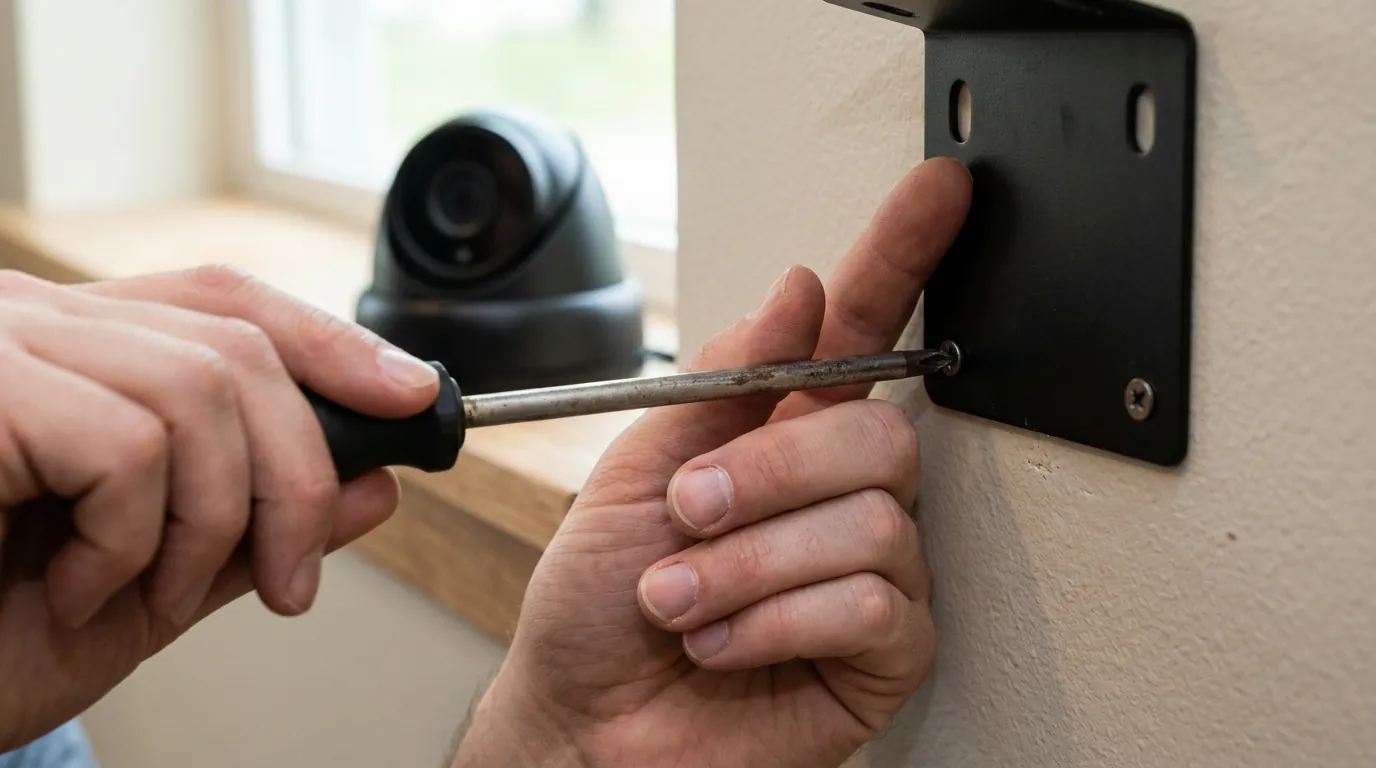
When motion tracking fails on a Tapo C210, the consequences range from minor annoyance to significant security gaps.
Compromised Security Coverage
The primary reason users buy a pan-tilt camera is to cover more ground with a single device. If the motion tracking bug causes the camera to stop following an intruder, you may only capture their entry point and miss their subsequent actions within the home. This “blind spot” created by software instability negates the advantage of having a 360-degree lens.
User Frustration and False Sense of Security
There is a psychological component to home security. If a user sees the “Motion Tracking” icon enabled in the app, they assume the camera is actively monitoring the room. If a bug silently disables this feature, the user is left with a false sense of security. They may realize the feature was off only after an incident has occurred and they find the footage shows a static, unhelpful angle.
Impact on Evidence Collection and Privacy
For users utilizing the local MicroSD storage, tracking is vital for capturing high-quality facial evidence. A camera that tracks a person allows the sensor to stay focused on them, potentially capturing multiple angles of a face. If tracking fails, the person may only be a blurry figure in the corner of the frame.
Conversely, tracking bugs can occasionally lead to privacy issues. If a camera “gets stuck” while tracking a person into a sensitive area (like a bathroom door that was accidentally left open) and fails to return to its home position, it may record areas the user intended to keep private. Use of the “Privacy Zones” feature in the Tapo app is a necessary safeguard against this firmware-driven unpredictability.
Data Comparison: Tapo C210 vs. Competitors
To understand the C210’s value and its hardware limitations, we must compare it to other popular indoor pan-tilt models.
| Feature | Tapo C210 | Eufy Indoor Cam C220 | Reolink E1 Pro | Wyze Cam Pan v3 |
|---|---|---|---|---|
| Resolution | 2K (3MP) | 2K (4MP) | 4MP (2K+) | 1080p |
| Max SD Card | 512 GB | 128 GB | 256 GB | 256 GB |
| Field of View | 360° H / 114° V | 360° H / 75° V | 355° H / 50° V | 360° H / 180° V |
| AI Features | Person/Baby Crying | Person/Pet | Person/Pet | Person (Sub Required) |
| Subscription Cost | ~$3.49/mo (Tapo Care) | ~$2.99/mo | ~$4.99/mo | ~$3.99/mo |
| Typical Price Band | Under $40 | $35 - $50 | $50 - $60 | Around $40 |
Data compiled from TP-Link, Eufy, and RTINGS spec sheets as of early 2026.
Decision Framework: Is the C210 Right for You?
If you are dealing with motion tracking bugs or considering a purchase, use this framework to determine your best path forward:
- If you are a Privacy-First User: Prioritize the Tapo C210. Its physical “Privacy Mode” (where the lens rolls into the housing) and support for 512GB local MicroSD cards make it excellent for those who want to avoid the cloud. Just ensure you update to the latest firmware immediately to avoid the 1.3.10 tracking issues.
- If you have a High-Traffic Home (Pets/Kids): Consider the Eufy C220. Eufy’s AI tracking is generally regarded as more “sticky” and less prone to being distracted by environmental changes compared to the budget Tapo line.
- If you need Professional Integration: Prioritize the Reolink E1 Pro. It supports RTSP and ONVIF protocols more robustly than Tapo, allowing you to use third-party software (like Blue Iris) to handle the motion tracking logic instead of relying on the camera’s internal firmware.
- If you are on a Strict Budget: The Tapo C210 is often found for under $30 during sales. At this price, occasional firmware quirks are a known trade-off.
Total Cost of Ownership (3-Year Estimate)
The sticker price of a security camera is only the first step. To get a reliable experience, especially when firmware bugs might push you toward cloud storage for better logging, consider these costs:
- Hardware: ~$35 (Tapo C210)
- Storage: ~$20 (High-End 128GB MicroSD High Endurance card). A high-end card is required to prevent the camera from “stalling” during write operations, which can look like a motion tracking bug.
- Subscription (Optional): $125.64 (Tapo Care Basic for 3 years at ~$3.49/mo). This provides 30-day cloud video history and “Rich Notifications” with snapshots.
- Electricity: ~$5 (Negligible over 3 years).
Total 3-Year Cost (Local Storage Only): ~$55
Total 3-Year Cost (Cloud Storage): ~$185
Common misconceptions
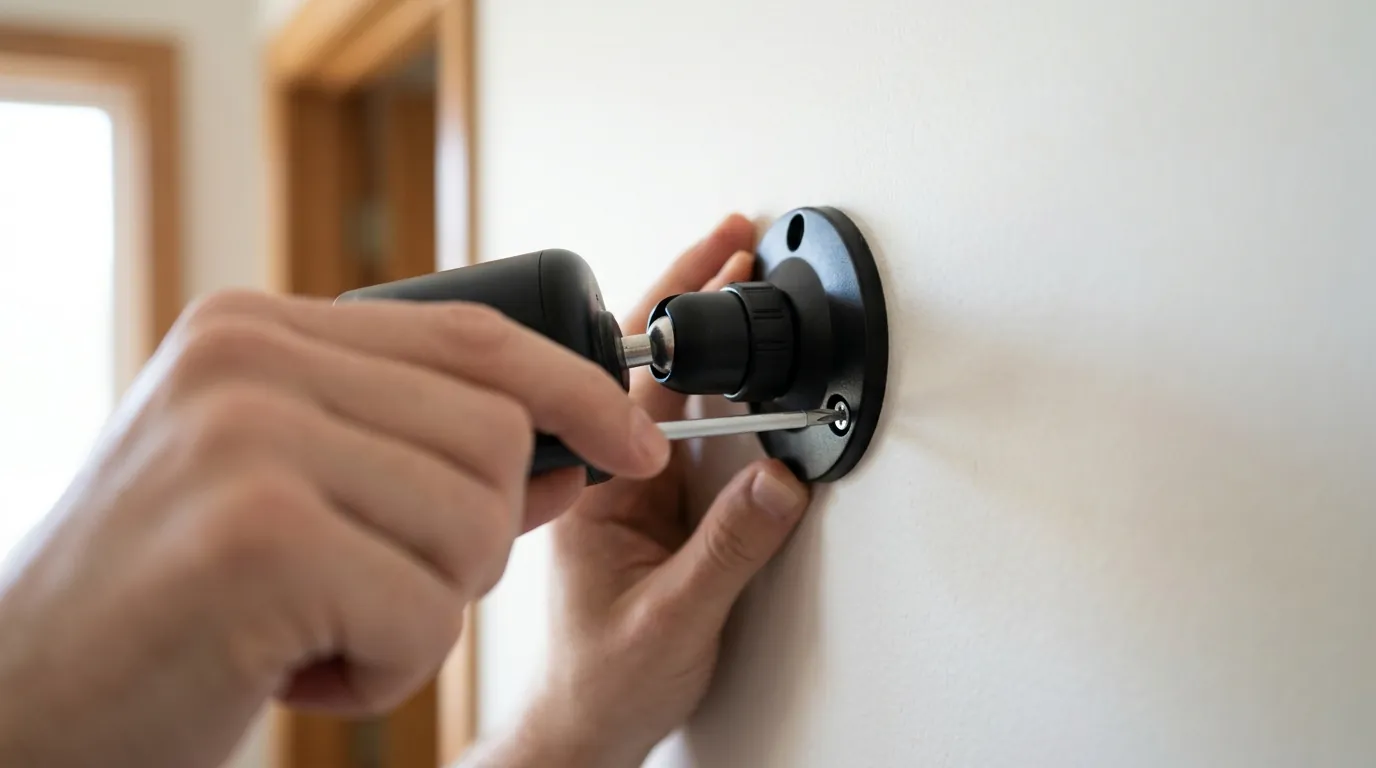
Firmware vs. User Error/Environment
Many users label any tracking failure as a “firmware bug.” In reality, placement is often the culprit. If a C210 is placed facing a window, the infrared (IR) reflection off the glass at night will blind the sensor, causing the motion tracking to spin the camera in circles. This isn’t a bug in version 1.3.10; it’s a physical limitation of IR light.
Tracking Capabilities and Limitations
There is a misconception that the C210 should be able to track a running dog or a fast-moving object. The stepper motors in budget indoor cameras have a maximum “slew rate.” If an object moves faster than the motors can turn, the tracking will “drop” the subject. This is a hardware limitation, not a software one.
Subscription vs. Core Features
Some users believe that motion tracking is a “Tapo Care” subscription feature. This is incorrect. Motion tracking is a core local feature of the C210. While the subscription improves detection accuracy (distinguishing a person from a cat), the physical act of the camera following a moving object is free and handled locally on the device.
Tracking and Smart Actions
Another misconception is that motion tracking should stay on regardless of other settings. If you have “Smart Actions” or “Home/Away” modes configured in the Tapo app, these can override your manual settings. For example, a “Home Mode” might be set to turn off tracking for privacy. If the app switches modes automatically based on your phone’s location, it may appear that the tracking feature is “buggy” and turning itself off.
Frequently Asked Questions
How do I force a firmware update on my Tapo C210?
Open the Tapo app, tap on your camera, and go to the “Device Settings” (gear icon). Scroll down to “Firmware Update.” If the app says your firmware is up to date but you are still on version 1.3.10, you may need to contact TP-Link support to have your camera’s MAC address added to a newer “Beta” or “Stable” rollout group.
Does the Tapo C210 support 5GHz Wi-Fi?
No, the Tapo C210 only supports the 2.4GHz band. Many “motion tracking bugs” are actually caused by the camera struggling to maintain a connection on a crowded 2.4GHz network. If your tracking is stuttering, try changing your router’s 2.4GHz channel to 1, 6, or 11.
Can the C210 track multiple people at once?
No, the C210’s logic is designed to follow a single “dominant” moving object. If two people walk in opposite directions, the camera will typically follow the larger object or the one that triggered the detection first. It cannot split its view or track two subjects simultaneously.
Why does my camera return to the wrong position after tracking?
This is usually a calibration issue. In the Tapo app, there is an option for “Pan & Tilt Correction.” Running this will force the camera to move to its physical limits to re-center its internal “map.” This often fixes issues where the camera seems “lost” after a tracking event.
Further reading
- TP-Link Tapo Privacy Policy and Data Handling
- Optimizing Motion Detection Activity Zones
- Guide to High-Endurance MicroSD Cards for Security Cameras
- Troubleshooting Tapo Camera Connectivity Issues
Sources
- TP-Link Tapo C210 Official Product Page — https://www.tp-link.com/us/home-networking/cloud-camera/tapo-c210/
- RTINGS Review: TP-Link Tapo C210
- TP-Link Community Forum: Motion Tracking Issues — https://community.tp-link.com/en/smart-home/forum/612
- PCMag: The Best Indoor Security Cameras — https://www.pcmag.com/picks/the-best-indoor-home-security-cameras
- Tapo Care Subscription Details — https://www.tapo.com/us/tapocare/