
Are Smart Home Cameras Safe from Summer Storms in 2026?
As summer weather patterns become increasingly volatile, the reliability of outdoor surveillance hinges on more than just a Wi-Fi connection. Protecting your security investment requires a technical understanding of ingress protection, electrical grounding, and data redundancy.
Quick Answer: Many modern outdoor smart home cameras from brands like Reolink, Eufy, and Arlo are designed with robust weather resistance (IP65, IP66, or IP67 ratings) to withstand heavy rain and wind. To protect against lightning and power outages, consider models with built-in surge protection, battery backup, or local storage, and always ensure proper grounding and mounting. For example, the Reolink Duo 3 PoE and Eufy SoloCam S340 offer high IP ratings and local storage options for enhanced storm resilience.
What it means
In the context of 2026 home security, a “summer storm” is a multi-vector threat to electronic hardware. While most consumers focus on “waterproofing,” the safety of a smart camera system is actually challenged by four distinct environmental stressors:
- Hydraulic Stress: Sustained heavy rain and “microburst” events can force water into seals that are only rated for light splashing.
- Kinetic Stress: High winds (often exceeding 60 mph in severe thunderstorms) and wind-borne debris can shift camera alignment or physically shear mounts from their substrate.
- Electrical Stress: This is the most common cause of “bricked” cameras. Lightning does not need to strike a camera directly to destroy it; a nearby strike can induce a massive voltage surge through power lines or Ethernet cables.
- Operational Failure: Storms frequently cause power outages or ISP (Internet Service Provider) disruptions. For a camera that relies entirely on a cloud server to function, a storm makes the device useless exactly when the property is most vulnerable.
Safety, therefore, is defined as the camera’s ability to remain physically intact, electrically functional, and capable of recording data throughout the duration of the event.
Why it exists
The demand for storm-resilient cameras has surged as smart home surveillance transitions from a luxury “gadget” to a critical component of home insurance and property management. In 2026, many homeowners use cameras not just for crime prevention, but for real-time weather monitoring and post-storm insurance documentation.
Manufacturers have responded by moving away from vague marketing terms like “weatherproof” in favor of standardized laboratory testing. However, a conflict exists between hardware capability and software architecture. While a camera like the Arlo Pro 5S features a ruggedized housing, its heavy reliance on cloud connectivity creates a “soft failure” point during storms that disrupt local Wi-Fi or regional internet backbones.
Conversely, brands like Reolink and Eufy have gained significant market share by prioritizing “edge” resilience—incorporating local microSD storage and HomeBase units that continue to function even when the neighborhood’s internet is down. This shift is a direct response to consumer frustration with “subscription-heavy” incumbents whose cameras often become expensive paperweights during severe weather outages.
How it works under the hood
Understanding how a camera survives a storm requires looking past the plastic shell at the engineering standards and electrical safeguards inside.
IP Ratings: Understanding Water and Dust Resistance
The Ingress Protection (IP) rating is the industry standard for environmental sealing. It consists of two digits: the first for solids (0–6) and the second for liquids (0–9). For 2026 outdoor cameras, you will typically see three ratings:
- IP65: Dust-tight and protected against low-pressure water jets. Suitable for cameras mounted under eaves.
- IP66: Protected against high-pressure water jets. This is the baseline for cameras fully exposed to the elements.
- IP67: Protected against temporary immersion (up to 1 meter for 30 minutes). This is ideal for areas prone to flash flooding or extreme wind-driven rain.
Physical Design and Mounting for Wind Resistance
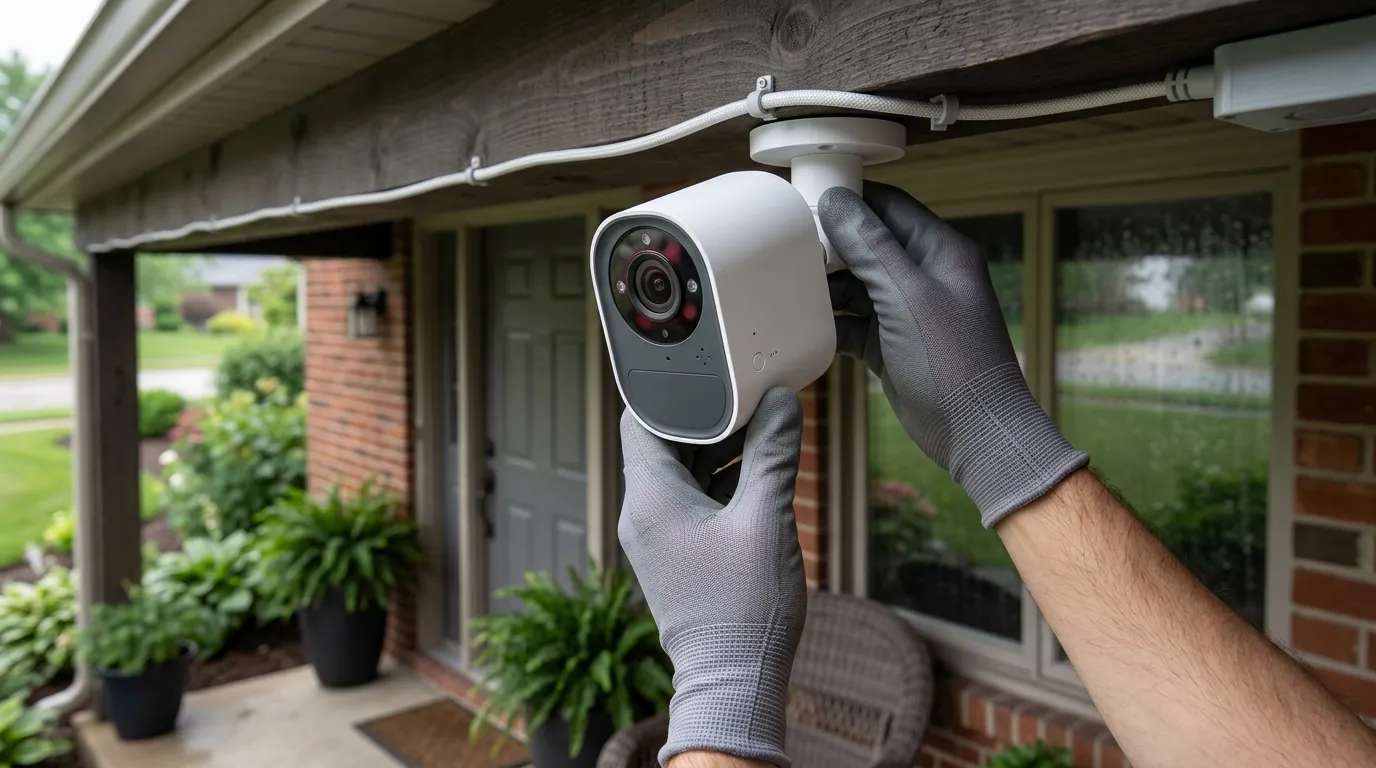
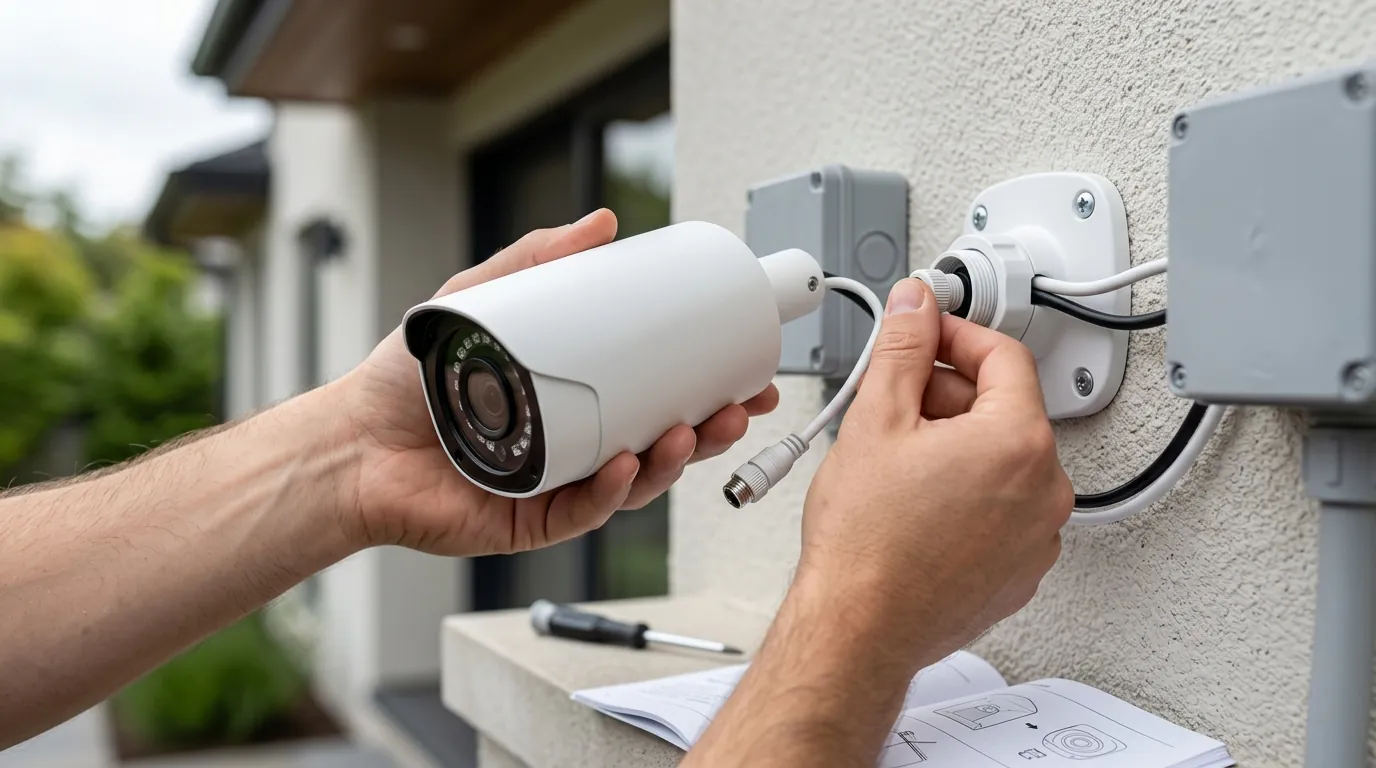
High-quality outdoor cameras, such as the Eufy SoloCam S340, utilize internal rubber gaskets and specialized “drip loops” in their cabling to prevent water from following the wire into the housing. Mounting brackets have also evolved; many now use reinforced polycarbonate or aluminum alloys with multi-point screw patterns to prevent the “vibration blur” or physical detachment caused by gale-force winds.
Surge Protection and Grounding Against Lightning
For hardwired cameras, particularly Power over Ethernet (PoE) models, electrical safety is paramount. A nearby lightning strike can travel through the network cable and destroy both the camera and the connected NVR (Network Video Recorder). Professional-grade installations in 2026 utilize Ethernet Surge Protectors (such as those from Ubiquiti) that divert excess voltage to a ground wire before it reaches the sensitive camera internals.
Battery Backup and Solar Power for Outages
Battery-powered cameras (e.g., Reolink Altas PT Ultra) provide a natural “air gap” from the electrical grid, making them inherently safer from line surges. When paired with integrated solar panels, these cameras can maintain 24/7 operation during extended power outages, provided they have local storage.
Local Storage for Continuous Recording
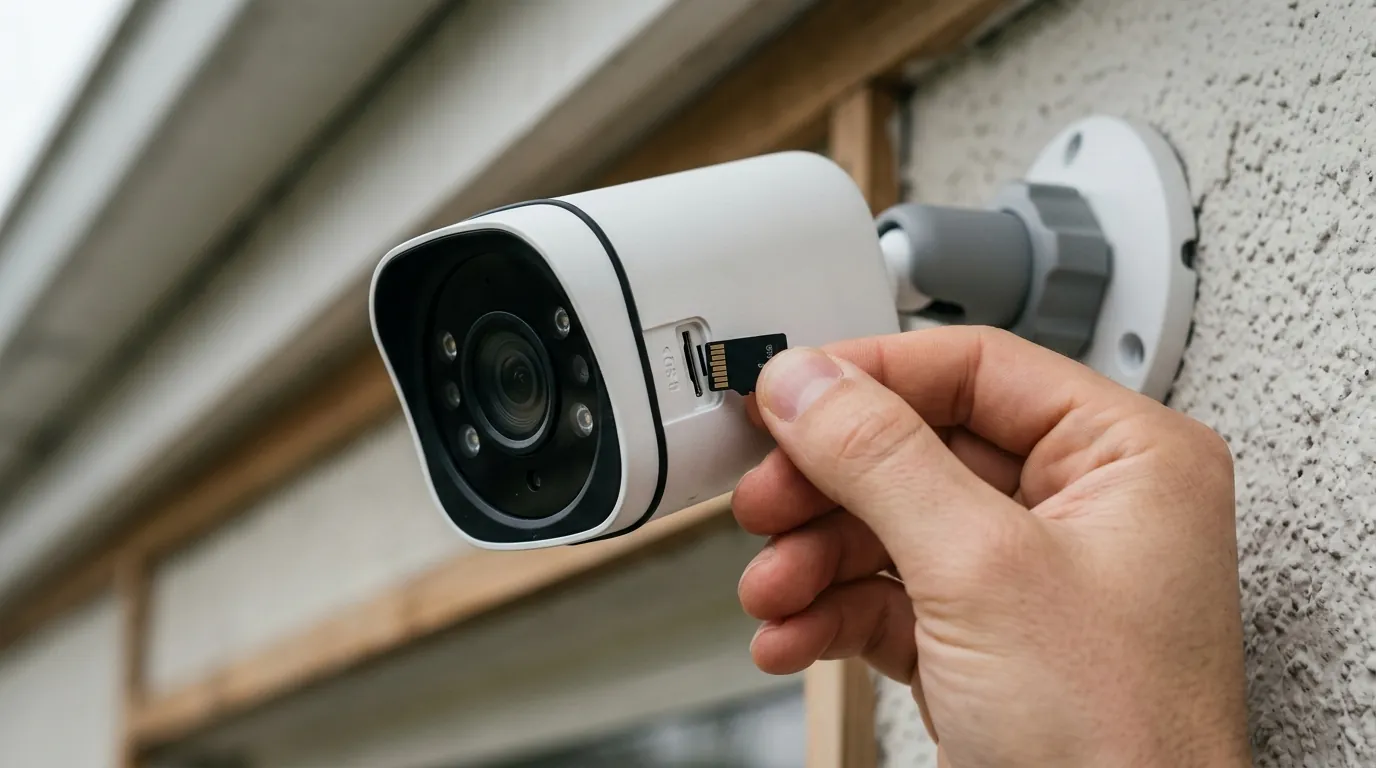
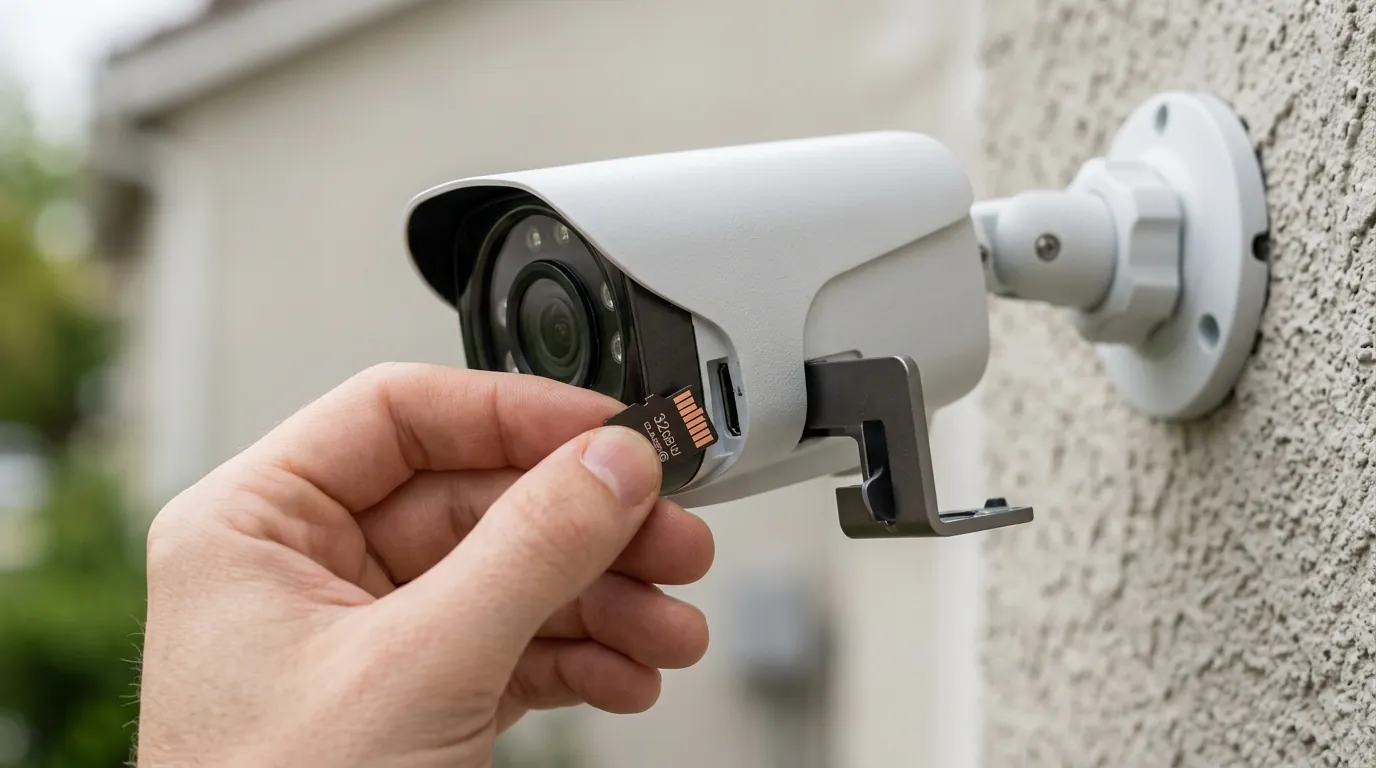
Data resilience is the final pillar of storm safety. If a storm knocks out your Wi-Fi, a cloud-only camera (like many older Ring models) stops recording. Modern 2026 units prioritize Local Storage via microSD or a local hub (like the Eufy HomeBase 3). This ensures that even if the internet is down, the camera continues to capture footage to internal memory, syncing it to the cloud once the connection is restored.
Maintaining Connectivity: Wi-Fi, Cellular, and PoE
- Wi-Fi (2.4 GHz vs. 5 GHz): 2.4 GHz signals penetrate rain and walls better than 5 GHz, making it more reliable during heavy downpours.
- Cellular (4G/LTE): For high-stakes security, cellular cameras (e.g., Reolink Go Series) bypass the home’s Wi-Fi entirely, using cellular towers that often have their own industrial-grade backup power.
- PoE: Offers the most stable connection but requires the most stringent electrical grounding.
Real-world implications
Data Table: 2026 Outdoor Camera Storm-Readiness Comparison
| Model | IP Rating | Power Source | Primary Storage | 3-Year Sub. Cost (Approx.) |
|---|---|---|---|---|
| Reolink Duo 3 PoE | IP66 | PoE (Wired) | Local (SD/NVR) | $0 |
| Eufy SoloCam S340 | IP67 | Solar/Battery | Local (8GB + HomeBase) | $0 |
| Arlo Pro 5S | IP65 | Battery | Cloud (Local w/ Hub) | $180–$360 |
| Ring Stick Up Cam Pro | IPX5 | Battery/Plug-in | Cloud Only | $150–$180 |
| Reolink Altas PT Ultra | IP66 | Battery | Local (SD/NVR) | $0 |
Note: IPX5 is significantly less resistant than IP66; it is rated for “water splashes” rather than “heavy jets.”
Total Cost of Ownership (TCO) and the “Feature Paywall”
When evaluating storm safety, you must consider the 3-year TCO. While a Ring or Arlo camera may have a lower “sticker price” (around $100–$150), they often require a monthly subscription ($5–$10/month) to access recorded footage. Over three years, this adds $180–$360 to the cost. If a storm disrupts your internet, you are paying for a service you cannot access. Reolink and Eufy models, which often cost more upfront ($150–$200 range), typically have a $0 TCO for storage, making them more economical and reliable during outages.
Decision Framework: Choosing Based on Your Environment
- If you live in a high-lightning/hurricane zone: Prioritize Battery/Solar cameras with IP66/67 ratings. The lack of a power cord protects against surges, and the high IP rating handles wind-driven rain. (Recommendation: Eufy SoloCam S340)
- If you are a renter: Look for Battery-powered units with Internal SD cards. They require no drilling for cables and will record even if the landlord’s Wi-Fi fails. (Recommendation: Reolink Argus 4 Pro)
- If you need 24/7 high-definition monitoring: Choose PoE but invest in a PoE Surge Protector and a UPS (Uninterruptible Power Supply) for your NVR. (Recommendation: Reolink Duo 3 PoE)
Protecting Your Investment: Warranties and Replacements
It is a common industry reality that many “Limited Lifetime” or “1-Year” warranties specifically exclude “Acts of God,” which includes lightning strikes and flood damage. According to Arlo’s warranty policy, damage from external causes is generally not covered. Checking your homeowners’ insurance for “electronics riders” is often a more effective way to protect a $500+ multi-camera system than relying on the manufacturer’s warranty.
Installation Strategies for Enhanced Durability
- Eave Mounting: Whenever possible, mount cameras under roof overhangs. This provides a physical shield against the majority of rainfall and direct sun, extending the life of the rubber seals.
- Drip Loops: Always leave a small “U” shaped loop in the cable before it enters a wall or the camera. This forces water to drip off the bottom of the loop rather than running into the connection.
- Dielectric Grease: For outdoor plug-in cameras, applying a small amount of dielectric grease to the power terminals can prevent corrosion caused by high summer humidity.
Common misconceptions
“Weatherproof” vs. IP Ratings
“Weatherproof” is a marketing term with no legal or technical definition. A camera labeled “weatherproof” might fail in a standard tropical storm. Always look for the specific IP65, IP66, or IP67 rating on the manufacturer’s spec sheet.
Surge Protectors Guarantee Total Safety
A standard power strip surge protector is designed for minor grid fluctuations, not a lightning strike. A direct or very close strike can jump the physical gaps inside a standard protector. True safety requires a combination of grounding rods and industrial-grade surge suppressors at the service entrance.
All Wireless Cameras Work During Power Outages
A “wireless” camera often refers to the data transmission (Wi-Fi), not the power. If your camera is plugged into an AC outlet, it will die when the power goes out. Even battery-powered Wi-Fi cameras will lose their ability to send alerts if the home’s router (which is plugged into the wall) loses power. For true outage resilience, your router and modem must be on a UPS.
Cloud Storage is Always Reliable
Cloud storage is redundant at the server level (e.g., Amazon AWS or Google Cloud), but it is highly vulnerable at the local level. If a storm takes down a fiber line three miles from your house, your camera cannot reach the cloud. Local storage is the only 100% reliable backup for storm events.
Frequently Asked Questions
Can lightning destroy a wireless camera?
Yes. Even if the camera is battery-powered and not physically connected to your home’s wiring, a nearby lightning strike creates a powerful electromagnetic pulse (EMP) that can fry the delicate integrated circuits inside the camera. However, battery cameras are generally safer than wired ones because they aren’t susceptible to surges traveling through the power grid.
Does rain affect motion detection during storms?
Heavy rain and wind-blown foliage are common causes of “false positives” in older motion-sensing cameras. In 2026, most high-end cameras use AI-based Person/Vehicle detection (like Eufy’s BionicMind) to filter out the movement of raindrops or swaying trees, significantly reducing storm-related notification fatigue.
Should I take my cameras down during a hurricane?
If a storm is predicted to have winds exceeding the camera’s mounting specifications (usually above Category 1 hurricane speeds of 74 mph), and if it is safe to do so, removing the cameras can prevent them from being destroyed by flying debris. However, many users leave them up to document property damage for insurance purposes, accepting the risk of hardware loss.
Further reading
- Guide to choosing the best outdoor security camera without subscriptions
- Understanding local storage vs. cloud storage for home security
- Best practices for securing your home during a power outage
- Detailed guide to IP ratings for consumer electronics
Sources
- Reolink — Official Duo 3 PoE Product Page and IP66 Certification
- Eufy — SoloCam S340 Technical Specifications and IP67 Rating
- Arlo — Arlo Pro 5S 2K Outdoor Security Camera Specs
- RTINGS — Environmental Testing for Outdoor Smart Cameras
- FCC ID Filings — RF and Weather Sealing Documentation for Consumer Hardware
- Ubiquiti — Ethernet Surge Protector (ETH-SP-G2) Data Sheet
- PCMag — Review of Reolink Altas PT Ultra