
Ring vs. Eufy Doorbell Privacy: Which Brand Protects Your Data?
Choosing between Ring and Eufy often comes down to a fundamental trade-off: the convenience of Amazon’s polished cloud ecosystem versus the data sovereignty of local storage.
Quick Answer: Ring offers robust end-to-end encryption but remains cloud-dependent. Eufy prioritizes local storage via HomeBase 3, but has a history of data-handling transparency issues. For total privacy, Eufy’s local-only mode is superior if cloud features are disabled.
What it means
In the smart doorbell market, “privacy” and “security” are often used interchangeably, but they represent two different concepts. Security is the protection of your data from unauthorized third parties (hackers). Privacy is the control you have over how the manufacturer or the government accesses that same data.
Data Residency: Where Your Video Lives
The primary differentiator between Ring and Eufy is data residency. Ring is a “cloud-first” platform. When your doorbell detects motion, the footage is uploaded to Amazon Web Services (AWS) servers. While this ensures you can access footage even if the doorbell is stolen, it means your private moments reside on a corporate server.
Eufy, conversely, champions “local-first” architecture. Most Eufy doorbells, particularly those paired with the HomeBase 3 (S380), store video on a hard drive inside your home. In this setup, the video never has to leave your local network to be saved, though it may traverse the internet to reach your phone.
Encryption Standards: AES-128 vs. End-to-End (E2EE)
Both brands use AES-128 or AES-256 encryption to protect data “at rest” (on the server or disk) and “in transit” (moving to your phone). However, Ring has a significant lead in End-to-End Encryption (E2EE). When E2EE is enabled, only your mobile device has the digital key to decrypt the video; not even Amazon can view it. Eufy has implemented similar features for its newer Edge-series cameras, but the rollout across its legacy doorbell line remains inconsistent.
| Feature | Ring (Protect Plan) | Eufy (HomeBase 3) |
|---|---|---|
| Primary Storage | Cloud (AWS) | Local (Internal/HDD) |
| Default Encryption | AES-128 | AES-128/256 |
| End-to-End Encryption | Supported (Select models) | Supported (Edge series) |
| AI Processing | Cloud-based | On-device (BionicMind) |
| Subscription Required? | Yes (for recording) | No (optional cloud) |
| Data Jurisdiction | United States | Global (Anker/China-based) |
Why it exists
The privacy architectures of Ring and Eufy are products of their parent companies’ business models.
The Subscription Trap and Data Harvesting
Ring, owned by Amazon, operates on a recurring revenue model. By keeping video in the cloud, Ring ensures users remain tethered to a Ring Protect subscription, which as of 2026 typically falls in the “$50-60 per year” band for a single device. This model incentivizes Amazon to keep your data on their servers, where they can also use anonymized metadata to improve their computer vision algorithms.
Eufy, owned by Anker Innovations, focuses on hardware sales. By offering “no monthly fees,” Eufy appeals to the growing segment of privacy-conscious buyers who are wary of the “subscription-ification” of home security. Following significant price hikes by Ring and Arlo in 2024 and 2025, Eufy’s value proposition has shifted from mere cost-savings to data autonomy.
The Push for Local Processing
The evolution of these features was also spurred by past failures. Ring faced immense scrutiny between 2019 and 2022 for its close relationship with police departments. Eufy, meanwhile, suffered a major blow to its reputation in late 2022 and early 2023 when security researchers discovered that “local-only” camera streams could be accessed via unencrypted web links and that facial recognition data was being uploaded to the cloud without clear disclosure. These “scandals” forced both brands to harden their 2026 feature sets, with Ring limiting police access and Eufy adding clearer local privacy toggles.
How it works under the hood
Understanding the technical path a video clip takes is essential for evaluating privacy.
Ring’s End-to-End Encryption (E2EE) Explained
In a standard Ring setup, the doorbell captures video, encrypts it, and sends it to AWS. If you enable E2EE, the process changes: the doorbell generates a unique key that is shared only with your enrolled mobile device. When the video reaches AWS, it is an unreadable blob of data. Amazon cannot “peek” at the footage to generate thumbnails or provide “Rich Notifications” because they do not have the key.
However, this comes with a “privacy tax.” Enabling E2EE on Ring typically disables features like:
- Shared Users (other family members cannot see the video).
- Event Timeline previews.
- Alexa Greetings.
Eufy’s BionicMind AI and Local Storage Architecture
Eufy’s HomeBase 3 utilizes “Edge AI” (BionicMind). Instead of sending a face to the cloud to determine if it’s “John,” the HomeBase processes the biometric data locally using its own NPU (Neural Processing Unit).
The “Thumbnail Leak” problem, however, is a technical nuance often overlooked. To send a “Rich Notification” (a push notification with a picture of the person) to your phone, Eufy must upload that small image to a cloud proxy. Even if your video storage is 100% local, these unencrypted thumbnails were historically a point of failure. In 2026, Eufy’s firmware now allows users to opt-out of “Rich Notifications” to ensure that not even a single frame of video ever touches a cloud server.
Network Traffic Comparison
- Ring: Doorbell → Router → Amazon AWS → Phone. (High cloud dependency).
- Eufy: Doorbell → HomeBase 3 (Storage/AI) → Router → Phone. (Low cloud dependency; cloud is only a “handshake” for remote viewing).
Real-world implications
Privacy isn’t just about hackers; it’s about how your data interacts with the real world, including law enforcement and technical outages.
Law Enforcement and Your Front Porch
Ring significantly changed its stance on police cooperation in early 2024. They discontinued the “Request for Assistance” tool, which allowed police to publicly ask for footage within the Neighbors app. Today, if police want your Ring footage, they must serve Amazon with a legal warrant or subpoena, or Ring must determine there is an “imminent danger of death or serious physical injury” to share data without a warrant.
Eufy, being a subsidiary of a Chinese-owned company (Anker), operates under a different legal framework. While they do not have a formal US law enforcement portal like Ring once did, their international standing means they may be less responsive to US subpoenas than a domestic company like Amazon—but also potentially subject to different data-sharing pressures in their home jurisdiction.
The ‘Brick’ Factor: Privacy During Outages
If your internet goes down, a Ring doorbell becomes a “brick” in terms of recording. It cannot reach the cloud, so no footage is saved. Eufy doorbells paired with a HomeBase 3 continue to record and process AI locally during an outage. From a privacy perspective, this means your data remains within your four walls even when the “bridge” to the outside world is broken.
Account Security
Privacy is moot if your account is easily breached. Ring now mandates Two-Factor Authentication (2FA) for all users, which is a critical baseline. Eufy has improved its 2FA prompts but has historically been more “permissive” with session persistence, meaning you stay logged in longer, which can be a risk if your phone is stolen.
Decision Framework: Which Should You Choose?
| If you are a… | Prioritize… | Recommendation |
|---|---|---|
| Renter | Ease of setup and 2FA | Ring Battery Doorbell (with E2EE enabled) |
| Homeowner | No monthly fees and data residency | Eufy Dual Cam (with HomeBase 3) |
| High-Security User | Total offline capability | Neither (Consider a wired PoE NVR system) |
| Smart Home Enthusiast | Alexa integration | Ring (The integration is seamless) |
Common misconceptions
The Myth of the ‘Cloud-Free’ Smart Camera
Many users believe that buying a Eufy camera means they are “off the grid.” This is false. Unless you block the camera’s internet access at the router level (which breaks remote viewing and notifications), the camera still performs a “heartbeat” check with Eufy’s servers. Most smart features still require a cloud handshake to verify your account credentials.
Misconception: ‘Ring gives police a live feed’
This is a persistent myth. Ring does not provide police with a “backdoor” to live-stream your camera. Even before the 2024 policy changes, police could only request recorded clips, and users had to manually approve the request. With E2EE enabled, even if Amazon wanted to give a live feed to the police, they technically could not.
Misconception: ‘Eufy is a US company’
While Eufy has a massive presence in Seattle and California, its parent company, Anker Innovations, is headquartered in Changsha, China. For users concerned about international data jurisdiction, this is a relevant factor, though Eufy maintains that US user data is stored on US-based servers.
3-Year Total Cost of Ownership (TCO) Comparison
When evaluating privacy, one must consider the “feature paywall.”
- Ring (e.g., Battery Doorbell Pro): Hardware (around $200) + 3 years of Ring Protect Basic ($150) = ~$350. Without the subscription, the camera has no saved video, making it nearly useless for security.
- Eufy (e.g., Video Doorbell E340 + HomeBase 3): Hardware (around $250) + 3 years of storage ($0) = ~$250.
Further reading
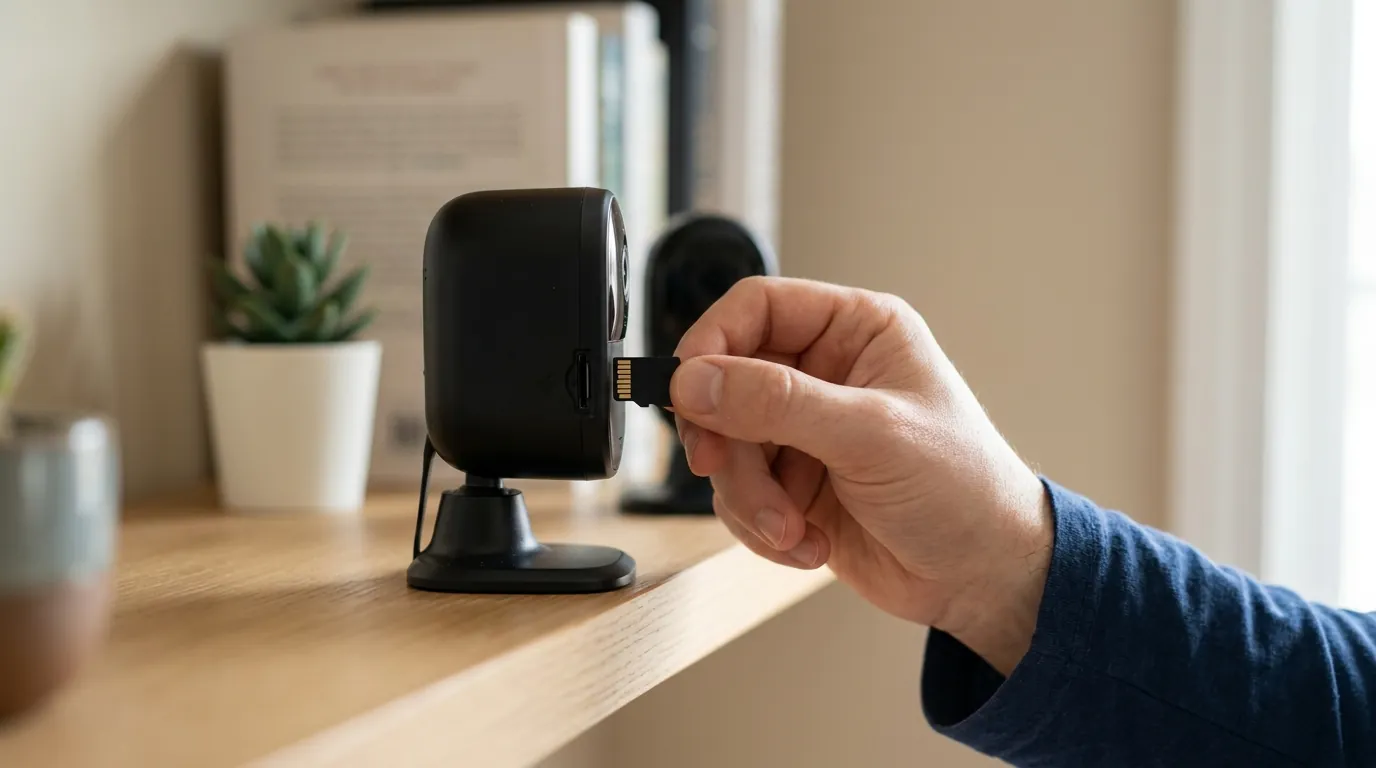
For those who find the privacy trade-offs of Ring and Eufy unacceptable, the next step is moving toward “Truly Offline” systems. These involve Power-over-Ethernet (PoE) cameras and a local Network Video Recorder (NVR).
- Audit Your Network: Use tools like Wireshark or a “Firewalla” appliance to see how often your cameras “phone home” to servers in Virginia or overseas.
- Matter and Thread: Keep an eye on the Matter smart home standard. As more doorbells adopt Matter, local control via hubs like Apple HomePod or Home Assistant will become more standardized, potentially bypassing brand-specific clouds entirely.
- Hardening Your Setup: If you currently own a doorbell, follow these steps to maximize privacy:
- Enable 2FA (Mandatory).
- Enable End-to-End Encryption (if using Ring).
- Disable “Rich Notifications” (if using Eufy) to prevent thumbnail uploads.
- Set “Privacy Zones” to black out your neighbor’s windows or public sidewalks.
- Review “Authorized Client” lists monthly to ensure no old phones still have access.
Quvii tracks these trade-offs across the category to help you decide which digital eyes are right for your front door.
Sources
- Ring — About End-to-End Encryption (E2EE)
- The Verge — Ring shuts down police request tool
- Eufy Security — Privacy Commitment and Encryption Standards
- RTINGS — Ring vs Eufy Doorbell Comparison
- FCC ID Search — Anker/Eufy RF Filings
- Wirecutter — The Best Smart Doorbell Reviews