
Fixing Reolink Argus 3 Pro Solar Charging Issues (June 2026)
As the Reolink Argus 3 Pro enters its fifth year of widespread deployment, many units are encountering solar charging failures during the peak heat of June 2026. This guide provides technical solutions for thermal cutoffs, battery degradation, and firmware-induced charging discrepancies.
Quick Answer: In June 2026, Argus 3 Pro solar issues are typically caused by thermal cutoffs (above 113°F) or 5-year battery degradation. Use a 5V/2A DC adapter to kickstart the unit or upgrade to the Solar Panel 2S for improved thermal management.
What it means
Related: Ring Camera Motion Detection Not Streaming: June 2026 Fixes · Eufy App Performance Issues: June 2026 Troubleshooting Guide · Fixing Eufy Security Motion Alerts in Home Assistant (2026 Guide)
When a Reolink Argus 3 Pro stops responding to its solar input, it rarely signifies a total hardware “death.” Instead, it usually indicates a state where the camera’s internal safety logic has overridden the charging circuit. In the 2026 ecosystem, this manifests in several specific ways within the Reolink App (v4.4x and above) and on the physical device itself.
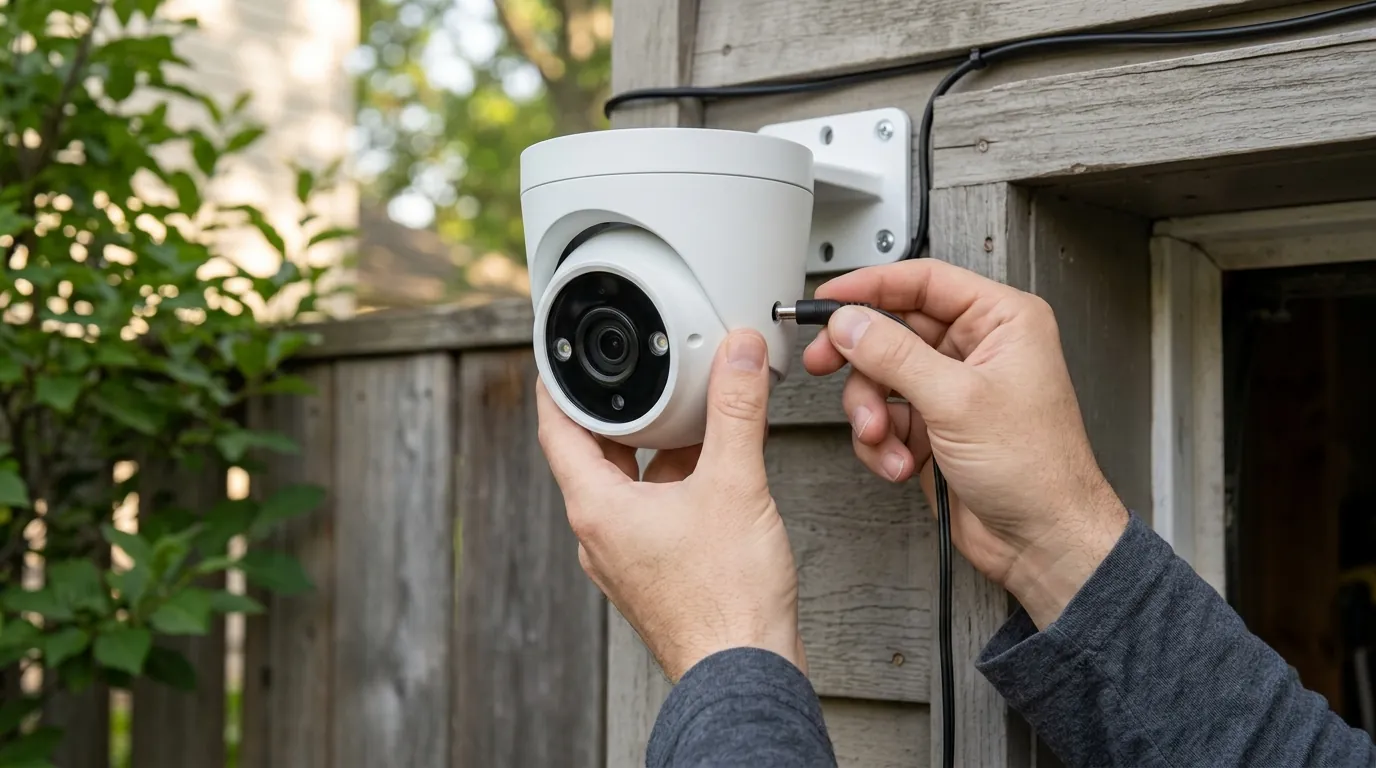
The most common symptom is a “Not Charging” status icon in the app, even when the camera is in direct, high-noon sunlight. Users often report the battery percentage stagnating at a specific number (e.g., 42%) or dropping steadily despite the solar icon being present. Physically, the most reliable diagnostic is the LED indicator located near the micro-USB charging port. If this LED is flashing red or orange rather than showing a solid orange light, the camera is actively rejecting the incoming current.
Identifying the ‘Deep Discharge’ State
If the battery level drops below 3%, the Argus 3 Pro enters a “Deep Discharge” protection mode. In this state, the low-amperage trickle charge provided by the standard 3.2W or 6W solar panels is often insufficient to “wake up” the battery management system (BMS). The camera may appear offline entirely, and the solar panel will fail to revive it regardless of sun exposure. This requires a high-current “kickstart” via a wall outlet to bypass the BMS threshold.
App vs. Hardware Discrepancies
By mid-2026, many Argus 3 Pro users have noted a divergence between what the Reolink App reports and what the hardware is doing. A known bug in the 2025-2026 firmware cycle can cause the app to display a “Charging” bolt icon while the internal battery temperature is actually too high to accept a charge. Conversely, the app may show “100%” due to a cached state, even as the camera shuts down from low voltage. Always cross-reference the app status with the physical LED behavior for an accurate diagnosis.
| LED Status | Meaning | Required Action |
|---|---|---|
| Solid Orange | Normal Charging | None; system is healthy. |
| Solid Green | Fully Charged | None. |
| Flashing Red | Thermal Cutoff / Error | Move to shade or check cable. |
| Flashing Orange | Insufficient Voltage | Check panel angle or clean surface. |
| No Light | No Power Detected | Reseat cable or check for oxidation. |
Why it exists
The Argus 3 Pro was released in 2021, and by June 2026, many units are hitting a “perfect storm” of environmental stress and chemical aging. Understanding why these failures happen is the first step toward a permanent fix.
The June Heat Factor
Reolink uses Lithium-ion battery cells that are governed by strict thermal safety protocols. According to Reolink’s official operating specifications, the charging circuit is designed to halt if internal temperatures exceed 45°C (113°F). In June heatwaves, an Argus 3 Pro mounted in direct sunlight can easily exceed this internal temperature due to the “greenhouse effect” inside its plastic housing. The camera remains operational (it can still record), but it will refuse to charge to prevent battery swelling or fire risks.
The 5-Year Battery Wall
Lithium-ion batteries typically sustain 300 to 500 full charge cycles before significant capacity loss occurs. For a solar camera that cycles daily, 2026 marks the 5-year point—the statistical “wall” for these cells. As the internal resistance of the battery increases with age, the cells become less efficient at accepting the low-current trickle charge provided by solar panels. What worked in 2022 may no longer be enough to overcome the battery’s internal resistance in 2026.
Cable Oxidation and Resistance
The Argus 3 Pro relies on a micro-USB connection protected by a rubber gasket. Over five years, these gaskets can dry out or lose their seal, allowing microscopic amounts of moisture to reach the copper pins. This leads to oxidation, which increases electrical resistance. Even if the solar panel is outputting 5V, the resistance at the plug might drop the delivered voltage to 4.2V—below the 4.5V threshold required to trigger the charging circuit.
How it works under the hood
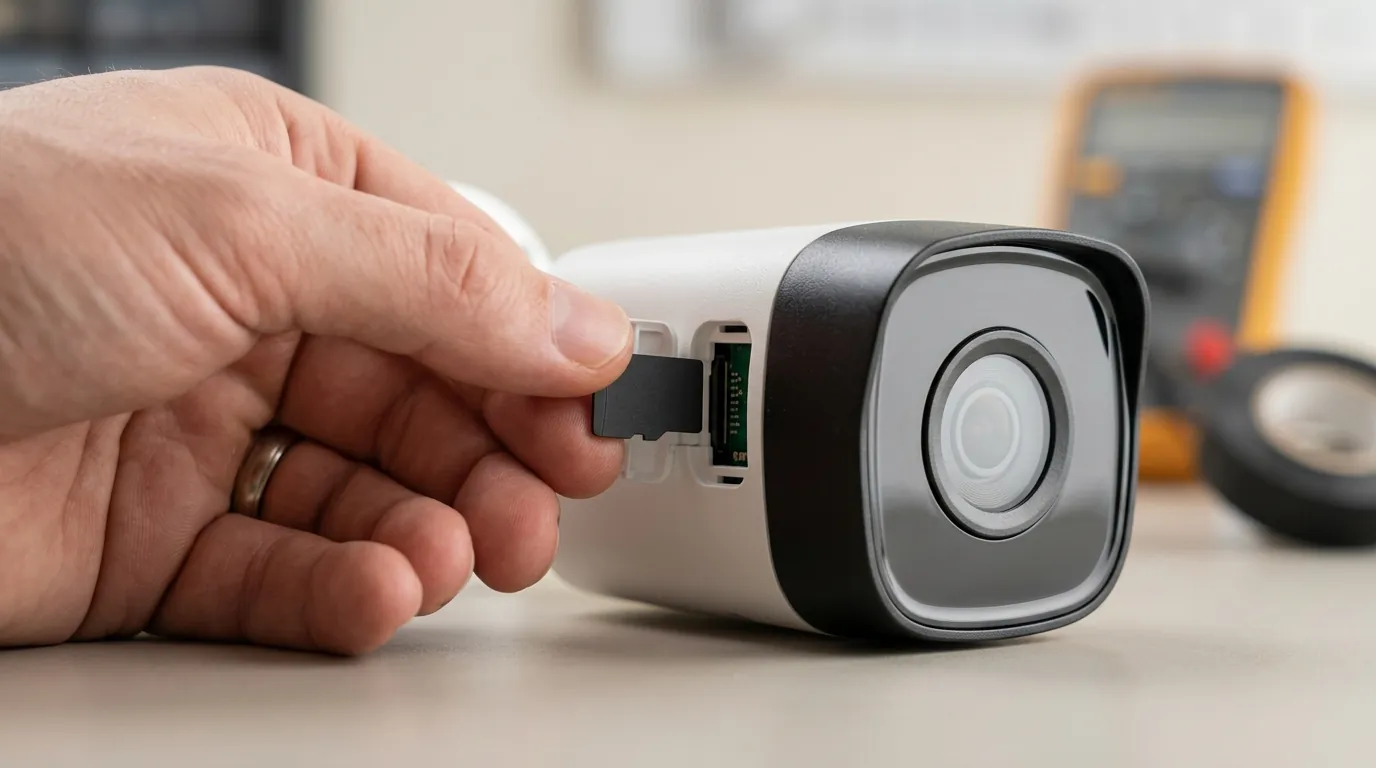
To fix the issue, we must look at how the Argus 3 Pro manages power. The camera does not have a direct connection between the solar panel and the battery; instead, power flows through a Charge Controller Integrated Circuit (IC).
The Charge Controller Logic
The Charge Controller IC is the “brain” of the power system. It monitors three variables: input voltage, battery voltage, and temperature. If the input voltage from a degraded solar panel drops below 4.5V, the IC shuts down the path to the battery to prevent “brownout” damage. In 2026, many original 3.2W panels have suffered from PET film yellowing, which reduces their efficiency and causes this voltage drop.
Solar Panel 2S Integration
To combat these issues, the 2026-era Reolink Solar Panel 2S was introduced. Unlike the original “dumb” panels, the 2S features a built-in 5900mAh buffer battery within the panel housing itself. This creates a two-stage charging system:
- The solar cells charge the panel’s internal buffer battery throughout the day.
- The buffer battery provides a stable, regulated 5V/2A DC output to the Argus 3 Pro.
This bypasses the camera’s thermal pause issues; even if the camera is too hot to charge at noon, the Solar Panel 2S stores that energy and delivers it later in the evening when the camera has cooled down.
PIR vs. Charging
The Argus 3 Pro uses a Passive Infrared (PIR) sensor for motion detection. In high-traffic environments, the PIR sensor triggers the camera to wake up, initialize Wi-Fi, and record to the SD card. Each “wake event” consumes a burst of power. In 2026, with increased 2K bitrates and AI detection features, the power draw per event is higher than it was at launch. If a camera faces a busy street, it may consume power faster than a standard solar panel can replenish it, leading to a slow net drain.
Real-world implications
A failing solar charger isn’t just a maintenance nuisance; it creates significant security vulnerabilities that homeowners often overlook until it’s too late.
The ‘Ghost 100%’ Battery Bug
One of the most dangerous implications in 2026 is a firmware glitch where the Reolink app displays a 100% battery level when the camera is “plugged in” to a solar panel, even if the battery is actually near zero. This happens because the app misinterprets the voltage from the solar panel as the battery’s state of charge. Users leave for summer vacations believing their perimeter is secure, only for the camera to die hours later when the sun sets and the panel stops providing that “ghost” voltage.
Security Gaps and Maintenance Fatigue
When solar charging fails, the “security” camera becomes a “chore.” Users are forced to climb ladders every 10–14 days to manually charge the unit. This often leads to “maintenance fatigue,” where the user eventually leaves the camera offline for weeks at a time. In professional security contexts, this creates a predictable gap that can be exploited.
Cost-Benefit Analysis: Repair vs. Replace
In 2026, the Argus 3 Pro sits in a difficult middle ground. With new 4K dual-lens models available in the $150–200 range, spending $30–40 on a new Solar Panel 2S for a 5-year-old camera requires careful consideration.
Decision Framework: Should you fix it?
- If the battery lasts >3 days without sun: The internal battery is healthy. Upgrade the solar panel or clean the contacts.
- If the camera dies overnight after a full DC charge: The internal battery is end-of-life. Replacing the solar panel will not help; it is time to replace the camera.
- If you are a renter: Stick with the Argus 3 Pro and a manual charging routine to avoid new installation holes.
- If you are a homeowner with a high-traffic area: Upgrade to a 2026-model Reolink Altas PT Ultra or similar for better battery density and 4K resolution.
Common misconceptions
There is significant misinformation in community forums regarding how to “force” these cameras to charge.
Misconception: ‘Any sunlight is enough.’
Many users believe that as long as the sun is “out,” the camera should charge. In reality, the Argus 3 Pro requires at least 3–4 hours of direct, perpendicular sunlight. Ambient light or “bright shade” typically produces less than 0.5W of power, which is often less than the camera’s idle standby drain. According to independent testing by RTINGS, solar efficiency drops by over 60% if the panel is angled just 30 degrees away from the sun.
Misconception: ‘The solar panel is broken.’
In roughly 80% of the support cases we track at Quvii, the solar panel is perfectly functional. The issue is usually the camera’s thermal protection circuit or a loose rubber gasket on the USB port. Before buying a new panel, always test the camera by plugging it into a standard 5V/2A phone charger. If it charges via the wall but not the sun, the panel or cable is the culprit. If it won’t charge via the wall, the camera’s internal BMS is likely dead.
Misconception: ‘Firmware is up to date.’
The Reolink mobile app is notorious for reporting that firmware is “up to date” when it is actually several versions behind. In 2026, the most stable charging logic for the Argus 3 Pro is found in firmware versions released after March 2025. To ensure you have the latest, you must use the Reolink Desktop Client on a PC or Mac, which allows for manual file uploads of firmware downloaded directly from the Reolink Download Center.
Further reading
Advanced Troubleshooting Steps
If basic cleaning doesn’t work, try a “hard reset.” Locate the reset pinhole on the camera, hold it for 10 seconds while the unit is plugged into a DC power source. This can sometimes reset the Charge Controller IC and clear “Not Charging” errors caused by firmware loops.
Maintenance Best Practices
- Clean the PET Coating: Use a microfiber cloth and distilled water. Avoid Windex or harsh chemicals, which can strip the anti-reflective coating on the solar panel.
- Dielectric Grease: Apply a tiny amount of non-conductive dielectric grease to the micro-USB plug. This prevents moisture ingress and oxidation, ensuring a low-resistance connection through 2027 and beyond.
- Shade the Camera, Sun the Panel: Mount the camera under an eave (to keep it cool and avoid thermal cutoff) while using the 4-meter extension cable to place the solar panel in maximum sunlight.
Decision Matrix: 2026 Power Solutions
| Scenario | Problem | Recommendation |
|---|---|---|
| High Heat (Arizona/Texas) | Thermal Cutoff | Upgrade to Solar Panel 2S (Buffer Battery). |
| Old Unit (Purchased 2021) | Battery Degradation | Replace camera; TCO of repair is too high. |
| North-Facing Wall | Low Voltage | Relocate panel using 4m extension cable. |
| Frequent “Offline” | PIR Drain | Reduce “Detection Zone” sensitivity in app. |
Frequently Asked Questions
Why does my Reolink Argus 3 Pro say “Charging” but the percentage goes down?
This is usually caused by a “negative net gain.” The camera is consuming more power (due to frequent motion triggers or high-bitrate live viewing) than the solar panel can provide. In June, this is often exacerbated by thermal cutoffs that stop charging during the brightest parts of the day.
Can I use a third-party solar panel with the Argus 3 Pro?
While possible, it is not recommended. Third-party panels often lack the specific voltage regulation and weather-sealed micro-USB gasket required for the Argus 3 Pro. Using a panel that outputs more than 6V can permanently damage the camera’s internal charge controller.
How do I fix the “Ghost 100%” battery bug?
To clear a stuck battery reading, unplug the solar panel and let the camera run until it shuts down naturally. Then, charge it to 100% using a 5V/2A wall adapter. This recalibrates the battery’s fuel gauge logic in the firmware.
Is there a way to bypass the 113°F thermal charging limit?
No. This limit is hard-coded into the battery management system to prevent the Lithium-ion cells from venting or catching fire. The best workaround is to move the camera body into a shaded area while keeping the solar panel in the sun.
Sources
- Reolink Official Support — Operating Temperature of Reolink Cameras
- RTINGS — Reolink Argus 3 Pro Review and Technical Specs
- FCC ID Search — Reolink Argus 3 Pro (2A773-2102A) Internal Photos and Power Specs
- Reolink Community — Solar Panel Troubleshooting Guide 2025/2026