
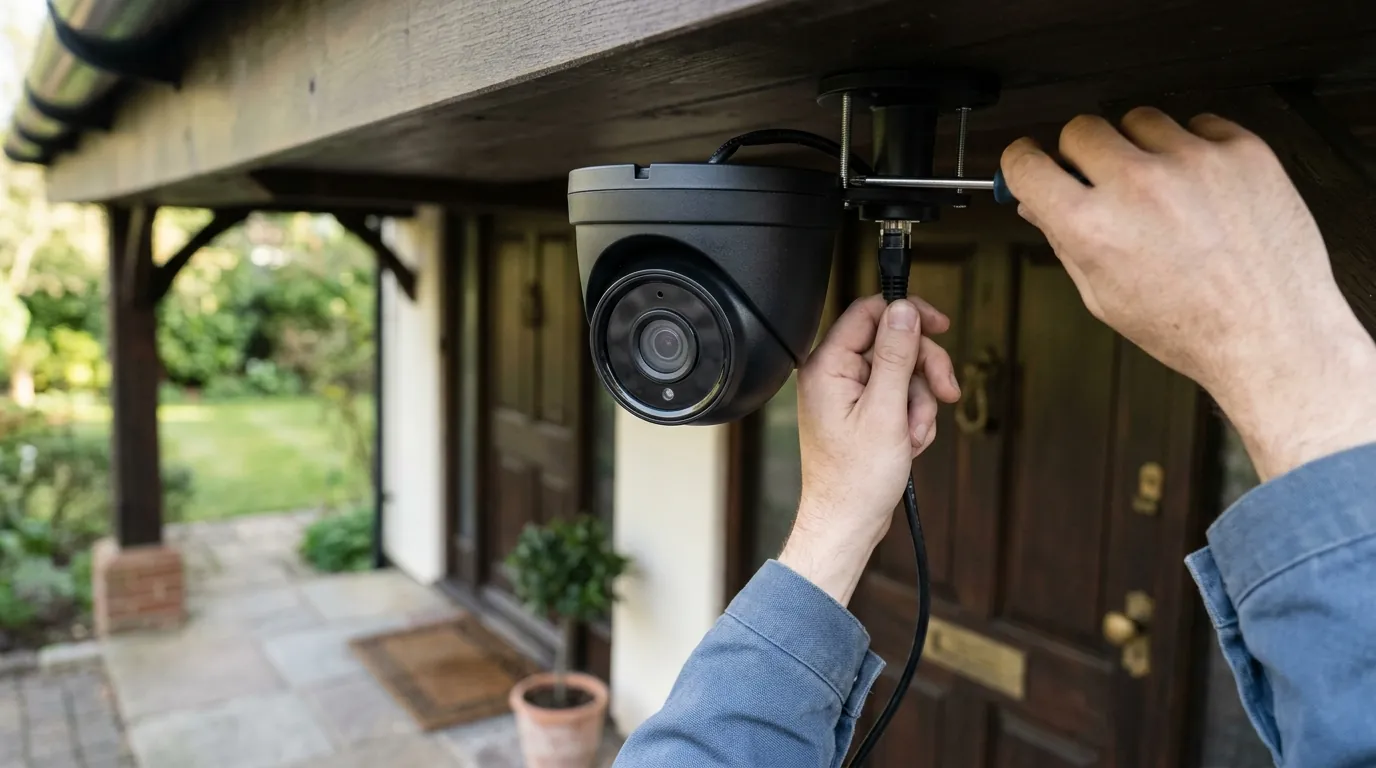
How Night Vision Security Cameras Work: 2026 Tech Guide
Seeing in total darkness was once the domain of military-grade hardware, but today’s security systems use advanced photonics to turn midnight into midday. Understanding how these sensors bridge the gap between invisible light and clear evidence is the first step in securing a modern home.
Quick Answer: Night vision cameras work by using invisible infrared (IR) light or high-sensitivity “starlight” sensors (like Reolink ColorX) to capture images in low light. Modern 2026 systems offer full-color video without needing bright spotlights.
What it means
In the landscape of 2026 surveillance, “night vision” is no longer a monolithic term. It refers to a sensor’s ability to render usable, high-contrast images in environments where light levels fall below 0.1 Lux. For context, a moonlit night is roughly 0.1 Lux, while a “pitch black” room is typically 0.001 Lux or lower.
The industry has shifted its focus from mere “Detection”—the ability to see that a shape is moving—to “Identification.” Modern users require the ability to read a license plate or distinguish facial features from 30 feet away in the dark. This shift is driven by the transition from active illumination (using LEDs to light up a scene) to passive light amplification (using massive sensors to “see” existing photons).
Infrared (Black & White) Night Vision
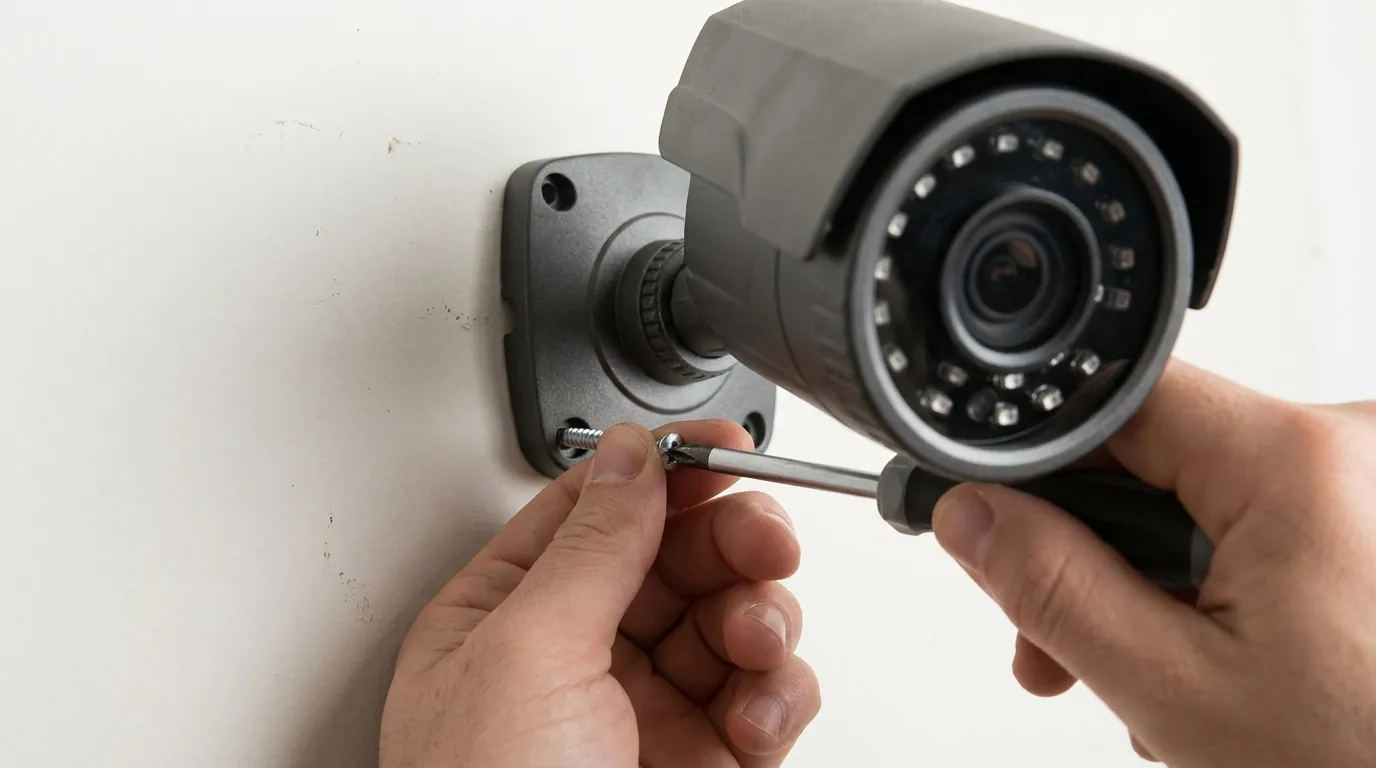
This remains the most common form of night vision. The camera uses a series of Infrared Light Emitting Diodes (LEDs) to flood the area with light that is invisible to the human eye but visible to the camera’s sensor. The resulting image is monochromatic (black and white) because infrared light does not carry color information that a standard sensor can interpret.
Full-Color Night Vision (Starlight Tech)
Starlight technology, pioneered by brands like Reolink with their ColorX series, uses specialized sensors that are significantly more sensitive than standard CMOS chips. These cameras can produce full-color images in near-total darkness by maximizing the gathering of ambient light from stars, streetlights, or distant porch lights.
Smart Hybrid Modes
Many 2026 models now feature Smart Hybrid Light modes. These cameras stay in black-and-white IR mode to remain “stealthy” until they detect a person or vehicle. Once a threat is identified, they instantly switch on a warm white light supplement to capture full-color details for evidence.
| Feature | IR Night Vision | Color Night Vision | Hybrid Night Vision |
|---|---|---|---|
| Image Detail | High Contrast (B&W) | High Detail (Color) | Variable |
| Range | Up to 100ft+ | 30ft - 60ft | 100ft (IR) / 40ft (Color) |
| Stealth | High (Invisible) | Low (Needs some light) | Medium (Reactive) |
| Power Draw | Moderate | Low (Sensor-based) | High (when LED is on) |
| Best Use | Total Darkness | Low Ambient Light | High-Traffic Areas |
Why it exists
The necessity for high-fidelity night vision is backed by sobering data. Historically, over 60% of residential burglaries occur during low-light or overnight hours when homeowners are asleep or visibility is low. Without effective night vision, a security camera is essentially a decorative plastic housing for half of the day.
The “Subscription Trap”
A growing concern in 2026 is the “Subscription Trap” popularized by brands like Ring and Nest. These companies often gate high-quality nighttime image processing behind cloud paywalls. While the camera hardware is capable, the Advanced AI Noise Reduction required to clean up grainy night footage is processed on remote servers, forcing users into monthly fees. Choosing cameras with powerful local processors allows for high-quality night vision without recurring costs.
Legal and Insurance Requirements
The legal landscape has also evolved. In 2026, grainy, “ghost-like” footage is increasingly inadmissible in courtrooms or rejected by insurance adjusters. If a camera cannot provide a clear “positive ID” of a suspect’s face or a vehicle’s registration, the footage may be deemed useless for prosecution. High-quality night vision ensures that the evidence gathered is actionable.
How it works under the hood
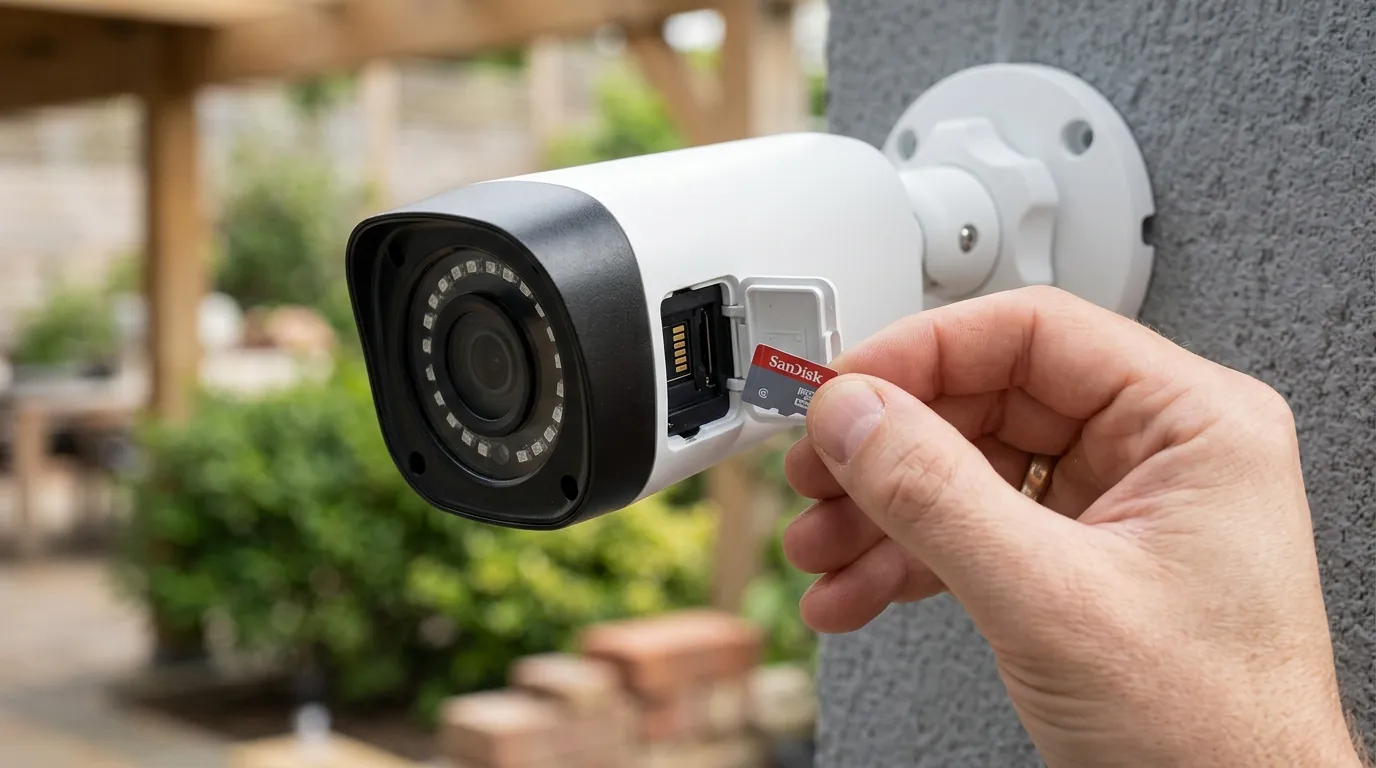
The transition from a daytime color image to a nighttime infrared image involves a complex mechanical and electronic dance within the camera housing.
The Role of the IR Cut Filter
If you have ever heard a faint “click” coming from your camera at sunset, you are hearing the IR Cut Filter. During the day, this mechanical filter sits between the lens and the sensor to block infrared light, which would otherwise distort daytime colors (making grass look purple, for example). At night, the filter physically slides away, allowing the sensor to utilize every available photon, including the infrared spectrum.
CMOS Sensor Sensitivity
The “eye” of the camera is the CMOS sensor. In 2026, high-end cameras like the Reolink Altas PT Ultra utilize large 1/1.8” sensors. These are significantly larger than the 1/3” sensors found in budget models. A larger sensor has larger individual pixels (sensels), which can capture more light in the same amount of time, resulting in a cleaner image with less digital “noise.”
Aperture and Lux Ratings (f/1.0 vs f/2.0)
The aperture is the opening in the lens that lets light through. It is measured in f-stops. A camera with an f/1.0 aperture (common in Color Night Vision models) allows roughly four times as much light to reach the sensor as a standard f/2.0 lens. This hardware advantage is what allows “Starlight” cameras to stay in color mode long after other cameras have switched to black and white.
Local AI Noise Reduction
When light is scarce, sensors produce “noise”—the dancing static seen in dark videos. Modern Image Signal Processors (ISP) use local AI algorithms to compare consecutive frames and “average out” the noise. This happens in real-time on the camera’s internal chip, sharpening edges and reducing motion blur without needing to upload data to a cloud server.
Wavelengths: 850nm vs. 940nm
Most security cameras use 850nm infrared LEDs, which produce a faint, visible red glow. This glow can act as a deterrent, letting intruders know they are being watched. However, for covert applications or indoor nurseries, 940nm “No-Glow” IR is used. These LEDs are completely invisible to the human eye but have a slightly shorter effective range than 850nm versions.
Real-world implications
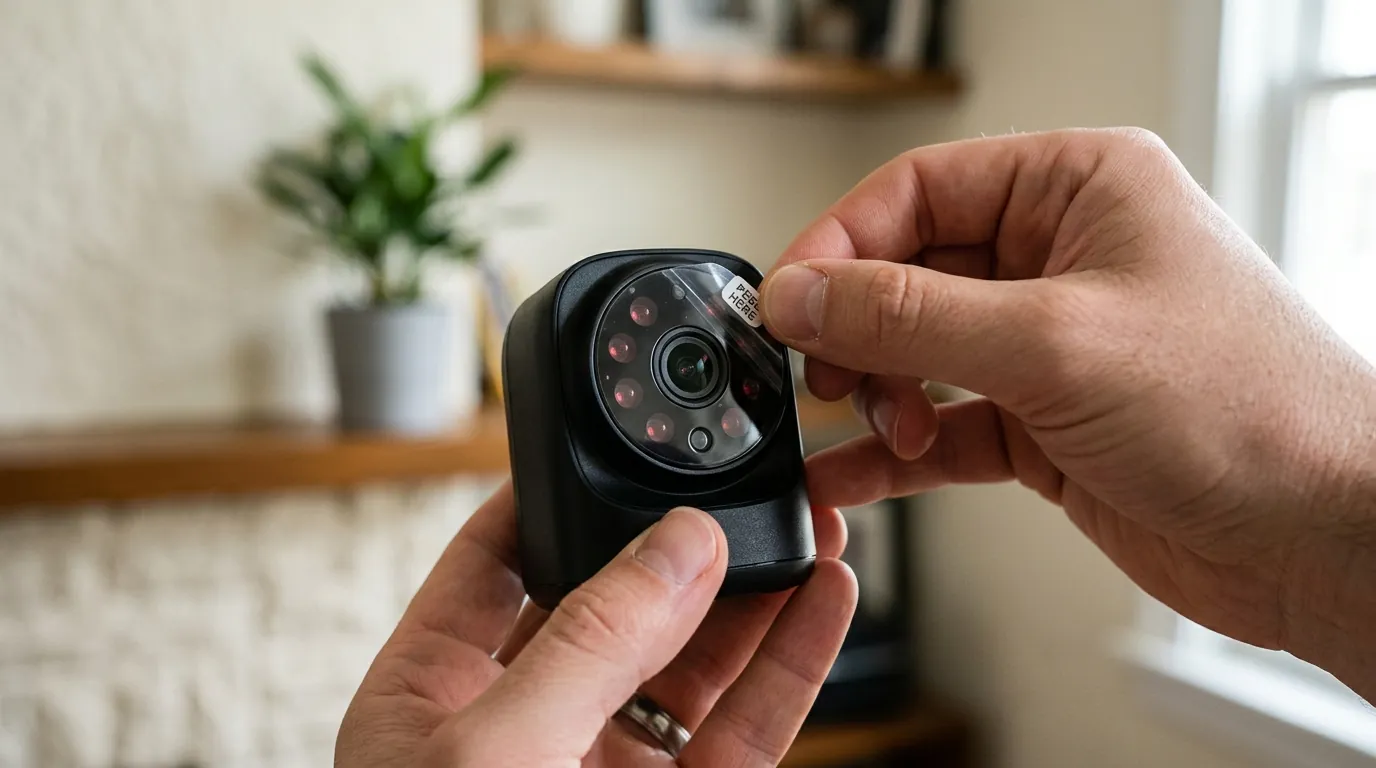
While the technology is impressive, real-world environmental factors can significantly impact how well a night vision camera performs.
The “Spiderweb” Problem
IR light is highly reflective. Small particles like dust, raindrops, or spiderwebs that are invisible during the day become brilliantly lit “white streaks” at night. This often triggers false motion alerts. High-quality systems use AI to distinguish between a “moving spider” and a “moving human,” but placement remains key to avoiding these reflections.
Placement Matters: Avoiding Glass Reflection
A common mistake is placing an IR camera behind a window. The infrared light will bounce off the glass and reflect directly back into the lens, blinding the camera. To see through glass at night, the internal IR LEDs must be disabled, and external lighting (like a porch light or an external IR illuminator) must be used.
Storage Impact of Nighttime Noise
Nighttime footage often requires 20-30% more storage space than daytime footage. This is because digital noise is essentially “random data” that the camera’s video compressor (like H.265) cannot easily simplify. This makes local storage solutions, such as high-capacity NVRs, essential for homeowners who want to keep weeks of high-bitrate nighttime evidence.
Privacy & Stealth
For indoor monitoring, particularly in nurseries or bedrooms, the 940nm “No-Glow” IR is the standard. It prevents the “red eye” glow from disturbing a sleeping infant while still providing clear 2K or 4K monitoring for the parents.
Common misconceptions
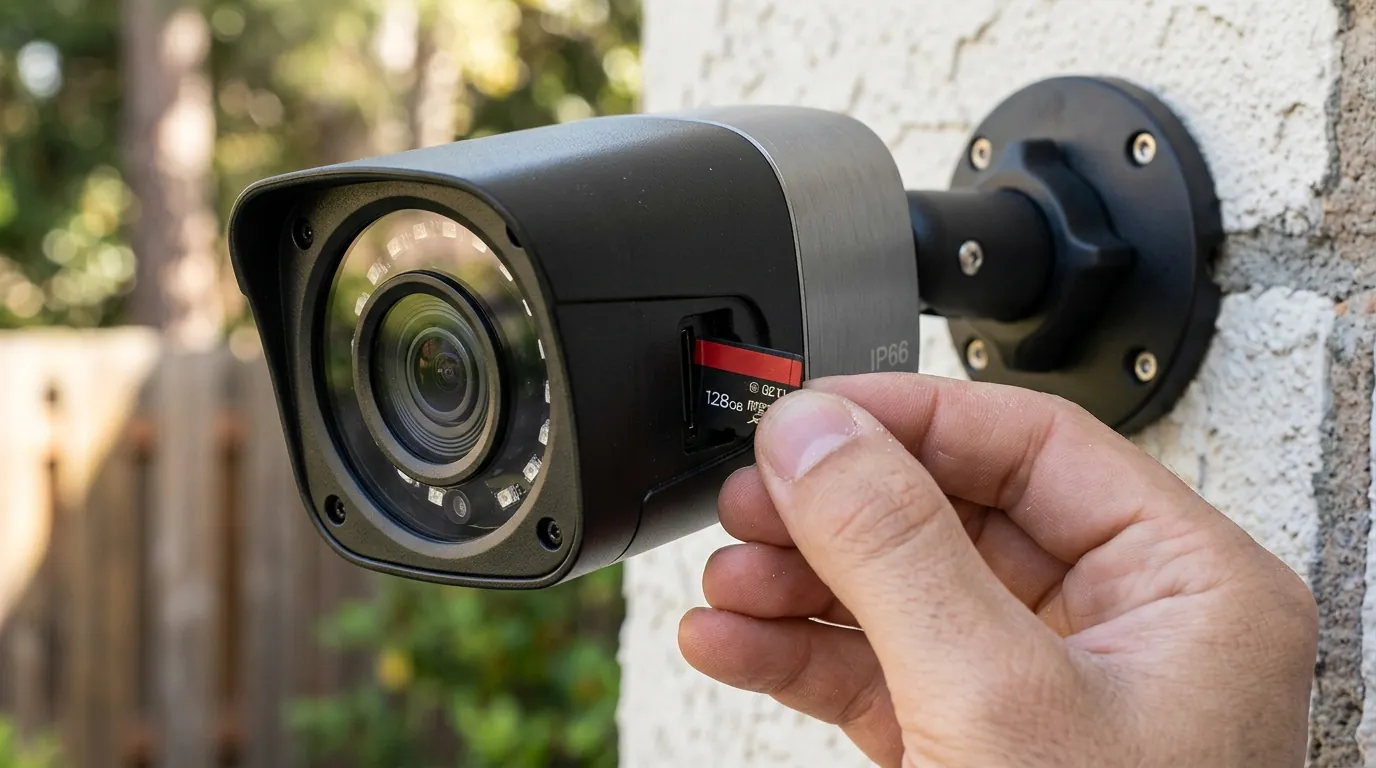
As marketing for “4K Night Vision” ramps up, several myths persist that can lead to poor purchasing decisions.
- “Night vision can see through windows”: As mentioned, this is false for any camera using internal IR LEDs. The reflection creates a white-out effect.
- “Color night vision needs zero light”: Even the most advanced Starlight sensors require at least a tiny amount of ambient light (approx. 0.001 Lux) to render a color image. In a truly sealed, lightless basement, the camera will still need to switch to IR mode.
- “More Megapixels = Better Night Vision”: This is often the opposite of the truth. If you cram 8 million pixels (4K) onto a small sensor, each pixel is tiny and cannot capture much light. A 2K camera with a large sensor will almost always outperform a 4K camera with a small sensor in low-light conditions.
Further reading
When deciding on a night-heavy surveillance setup, consider how the camera is powered. PoE (Power over Ethernet) cameras are generally superior for night vision because they have a constant, high-wattage power supply for the IR LEDs and the ISP. Battery-powered cameras must often “dim” their LEDs or use shorter recording times to conserve energy.
Adopting a “Subscribe to Nothing” philosophy is also vital for nighttime security. By keeping your high-bitrate footage on local NVRs or high-speed SD cards, you ensure that the fine details—like the texture of a jacket or the color of a getaway car—aren’t lost to cloud compression.
Looking forward, the future of consumer security lies in thermal imaging. While currently expensive, thermal sensors are beginning to appear in high-end consumer “hybrid” cameras, allowing for the detection of heat signatures through fog, heavy rain, and dense foliage where traditional IR and Starlight sensors fail.
Sources
- Network Webcams: Understanding Low Light Performance
- Montavue: How Night Vision Cameras Work
- Sipko Security: IR vs Color Night Vision
- Reolink: Color Night Vision Explained — https://reolink.com/blog/color-night-vision-security-camera/
- Hikvision: Smart Hybrid Light Technology — https://www.hikvision.com/en/core-technologies/low-light-imaging/smart-hybrid-light/
- Security.org: Burglary Statistics and Trends
- All-Abouts: The Mechanics of Night Vision
- Botslab: Image Signal Processors in Security
- Reolink: Sensor Size and Image Quality — https://reolink.com/blog/security-camera-sensor-size/
- Hikvision: ColorVu Technology — https://www.hikvision.com/en/core-technologies/low-light-imaging/colorvu/