
Doorbell Camera vs. Security Camera: Optimal Placement Guide
Choosing between a doorbell camera and a large outdoor security camera is not about which is better, but about which perspective your property lacks. While both capture video, their optical engineering and physical placement create two entirely different layers of protection.
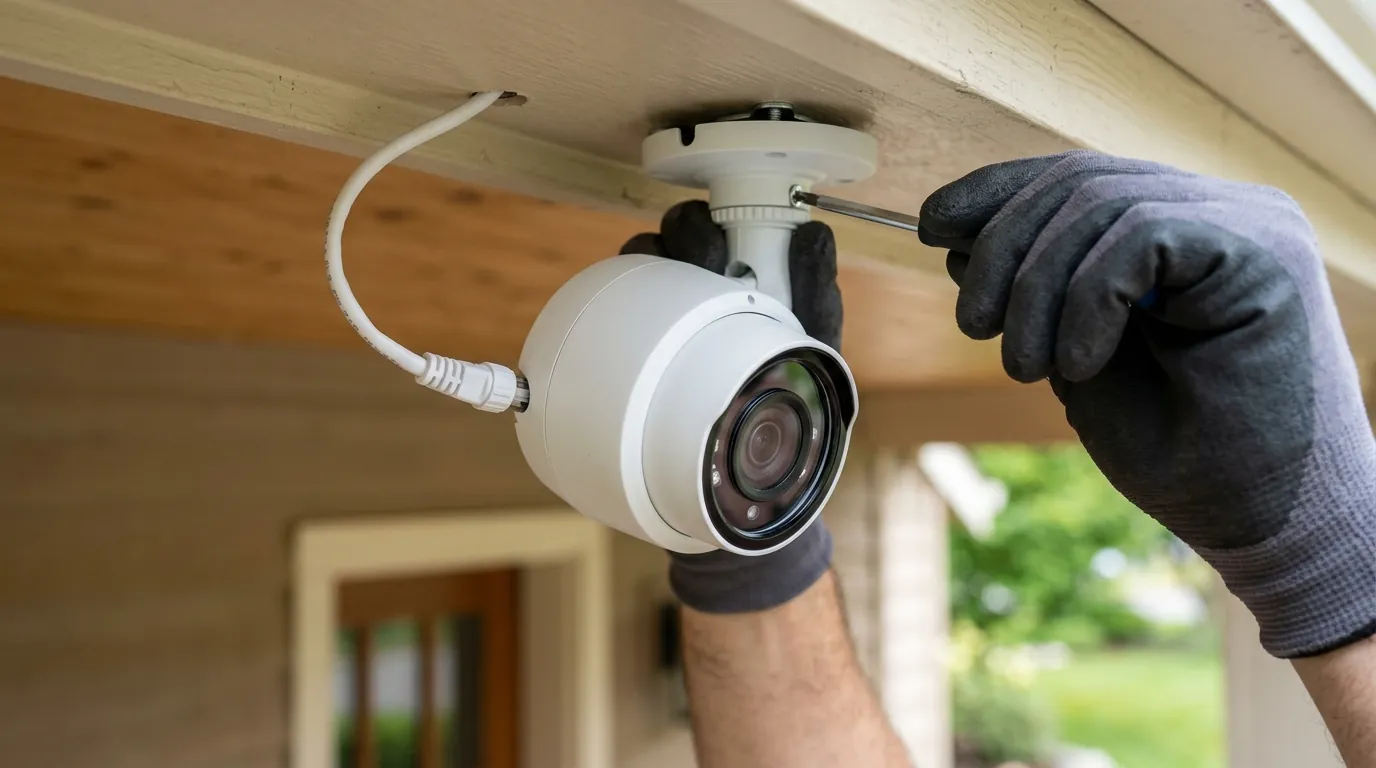
Quick Answer: Doorbell cameras are ideal for monitoring immediate doorstep activity, package deliveries, and visitor interaction, typically mounted at eye level directly on or beside the doorframe. Larger outdoor security cameras, conversely, are designed for broader area surveillance of yards, driveways, or property perimeters, and are best mounted higher on walls or eaves to achieve a wider field of view and act as a visible deterrent.
What it means
Related: Doorbell Camera Privacy: Your Rights When Federal Agents Visit Your Po · Arlo Pro VMC4030 Factory Reset Failure: July 2026 Fix Guide · Home Assistant Alexa Media Player Broken in 2026? Fixes & Alternatives
To build an effective surveillance strategy, it is essential to distinguish between “point-of-entry” monitoring and “area” monitoring.
Doorbell Camera: Your Digital Doorman
A doorbell camera is a specialized, compact device designed to replace a traditional doorbell. Its primary objective is two-way communication and “near-field” monitoring. Because these cameras are mounted at roughly 48 inches (1.2 meters) from the ground, they capture a “straight-on” view of a person’s face. Modern units, such as the Eufy Video Doorbell E340, often utilize dual-camera systems—one facing forward for faces and one angled downward specifically to monitor packages resting on the porch.
Large Security Camera: The Perimeter Watcher
Large security cameras—typically categorized as bullet, dome, or Pan-Tilt-Zoom (PTZ) cameras—are built for “far-field” surveillance. These devices, such as the Reolink Altas PT Ultra, feature larger image sensors, more powerful Infrared (IR) arrays for long-distance night vision, and often higher-resolution optics (4K or 8K). They are designed to be mounted 8 to 10 feet high, providing a bird’s-eye view of a driveway, backyard, or side passage.
Comparison: Doorbell Camera vs. Large Security Camera
| Feature | Doorbell Camera | Large Security Camera |
|---|---|---|
| Primary Use | Visitor ID, Package Security | Perimeter Defense, Yard Monitoring |
| Typical Resolution | 2K to 5MP (often 1:1 or 3:4 ratio) | 4K to 8K (typically 16:9 ratio) |
| Mounting Height | 44–50 inches (Eye level) | 8–12 feet (Eave/Wall mount) |
| Field of View (FOV) | High Vertical (up to 180° head-to-toe) | High Horizontal (up to 140° wide) |
| Night Vision Range | 10–20 feet | 30–100+ feet |
| Two-Way Audio | Standard (Full Duplex) | Common, but often lower volume/clarity |
| Power Source | Doorbell wiring or Battery | PoE, Plug-in AC, or Solar/Battery |
Why it exists
The specialization of these two camera types is a response to the “blind spot” problem. A single camera type rarely covers all security vulnerabilities effectively.
Filling Specific Security Gaps
Doorbell cameras emerged to solve the “porch pirate” epidemic and the need for remote visitor screening. A standard security camera mounted 10 feet high on a garage eave provides excellent coverage of a car in the driveway, but it usually only captures the top of a delivery person’s hat. The doorbell camera fills this gap by providing high-detail facial recognition at close range.
The Complementary Nature of Modern Home Surveillance
In a professional-grade residential setup, these cameras work in tandem. The large security camera acts as a “scout,” detecting a vehicle pulling into the driveway and triggering a high-level alert. As the individual approaches the door, the doorbell camera takes over, providing the high-resolution facial detail and the interface for the homeowner to speak to the visitor. This “layered” approach ensures that even if a perpetrator obscures their face while walking up (looking down at the ground), the doorbell camera captures them as they reach for the handle or bell.
How it works under the hood
The technical differences between these devices dictate their optimal placement.
Field of View and Specialized Coverage
Doorbell cameras often prioritize a “head-to-toe” Field of View (FOV). For example, the Ring Battery Doorbell Pro uses a 150° x 150° FOV. This square aspect ratio is critical because it allows the user to see both the face of a tall visitor and a package placed on the floor simultaneously.
Large outdoor cameras, such as the Arlo Pro 5S 2K, typically utilize a 16:9 widescreen FOV. This is optimized for horizontal coverage, allowing a single camera to monitor the entire width of a two-car driveway or a wide backyard.
Powering Your Surveillance: Wired vs. Wireless Options
- Doorbells: Most are designed to tap into existing 16-24V AC doorbell transformers. If no wiring exists, battery-powered models are common, though they often suffer from “lag” (latency) between a motion event and the start of recording.
- Large Cameras: These offer more diverse power options. Power over Ethernet (PoE) is the gold standard for reliability, delivering both data and power through one cable. Large cameras also frequently support solar panels, which are more effective for these units than doorbells because they can be mounted high on a roofline with better sun exposure.
Motion Detection and Smart Alerts
Placement significantly affects how AI algorithms process motion. Doorbell cameras are tuned for “Near-Field” PIR (Passive Infrared) or Radar detection. They are designed to ignore cars passing in the street and only trigger when someone enters the immediate porch zone. Large cameras use more sophisticated “Long-Range” AI that can differentiate between a person, a vehicle, and an animal at distances of 50 feet or more.
Night Vision and Environmental Adaptability
Because doorbell cameras are meant to see people 3 to 5 feet away, their IR LEDs are relatively low-power to prevent “white-out” (where a face looks like a glowing white orb). Large cameras feature much more powerful IR arrays or “Color Night Vision” spotlights designed to illuminate a yard up to 100 feet away.
Real-world implications
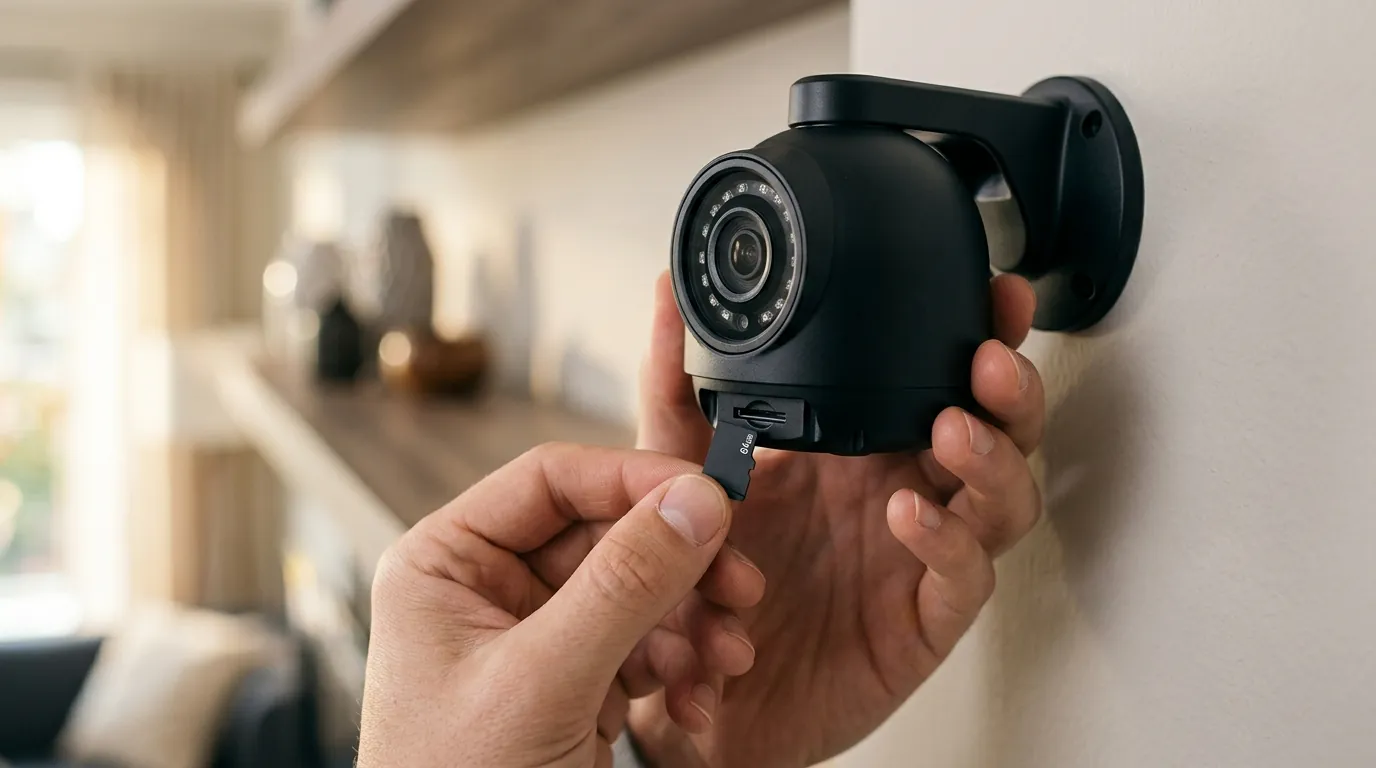
Strategic placement is the difference between capturing a usable image and having a gallery of useless glare and shadows.
Strategic Placement for Doorbell Cameras
The biggest mistake in doorbell placement is mounting it too high.
- The 48-Inch Rule: Aim for 44 to 48 inches from the ground. This ensures the camera is at chest/face level for most adults.
- Angle Wedges: If your door is at the end of a long hallway or perpendicular to the walkway, use a 15° or 30° “wedge” (usually included in the box) to angle the camera toward the approach path.
- Avoid Sidelighting: If possible, avoid placing the doorbell where a bright porch light is directly to its side, as this can cause lens flare at night.
Maximizing Coverage with Large Security Cameras
- The 8-to-10 Foot Sweet Spot: Mounting higher than 12 feet often results in “bird’s-eye” views where you only see the tops of heads. Mounting lower than 8 feet makes the camera vulnerable to tampering or being covered by an intruder.
- Corner Mounting: Placing a wide-angle camera on the corner of a building allows it to cover two sides of the structure, maximizing your hardware investment.
- The Entry-Point Focus: Always aim large cameras at “choke points”—areas an intruder must pass through, such as a gate, a driveway entrance, or a specific basement window.
Decision Framework: Which Camera Should You Prioritize?
| If you are a… | Prioritize… | Why? |
|---|---|---|
| Renter | Doorbell Camera (Battery) | Easy to install/remove; covers the most likely entry point (front door) without drilling into eaves. |
| Homeowner (Large Lot) | Large Outdoor Cameras (PoE/Solar) | You need to detect intruders before they reach the house. A doorbell camera is too late for perimeter defense. |
| Small Business Owner | Large Cameras (Internal/External) | Deterrence is key. Visible large cameras discourage shoplifting and vandalism more than a discrete doorbell. |
| Package Heavy Shopper | Doorbell Camera (Dual-Lens) | Specifically designed to monitor the “last inch” of delivery and deter porch piracy. |
Total Cost of Ownership (TCO) Analysis
When choosing between these types, the hardware price is only the beginning. Over a 3-year period, the “feature paywall” can significantly alter the cost.
- The Subscription Trap: Brands like Ring, Nest, and Arlo generally require a monthly subscription (around $50–$60/year per camera or $100–$150/year for a household) to access basic features like cloud storage or even “Person Detection.”
- 3-Year TCO Example (Single Camera):
- Ring Battery Doorbell Pro: Hardware (around $230) + 3 Years of Ring Protect Basic (around $150) = $380 Total.
- Reolink Doorbell (WiFi): Hardware (around $100) + High-End microSD card (around $20) + $0 Subscription = $120 Total.
Installation Checklist: Pre-Mounting Survey
- Wi-Fi Strength: Take your phone to the exact mounting spot. If you have fewer than two bars of Wi-Fi, a high-resolution camera will likely stutter or fail to connect. Consider a Wi-Fi 6 or 6E compatible camera for better range.
- Power Access: For large cameras, identify the nearest outlet or if you can run an Ethernet cable to a PoE switch.
- The “Sun Path”: Observe the spot at midday. Direct sunlight hitting the lens for hours can degrade the sensor over time and cause “blind” periods due to glare.
Common misconceptions
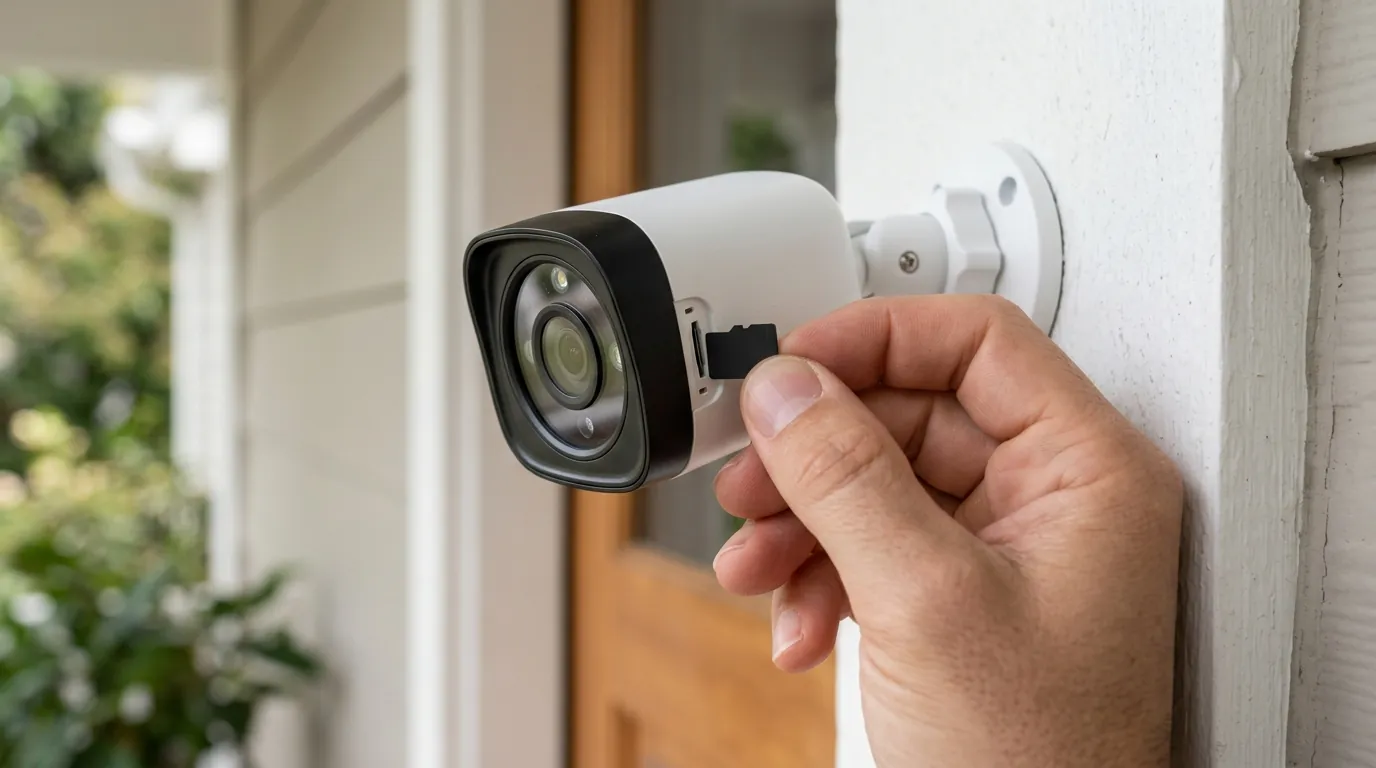
The “One Camera Does It All” Myth
Many buyers believe a single high-end doorbell camera is enough. While a doorbell covers the front door, it leaves the back door, side windows, and driveway completely vulnerable. Security is a “mesh” of views, not a single point of failure.
Height vs. Detail: Finding the Sweet Spot
There is a common belief that “higher is better” to prevent theft of the camera itself. However, mounting a camera at 15 feet makes facial identification nearly impossible. Most modern cameras have “anti-theft” features, and capturing a clear face at 8 feet is more valuable than a high-altitude video of a theft you can’t identify.
Understanding “Wireless” in Security Cameras
“Wireless” almost always refers to the data transmission (Wi-Fi), not the power. Most “wireless” large security cameras still require a power cord plugged into an outlet. Only “Wire-Free” (battery-powered) cameras are truly cable-free. Always check the spec sheet for “Battery-Powered” vs. “Wireless” to avoid installation surprises.
Motion Detection: Beyond Basic Alerts
Users often complain that their cameras “go off every time a car passes.” This is usually a failure of placement or a lack of AI features. High-quality large cameras allow you to draw “Privacy Zones” or “Detection Zones,” telling the software to ignore the street and only alert you if someone steps onto your grass.
Frequently Asked Questions
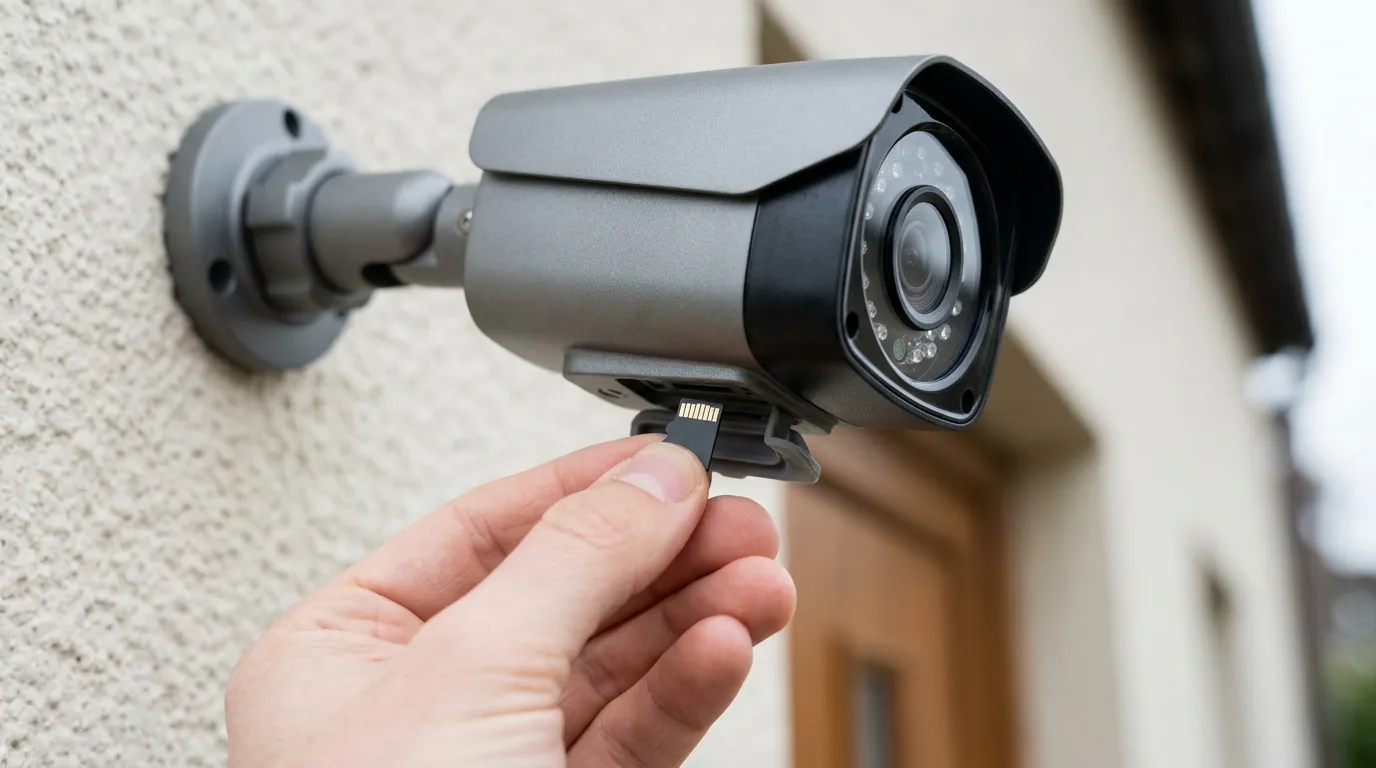
Can I use a doorbell camera as my only security camera?
While possible for a small apartment with a single entry, it is not recommended for a house. Doorbell cameras have limited range and cannot see around corners or monitor the perimeter, leaving side and back entries exposed.
Should I get a battery or wired doorbell camera?
Wired is always superior if the infrastructure exists. Wired cameras provide “pre-roll” (capturing the seconds before motion starts) and never require downtime for charging. Battery models are best for renters or homes where rewiring is cost-prohibitive.
Do large security cameras record 24/7?
Most battery-powered large cameras only record when motion is detected to save power. If you require 24/7 continuous recording, you must choose a “wired” or “PoE” (Power over Ethernet) system connected to a Network Video Recorder (NVR) or a high-end local storage solution.
How high should I mount my outdoor security camera to prevent it from being stolen?
The recommended height is 8 to 10 feet. This is high enough to be out of reach for a person standing on the ground, but low enough to maintain a useful angle for facial recognition.
Sources
- Eufy Video Doorbell E340 Product Page — Manufacturer specifications for dual-camera systems.
- Ring Battery Doorbell Pro Specs — Official FOV and radar detection data.
- Reolink Altas PT Ultra Documentation — Technical details on 4K continuous battery recording and IR range.
- Arlo Pro 5S 2K Features — Details on wide-angle FOV and night vision capabilities.
- RTINGS - Best Video Doorbells — Independent testing data on resolution and latency.
Quvii tracks these trade-offs across the category to help users build resilient, privacy-focused surveillance systems.