
Blink Camera Offline? June 2026 Troubleshooting Guide
When a Blink camera drops its connection, it often happens at the least opportune moment, leaving gaps in your home security timeline. In June 2026, troubleshooting these devices requires understanding the interplay between the newer Sync Module XR and the high-voltage requirements of the 2K-generation hardware.
📝 Editorial Note: This guide is AI-assisted and game data evolves rapidly. Please cross-reference with in-game information. Updated: 2026-06-25.
Quick Answer: Most 2026 Blink offline issues are caused by Sync Module XR connectivity or low battery voltage. Power cycle your Sync Module first; if the camera remains offline, replace batteries with 1.5V Lithium AA and ensure 2.4GHz Wi-Fi is at 3 bars.
What it means

Related: Google Nest Camera Firmware Update Failed: Solutions & Causes · Reolink Camera Connection Failure: 2026 Troubleshooting Guide · Fix Reolink Camera False Motion Detection Alerts: A 2026 Guide
When your Blink Home Monitor app reports a device is “Offline,” it indicates a break in the communication chain between the camera, the Sync Module, and the Amazon/Blink cloud servers. This status is not a single point of failure but a symptom that can originate from three distinct hardware layers.
App Status Indicators
In the 2026 version of the Blink app, an offline state is typically signaled by a dimmed thumbnail and a small “Cloud Disconnected” icon (a cloud with a slash through it). If the entire system is down, you will see a banner at the top of the home screen stating “Sync Module Offline.” It is critical to distinguish between these two:
- Camera Offline: The Sync Module is connected to the internet, but it cannot “see” the specific camera.
- Sync Module Offline: The hub has lost its Wi-Fi or power connection, rendering all associated battery-powered cameras unreachable.
Physical Camera LED Codes
Blink has refined its LED signaling for the Outdoor 4 and Mini 2K+ models to provide better diagnostic feedback without needing to open the app.
| LED Pattern | Meaning (Outdoor 4 / Mini 2K+) | Action Required |
|---|---|---|
| Solid Red | Hardware/Boot Error or Battery Failure | Replace batteries immediately. |
| Flashing Red (5x) | Low Voltage / Failed Wake-up | Check battery type (must be 1.5V Lithium). |
| Flashing Blue | Pairing Mode / Ready for Setup | Re-add camera to the Sync Module. |
| Solid Blue | Recording / Live View Active | No action needed; camera is online. |
| No Light | Sleep Mode or Total Power Loss | Press the “Reset” button briefly to check for response. |
The Sync Module Status Light
The Sync Module XR, released as the backbone for the 2026 ecosystem, features a multi-color LED. A solid green light indicates a successful connection to both the local Wi-Fi and the Blink servers. A solid red light indicates a local network failure (the module cannot talk to your router), while a flashing green light suggests the module is connected to Wi-Fi but cannot reach the Amazon cloud—often a sign of a subscription authentication issue or a service outage.
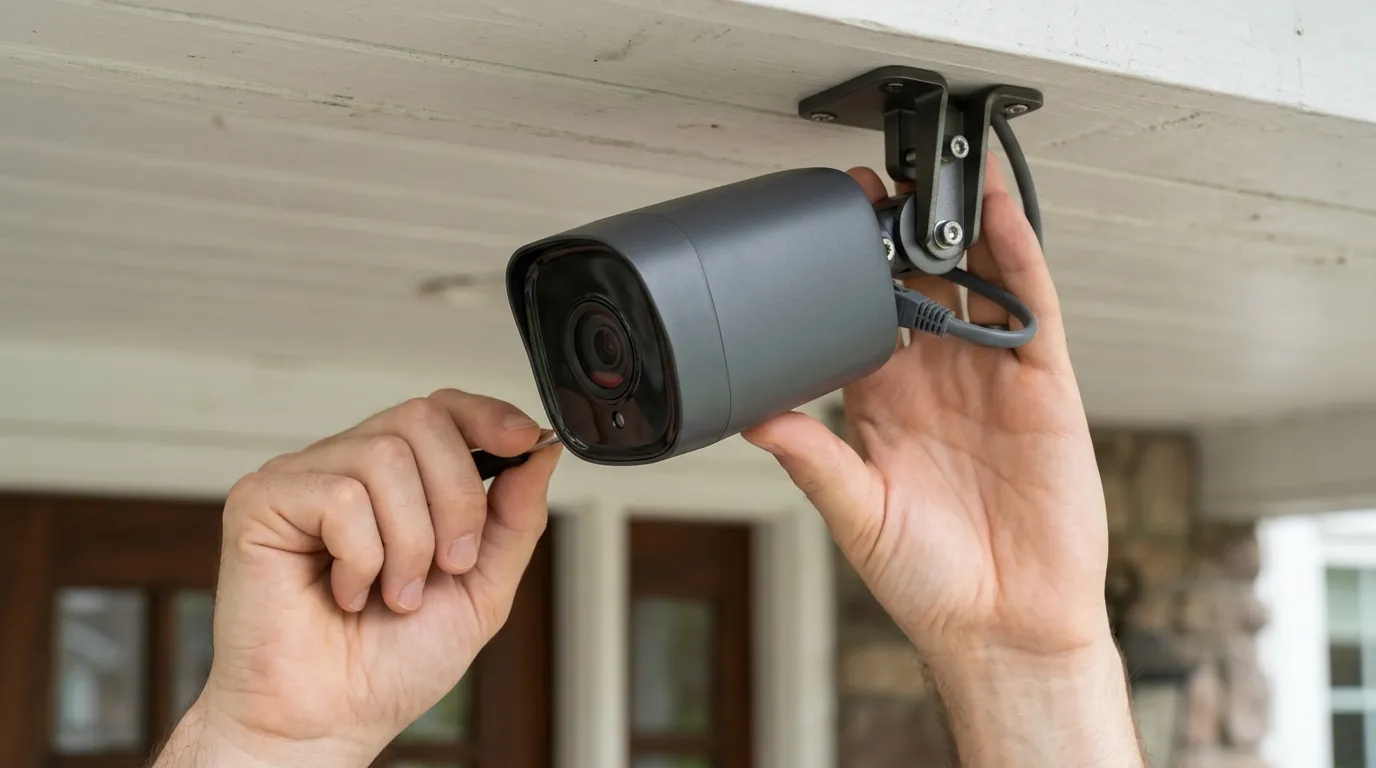
[IMAGE PLACEHOLDER: A Blink Outdoor 4 camera mounted on a residential porch with a smartphone in the foreground showing the ‘Camera Offline’ error message in the Blink app. Aspect Ratio: 16:9]
Why it exists
Blink cameras are designed for extreme power efficiency, which makes them uniquely sensitive to environmental and network changes. Understanding the “why” behind an offline status helps prevent recurring drops.
The 2.4GHz Frequency Conflict
Despite the prevalence of Wi-Fi 6E and 7 in 2026, Blink hardware continues to rely exclusively on the 2.4GHz band for its superior wall-penetrating capabilities. However, as smart home density has increased, the 2.4GHz band has become increasingly congested. If your router is set to “Auto” channel selection, it may jump to a frequency that is crowded by neighbor networks or microwave interference, causing the Blink camera to lose its “handshake” with the router during its wake-up cycle.
Battery Voltage Drop-Off
Blink cameras do not use standard alkaline batteries for a technical reason: voltage curves. An alkaline battery drops its voltage linearly as it drains. Once a battery hits roughly 1.3V, it may still have “capacity,” but it lacks the burst current necessary to power the camera’s Wi-Fi radio and PIR (Passive Infrared) sensor simultaneously. The camera will appear “Online” in standby but will crash and go “Offline” the moment it tries to record or start a Live View.
Firmware Update Interruptions
Amazon frequently pushes “silent” security patches to Blink devices. In June 2026, several users reported offline issues following a mandatory firmware update for the Sync Module XR. If the update process is interrupted by a flickered Wi-Fi connection, the camera may enter a “boot loop” where it attempts to reconnect but fails because the internal software handshake is incomplete.
How it works under the hood
To troubleshoot effectively, you must understand that a Blink camera is actually a dual-radio device. It does not just use Wi-Fi; it uses a proprietary low-frequency link to stay “alive.”
LFR vs. Wi-Fi: The Proprietary Link
Blink utilizes a 900MHz Low Frequency Radio (LFR) signal to communicate between the camera and the Sync Module. This is the “heartbeat.”
- The Wake-up: The Sync Module sends an LFR command to the camera to “wake up.”
- The Handshake: The camera wakes up and attempts to connect to your router via 2.4GHz Wi-Fi.
- The Data Transfer: Video is sent directly from the camera to your router and then to the Blink Cloud.
If the LFR signal is strong but the Wi-Fi is weak, the camera will “wake up” but fail to send video, resulting in a “Camera Offline” or “Thumbnail Failed” error.
Sync Module XR vs. Sync Module Core Hubs
The Sync Module XR (3rd Generation) introduced in late 2025/early 2026 features an amplified LFR antenna. While the older Sync Module 2 was rated for approximately 100 feet of range, the XR claims up to 400 feet in open air. However, this only applies to the command signal. The camera still needs a robust Wi-Fi connection to the router to actually function. This “asymmetric range” is a common source of confusion for users who place cameras 200 feet away; the camera “hears” the hub but cannot talk to the internet.
The Authentication Token Process
Every time a Blink camera connects, it must present a digital token to the Blink Cloud. If your Amazon account has a billing issue or if you have recently changed your password, the Sync Module may fail to refresh these tokens. This results in the system appearing “Online” in the app but failing every attempt to actually view or record footage.
Real-world implications
An offline camera is more than just a nuisance; it creates significant secondary issues that can damage the hardware or compromise security.
Missed Events and Security Risks
The most obvious risk is the loss of coverage. Unlike some competitors that offer local “failover” recording to an internal SD card, a Blink camera that is offline cannot bridge the gap. If the Wi-Fi is down, the motion is not captured. There is no internal buffer to store the clip and upload it later once the connection is restored.
Impact on Local Storage (USB/MicroSD)
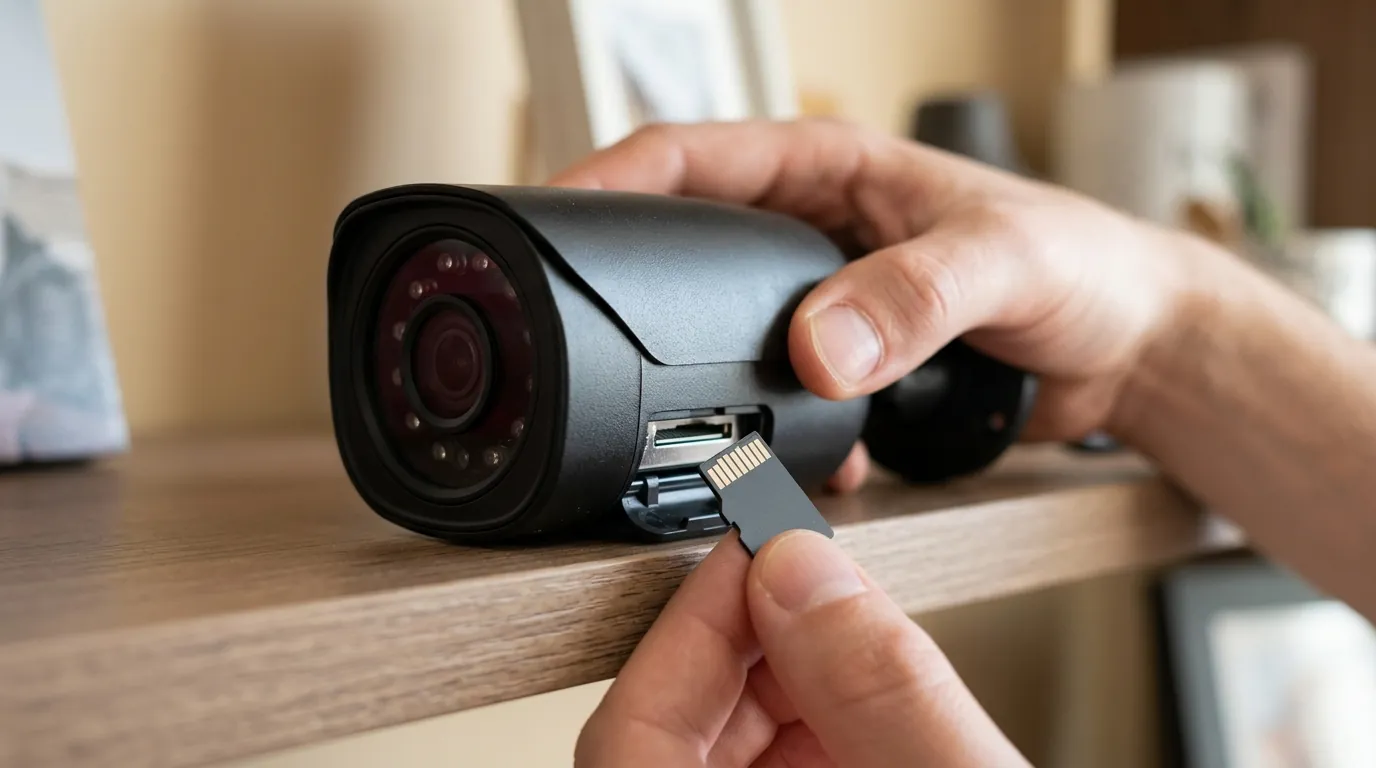
For users utilizing the Sync Module XR for local storage (to avoid subscription fees), an offline state is catastrophic. The Sync Module acts as the “gatekeeper” for the USB drive or MicroSD card. If the module is offline, the cameras have no destination for their video files. Furthermore, a slow or corrupted MicroSD card in the Sync Module can actually cause the system to go offline, as the module’s processor hangs while trying to write data to a faulty sector.
Accelerated Battery Depletion
When a Blink camera loses its connection, it doesn’t just sit idle. It enters a “Search” mode, aggressively scanning for both the LFR heartbeat and a Wi-Fi SSID. This process consumes significantly more power than standard standby mode.
| Mode | Estimated Battery Draw | Projected Lifespan |
|---|---|---|
| Connected Standby | ~0.5 mW | 24 Months |
| Active Recording | ~250 mW | (Based on usage) |
| Searching (Offline) | ~120 mW | 48 - 72 Hours |
If a camera remains offline for a weekend, it can drain a fresh pair of Lithium batteries to the point of failure.
Common misconceptions
Many “fixes” suggested in community forums are actually counterproductive for the 2026 Blink hardware ecosystem.
The Rechargeable Battery Myth
“I just charged them, so they should work.” This is the most common error. Standard NiMH rechargeable batteries (like Eneloop) have a nominal voltage of 1.2V. Even when “full,” they are already at the failure threshold for a Blink Outdoor 4 camera. The camera requires the 1.5V (and ideally 1.7V peak) provided by Energizer Ultimate Lithium AA batteries. Using rechargeables or alkalines will lead to “Offline” errors during high-drain events like night vision recording.
The ‘Reset Button’ Fallacy
Many users immediately reach for a paperclip to reset the camera. On Blink devices, a factory reset should be the last step. Resetting the camera deletes its encryption tokens. If the issue was actually a router glitch, resetting the camera forces you to go through the entire “Add Device” workflow again, which often fails if the underlying network issue hasn’t been resolved. Always power cycle the Sync Module (unplug for 30 seconds) before touching the camera.
Mesh Network Compatibility Issues
In 2026, most homes use Mesh Wi-Fi (e.g., Eero, Orbi). These systems often use “Band Steering” to push devices to the 5GHz frequency. Because Blink cameras only have 2.4GHz radios, they can sometimes become “confused” when the Mesh node tries to force a handoff. If your Blink system is frequently offline, the solution is often to create a dedicated 2.4GHz “Guest Network” specifically for your cameras.
TCO and Decision Framework
Total Cost of Ownership (3-Year Estimate)
Buying a Blink camera is a low-entry-cost decision, but the maintenance of a stable connection adds up.
- Hardware: Around $100 (Outdoor 4 Two-Pack).
- Batteries: $40–$60 (Replacing 1.5V Lithiums every 12-18 months across two cameras).
- Subscription: $30/year (Basic) or $100/year (Plus).
- Total 3-Year Cost: Approximately $230 - $460.
Decision Framework: Is Blink Right for Your Environment?
- If you are a Renter: Blink is ideal. The Sync Module XR allows for a “bridge” that doesn’t require drilling, and the 2.4GHz focus works well in smaller apartments.
- If you have a Large Property (1+ Acre): Prioritize the Sync Module XR. Its 900MHz LFR signal is one of the few consumer technologies that can reliably “wake up” a camera at the end of a long driveway.
- If you want “Set and Forget”: Avoid battery-powered Blink models. Consider the Blink Mini 2K+ (wired) or switch to a brand like Reolink that offers PoE (Power over Ethernet) to eliminate “Offline” issues caused by battery voltage drops.
Further reading

To maintain a stable 2026 smart home, optimizing your infrastructure is as important as the cameras themselves.
Local Storage Optimization
You can run a Blink system without a subscription by using a high-end MicroSD card (U3/V30 rated) in the Sync Module XR. This reduces the “Offline” timeouts caused by slow cloud upload speeds. However, you lose features like “Person Detection” and “Cloud Backup.”
Wi-Fi Channel Management
For the most stable connection, log into your router and set the 2.4GHz band to a fixed channel (1, 6, or 11). This prevents the router from hopping and dropping the camera’s connection during the night.
Alternative Hardware Options
If Blink’s battery requirements are too stringent, brands like Reolink offer cameras with built-in rechargeable lithium-ion packs and integrated solar panels. These maintain a more consistent voltage than AA cells, reducing “Offline” instances in cold climates.
Frequently Asked Questions
Why does my Blink camera say offline but the Sync Module is online?
This usually indicates a Wi-Fi signal issue between the camera and your router, or a battery voltage drop. The camera is receiving the “wake up” signal from the Sync Module via 900MHz radio, but it lacks the power or signal strength to connect to your Wi-Fi to send video.
Can I use a Wi-Fi extender to fix Blink offline issues?
Generally, no. Most Wi-Fi extenders create a new SSID or a “half-duplex” connection that increases latency. Blink cameras are sensitive to latency during the handshake process. A Mesh Wi-Fi system or a dedicated 2.4GHz access point is a much more reliable solution.
Does the Blink camera work if the Wi-Fi is down but the Sync Module is on?
No. While the Sync Module can still communicate with the camera via LFR, the camera requires an active Wi-Fi connection to upload footage to the cloud or save it to the Sync Module’s local storage.
How do I update the firmware on an offline Blink camera?
You cannot update an offline camera. You must first bring it back online by moving it closer to the router or replacing the batteries. Once it reconnects, the firmware update will trigger automatically within 24 hours if the camera is in an idle state.
Sources
- Blink Support: Battery Requirements
- Blink Support: Troubleshooting Offline Devices
- FCC ID Search (Blink Sync Module XR RF Specs) — https://apps.fcc.gov/oetcf/eas/reports/GenericSearch.cfm
- RTINGS: Blink Outdoor 4 Review & Connectivity Testing
- The Verge: Amazon’s Blink Ecosystem Update — https://www.theverge.com/search?q=blink+camera