
Best Smart Locks for Summer Travel 2026: Secure Your Home
Securing your home for an extended summer absence requires more than just a sturdy deadbolt; it requires the ability to manage access and verify security from thousands of miles away without the burden of monthly fees.
Quick Answer: For 2026 summer travel, the Aqara U400 and Schlage Encode Plus are top picks. They utilize Matter-over-Thread and the new Aliro standard for reliable, subscription-free remote access and digital key sharing while you are away.
What it means
Related: Best Wireless Security Cameras for Renters 2026: No-Drill & No-Sub · Fixing Reolink PoE Doorbell Motion Delay: 2026 Optimization Guide · Ring Doorbell Privacy Settings for Summer Guests: 2026 Guide
A “travel-ready” smart lock in 2026 is defined by three pillars: remote reliability, granular guest management, and extreme battery endurance. When you are away for weeks, you cannot afford a lock that “drops” from the Wi-Fi or requires a physical hub reset. True travel security means having a lock that remains reachable through a local mesh network and allows you to issue, modify, or revoke guest codes for pet sitters or emergency maintenance without needing to be on-site.
The Death of the Proprietary Hub
For years, smart locks required proprietary “bridges” or hubs plugged into a wall outlet to talk to the internet. These were notorious single points of failure; if the bridge crashed while you were in Europe, your lock became “dumb.” In 2026, the industry has largely transitioned to Matter 1.4, a universal communication standard. Matter-over-Thread locks, such as the Aqara U400 (the successor to the U300 series), connect directly to “Thread Border Routers” already in your home, such as an Apple TV, HomePod, or Amazon Echo. This eliminates the need for brand-specific hubs and creates a self-healing mesh network that is significantly more stable for long-term absences.
Aliro: The Universal Digital Key
The most significant shift in 2026 is the full implementation of Aliro. Developed by the Connectivity Standards Alliance (CSA), Aliro is a standardized protocol for digital keys. It allows a single digital key stored in your phone’s secure element (like Apple Wallet or Google Wallet) to work across different lock brands. For summer travel, this means you can send a standardized “Key” to a house sitter that works regardless of whether they use an iPhone or an Android device, removing the friction of forcing guests to download specific, often buggy, manufacturer apps.
| Feature | Matter 1.4 (Thread) | Legacy Wi-Fi | Aliro Protocol |
|---|---|---|---|
| Primary Connection | Thread Mesh | 2.4GHz Wi-Fi | NFC / UWB |
| Battery Life | 12–18 Months | 3–6 Months | N/A (Authentication Only) |
| Remote Access | Via Border Router | Direct to Router | N/A (Local Proximity) |
| Interoperability | High (Multi-platform) | Low (App-specific) | Universal (Cross-platform) |
| Subscription Req. | None | Sometimes | None |
Why it exists
Smart locks exist to solve “Vacation Anxiety”—the nagging doubt about whether the front door was actually locked or if the neighbor successfully let the cat out. In 2026, this technology has evolved from a luxury convenience to a critical component of the “Service Economy.”
As homeowners increasingly rely on third-party services—dog walkers, plant waterers, and grocery delivery—the physical key has become a security liability. A physical key can be copied or lost; a smart lock code can be set to expire at 5:00 PM on the day you return from your trip. According to research from Parks Associates, the ability to monitor entry logs in real-time is the primary driver for smart lock adoption among frequent travelers.
Security Camera Synergy
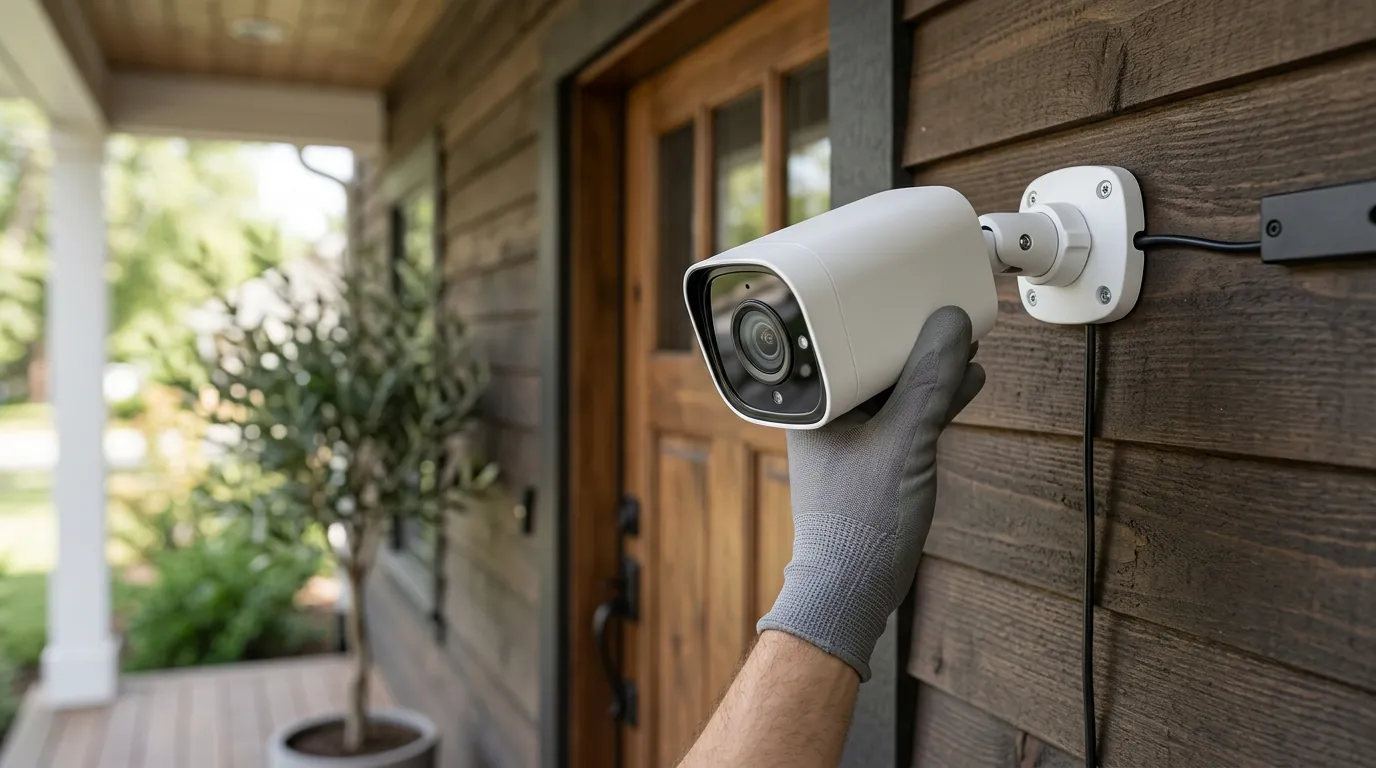
Smart locks do not operate in a vacuum. In a 2026 security ecosystem, the lock acts as the primary “trigger” for entry-way cameras.
The Security Chain Infographic (Description):
- Lock Event: A guest enters their unique code into the Schlage Encode Plus.
- Camera Wake-up: The lock sends a local signal via Matter to the porch camera.
- User Notification: You receive a notification on your phone: “House Sitter entered via Front Door.”
- Visual Verification: You can view the associated clip immediately to ensure only the authorized person entered.
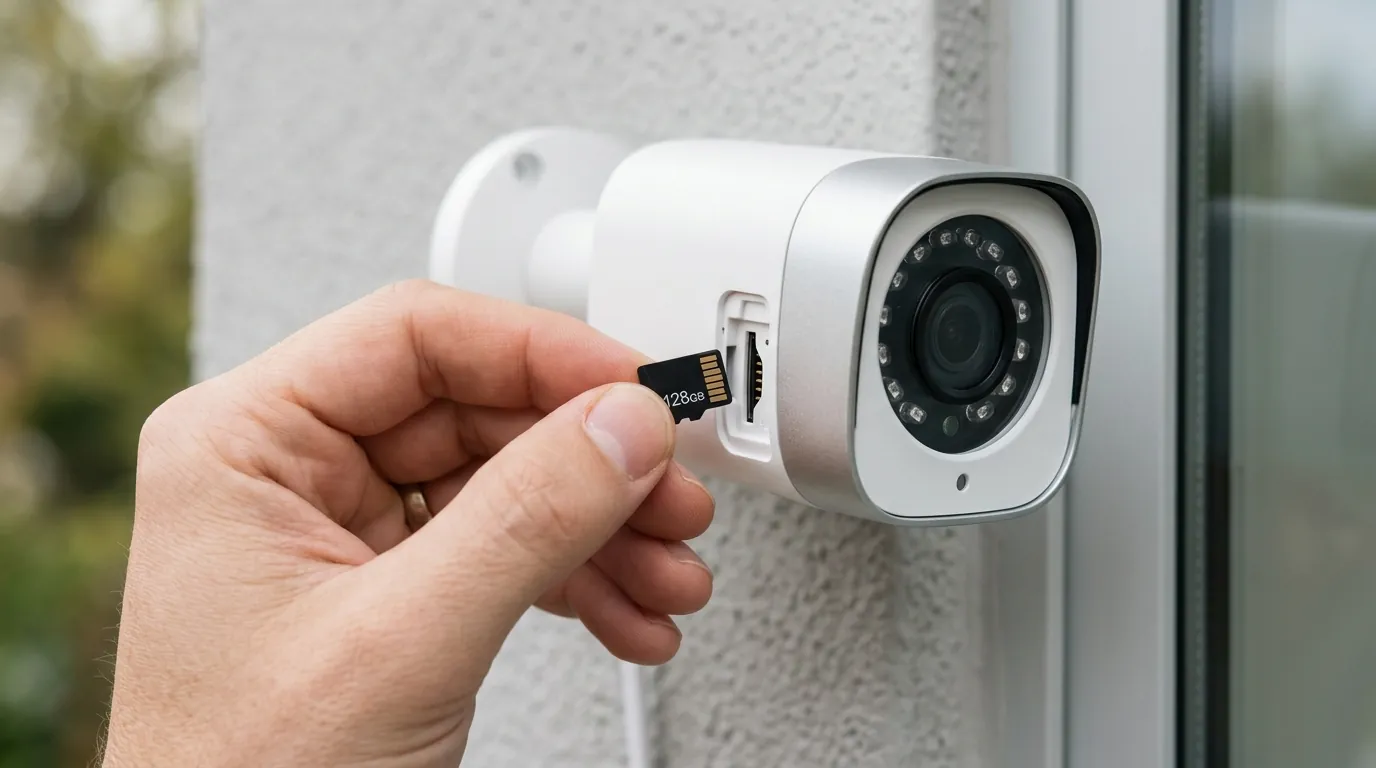
This synergy ensures that cameras aren’t just recording random motion (like a blowing leaf), but are capturing high-intent events, preserving both battery life and storage space on your local NVR or microSD card.
How it works under the hood
The reliability of a 2026 smart lock depends on its underlying networking and hardware physics. Understanding these ensures you don’t return home to a dead battery or a locked-out guest.
Thread Mesh Networking: The Battery Battle
Legacy Wi-Fi locks are notorious for “battery anxiety.” Because Wi-Fi is a power-hungry protocol, these locks often require 4 to 8 AA batteries every few months. In contrast, 2026 locks like the Level Lock Pro utilize Thread, a low-power mesh networking protocol.
Thread devices spend most of their time in a “sleep” state, waking up only when a command is sent or the lock is turned. This allows a lock to stay online and responsive for over a year on a single set of batteries. In 2026, Thread-based locks have become the standard for summer travel because they can reliably last through a three-month absence without the risk of the battery dying while you are away.
| Power Type | Estimated Battery Life (Daily Use) | Travel Standby Time |
|---|---|---|
| Wi-Fi (4x AA) | 3–5 Months | ~6 Months |
| Thread (1x CR2) | 10–12 Months | ~18 Months |
| Thread (4x AA) | 18–24 Months | ~36 Months |
UWB vs. NFC Unlocking
The physics of “hands-free” entry has split into two technologies: Near Field Communication (NFC) and Ultra-Wideband (UWB).
- NFC (Apple HomeKey): Requires you to tap your phone or watch against the lock. It is highly secure but requires physical proximity.
- UWB (Aqara U400): Found in higher-end 2026 models, UWB allows for “true” hands-free entry. The lock can detect your phone’s precise location within centimeters. As you approach the door with your hands full of luggage, the lock disengages automatically. According to technical deep dives from RTINGS, UWB is significantly more resistant to “relay attacks” than Bluetooth because it measures the “time of flight” of the signal.
Local Logic
Matter 1.4 allows for “Local Logic.” This means that if your internet service provider (ISP) goes down during your summer trip, your smart home automations—like “Turn on the hall light when the door unlocks”—will still function. The lock communicates directly with other devices over the local Thread mesh without needing to ping a cloud server.
Encryption Standards: AES-128 and Local Key Storage
Modern locks use AES-128 bit encryption to protect the communication between your phone and the deadbolt. Crucially, brands like Schlage and Yale have moved toward local key storage. Your fingerprints and guest codes are stored on the lock’s internal hardware, not on the manufacturer’s servers. This prevents a cloud data breach from exposing your home’s physical access codes.
Real-world implications
The transition to smart locks involves more than just hardware; it intersects with evolving privacy laws and emergency preparedness.
Privacy: Who Owns Your Entry Logs?
As of 2026, over 20 US states have enacted comprehensive privacy laws (such as the CCPA/CPRA in California and the My Health My Data Act in Washington) that strictly regulate “biometric identifiers,” including fingerprints used for smart locks.
When choosing a lock for travel, the “Local-First” philosophy is paramount. Brands like Aqara and Schlage emphasize that entry logs (who came in and when) are stored locally. This is a critical distinction from cloud-heavy brands like Ring or Nest, which may store this data on their servers.
- Police Cooperation: Local-access locks provide a buffer against “warrantless” data sharing. If the data is only on your device, law enforcement generally must come to you (the homeowner) rather than serving a secret subpoena to a corporation like Amazon or Google.
Privacy Policy Comparison (2026 Summary):
- Schlage: No monthly subscription required for history; data stored locally on the bridge/lock.
- Yale (Assure 2): Matter version supports local-only logs via HomeKit/Google Home.
- Aqara: Fingerprint data is encrypted and stored in the local secure element; no cloud upload of biometric templates.
The “Dead Battery” Scenario
The biggest fear for travelers is returning to a dead lock. 2026 models have standardized emergency overrides:
- Physical Key: Models like the Schlage Encode Plus ($250-300 range) retain a traditional keyway.
- USB-C Jumpstart: The Aqara U400 and many Yale models now feature a USB-C port on the bottom of the exterior assembly. If the batteries die, you can touch a portable power bank to the port to provide enough temporary power to enter your code.
- 9V Battery Terminals: Some older or “sleek” designs (like the Yale Assure 2) use two metal contacts for a 9V battery jumpstart.
What to do now: Upgrading for your next trip
If you are preparing for a summer trip, prioritize a lock that supports Matter-over-Thread. If you are an iPhone user, ensure the lock is Apple HomeKey compatible. For Android users, look for Aliro support to ensure your digital keys will be future-proof as Google and Samsung update their wallet apps throughout 2026.
Common misconceptions
Misconception: “Smart locks are easier to hack.”
Reality: Most home burglaries are “crimes of opportunity” involving smashed windows or “lock bumping” (using a specially cut key to force a cylinder). According to the ANSI/BHMA grading system, a smart lock’s physical strength is what matters most. A Grade 1 smart lock (the highest rating) is physically harder to break than a “dumb” Grade 3 lock from a big-box store. RF hacking is extremely rare in residential burglaries compared to physical force.
| ANSI/BHMA Grade | Security Level | Best Use Case |
|---|---|---|
| Grade 1 | Highest (Commercial) | Front doors, high-value homes |
| Grade 2 | Intermediate (Residential) | Standard residential use |
| Grade 3 | Basic (Residential) | Interior doors or low-risk areas |
Misconception: “I need a monthly fee for remote codes.”
Reality: In the past, companies like August or Nest sometimes gated certain remote features behind subscriptions. In 2026, Matter-compatible locks provide guest code management for free through your smart home hub (Apple Home, Home Assistant, etc.). You are paying for the hardware, not the right to use it.
Misconception: “If Wi-Fi goes out, I’m locked out.”
Reality: Smart locks use Wi-Fi or Thread only for remote commands and notifications. Local entry via keypad, fingerprint, or physical key works entirely offline. Furthermore, most locks use Bluetooth as a secondary “proximity” backup, allowing your phone to unlock the door even if your home’s entire network is down.
Total Cost of Ownership (TCO) Breakdown
When budgeting for a smart lock, the sticker price is only one part of the equation.
- Hardware: $200–$350 (one-time).
- Subscription: $0 (for Matter-compliant brands).
- Batteries: Wi-Fi locks may cost $20-30/year in high-quality lithium batteries. Thread locks typically cost $5/year.
- 3-Year TCO: A $300 Thread lock is often cheaper over three years than a $180 Wi-Fi lock due to battery savings and the lack of a required “Connect Bridge.”
Further Reading
- For advice on pairing your lock with a privacy-focused recording system, see our guide on local storage security cameras.
- Choosing a communication protocol? Read our deep dive on Matter vs Zigbee for home security.
- Setting up a secondary residence? Learn how to secure a vacation home with subscription-free tech.
Frequently Asked Questions
Can I use a smart lock on a vacation rental (Airbnb)? Yes, but you should prioritize locks with a physical keypad and Aliro support. This allows you to generate unique codes for each guest that automatically activate at check-in and expire at check-out, all without the guest needing to install an app.
What happens if the smart lock’s motor fails? Most high-quality smart locks (Grade 1 or 2) include a physical key override or a thumb-turn on the inside. If the motor fails while you are inside, you can always exit manually. If it fails while you are outside, a physical backup key is your best safeguard.
Are fingerprint scanners reliable in the summer humidity? Capacitive fingerprint scanners can struggle with extremely wet or sweaty hands. However, 2026 models like the Aqara U400 use advanced “active thermal” or optical sensors that are significantly more reliable in humid summer conditions than the sensors found in early smart locks.
Does a smart lock work with a screen door? Generally, no. Most smart locks are designed for standard 1-3/4 inch thick deadbolts. Screen doors are too thin for the internal motor housing. For screen doors, most users rely on a traditional key or a smart “retrofit” actuator if space permits.
Sources
- Connectivity Standards Alliance — Matter 1.4 Specifications
- Connectivity Standards Alliance — Aliro Digital Key Standard
- Aqara — Smart Lock U300/U400 Technical Specs
- Schlage — Encode Plus Smart WiFi Deadbolt
- RTINGS — Best Smart Locks of 2025-2026
- The Verge — Aliro: The New Standard for Digital Keys
- BHMA — Understanding Lock Grades