
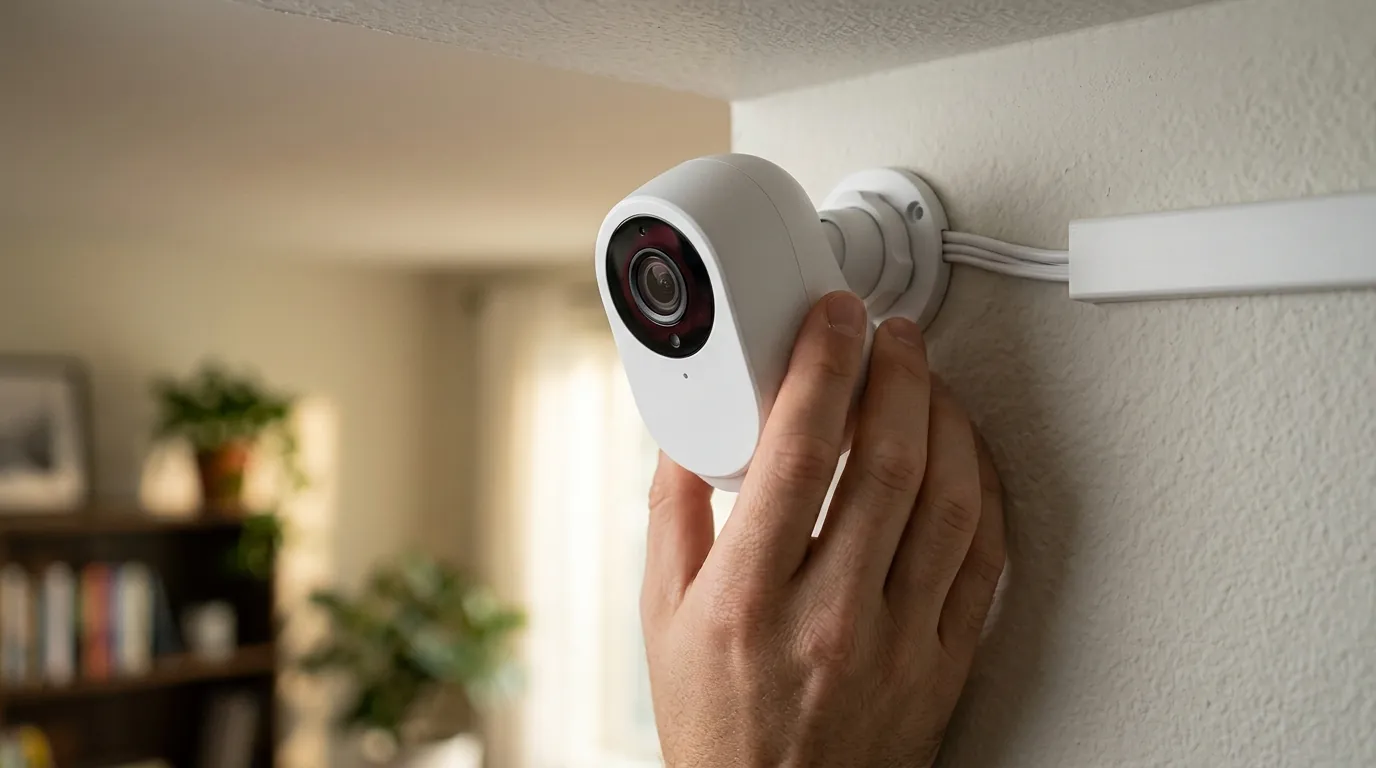
Are Security Cameras Worth It for Apartments? (2026 Renter's Guide)
For apartment dwellers in 2026, the value of a security camera has shifted from a luxury “smart home” add-on to a critical tool for documenting landlord disputes, package deliveries, and unauthorized maintenance entries.
Quick Answer: Yes. For package theft and liability, cameras are worth it if you choose no-drill, subscription-free models like the Eufy C210 or Reolink Argus 4 Pro to protect your deposit and privacy.
What it means
In the context of 2026 apartment living, “worth” is no longer measured solely by the prevention of rare home invasions. Instead, the return on investment (ROI) for a renter is found in accountability. While a homeowner might prioritize perimeter defense, a renter uses a camera to audit the “human traffic” inherent to managed properties—landlords, maintenance crews, and neighbors in shared hallways.
The shift toward tenant-owned hardware is driven by the limitations of landlord-provided systems. While building managers often install CCTV in lobbies or parking garages, these systems rarely offer tenants direct access or protection for the “last ten feet” of their doorway.
Comparison: Landlord CCTV vs. Tenant-Owned Cameras (2026)
| Feature | Landlord-Managed CCTV | Tenant-Owned Device |
|---|---|---|
| Control | Full control by management | Full control by tenant |
| Privacy | Management can view footage | End-to-end encryption (E2EE) |
| Access | Requires police/legal request | Instant mobile alerts |
| Coverage | Public areas only | Personal entry/Interior |
| Data Ownership | Property of the building | Stored on local microSD/Hub |
The ROI of Renter Security
The financial “worth” of a camera often pays for itself in a single event. With the average security deposit now exceeding one month’s rent in most US urban centers, having timestamped 4K video proof that a maintenance worker caused floor damage—rather than the tenant—can save thousands of dollars during the move-out inspection.
Personal Safety vs. Property Protection
For those living alone, the value is psychological. Modern cameras act as a digital peephole. In 2026, features like “Pre-Roll” (which captures the seconds before motion is detected) allow renters to see exactly who is knocking before opening the door, a feature now standard in battery-powered units like the Ring Battery Doorbell Pro.
Why it exists
Apartments present a unique security profile. Statistically, multi-family dwellings are approximately 85% more likely to experience property crimes than single-family homes, largely due to high foot traffic, shared entry points, and the anonymity provided by dense populations.
The High-Density Risk Factor
In a single-family home, a person walking up the driveway is an anomaly. In an apartment building, dozens of people pass your door daily. This “noise” creates a cover for “porch piracy.” In 2026, package theft remains the most frequent crime reported by urban renters, with the FBI’s 2025 Uniform Crime Reporting (UCR) data suggesting that nearly 1 in 4 apartment dwellers will lose a package to theft annually.
The Evolution of Renter-Friendly Hardware
Historically, security cameras required drilling into studs and running coaxial or Ethernet cables—actions that would violate almost any standard lease. The “Renter’s Dilemma” was the choice between security and keeping a security deposit.
The industry responded with “no-drill” hardware. By 2026, high-bond adhesives (like high-strength adhesive strips) and over-the-door tension mounts have become the standard. According to Reolink’s 2026 product documentation, over 40% of their consumer-grade battery cameras are now sold with non-destructive mounting kits as standard accessories.
How it works under the hood
The technical landscape of 2026 has solved the two biggest hurdles for apartment cameras: signal congestion and interoperability.
Beating Wi-Fi Congestion
In a building with 50 units, the 2.4GHz and 5GHz Wi-Fi bands are often saturated, leading to dropped frames and delayed alerts. Modern renter-focused cameras like the Tapo C120 utilize Wi-Fi 6 and 6E. By tapping into the 6GHz band, these devices bypass the “traffic jam” of older routers, ensuring that a person-detection alert reaches your phone in under two seconds.
The Matter Standard in 2026
With the maturation of Matter 1.4 and 1.5, cameras are no longer silos. A renter can now buy an Aqara G3-series camera and have it natively trigger a Philips Hue light or a Yale smart lock without needing a proprietary bridge. This allows a “security scene” where your indoor lights turn on the moment the camera detects a “non-resident” face at the door.
Local Storage vs. Subscription Clouds
To avoid the “digital tax” of monthly fees, 2026 hardware heavily favors Edge AI and local storage.
- Edge AI: On-device chips (like Eufy’s BionicMind) process the video locally. Instead of sending raw footage to the cloud to check if a “person” is present, the camera does the math itself.
- Local Hubs: Devices like the Eufy HomeBase 3 or the Reolink Home Hub allow renters to store months of 4K footage on a hard drive hidden in a closet, requiring $0 in monthly fees.
Spec Table: Top 2026 Renter Cameras
| Model | Resolution | Storage Type | Matter Support | Power Type |
|---|---|---|---|---|
| Eufy C210 | 2K | Local (microSD) | No | Battery |
| Reolink Argus 4 Pro | 4K (Dual-Lens) | Local + Hub | Yes (Matter 1.4) | Battery/Solar |
| Tapo C120 | 2K QHD | Local + Cloud | Yes | Wired (USB-C) |
| Aqara G350 | 4K | Local + Hub | Yes (Matter 1.5) | Wired (USB-C) |
Real-world implications
Owning a camera in an apartment involves navigating a complex web of lease agreements and privacy laws.
Navigating Your Lease and the Law
The most common legal question for renters is: Can I record the hallway? In most US jurisdictions, there is no “reasonable expectation of privacy” in a shared apartment hallway. However, audio recording is more strictly regulated. In “all-party consent” states (like California or Illinois), recording audio of a neighbor’s conversation in the hallway could technically be a violation of wiretapping laws. Most 2026 cameras allow you to disable audio recording while keeping video active to stay compliant.
Checklist: Legal Compliance for Apartment Cameras
- Review Lease: Does it explicitly ban “exterior modifications”? (If so, use a no-drill mount).
- Angle the Lens: Ensure the camera is pointed at your door, not directly into a neighbor’s living room when their door opens.
- Privacy Zones: Use the app to “black out” neighbor windows or doors in the software.
- Audio Laws: Determine if your state requires consent for audio recording.
Insurance Discounts and Claims
While a camera might not stop a thief, it significantly eases the insurance claim process. Renters’ insurance providers like Lemonade or State Farm often offer a 2% to 5% discount for “theft protection” devices. More importantly, according to The Verge’s 2025 report on digital evidence, claims backed by high-definition video are processed 30% faster on average because they eliminate the “he-said, she-said” regarding the point of entry.
Non-Destructive Installation Methods
For 2026, the three primary “no-drill” methods are:
- Over-the-Door Brackets: Specifically for doorbells. These steel frames wrap around the door edge and are secured from the inside.
- Magnetic Bases: Many cameras (like the Arlo Essential series) now feature industrial-strength magnets that can snap onto metal door frames or refrigerators.
- Window Mounts: Devices like the Panasonic HomeHawk use suction or specialized adhesives to look through glass from the inside, avoiding the need to mount anything outside at all.
Common misconceptions
The apartment security market is rife with outdated information that often deters renters from protecting themselves.
The “Drilling” Myth
Many renters believe they cannot have a video doorbell because they cannot drill into the door frame. This is false. In 2026, third-party brands like Doorbell Boa and manufacturer-official no-drill mounts (like the Ring No-Drill Mount) use high-strength adhesive that can be removed with a hairdryer and dental floss, leaving zero residue and protecting the security deposit.
The Subscription Trap
A common fear is that a $100 camera actually costs $400 over three years due to subscriptions. While brands like Ring and Arlo heavily push monthly plans, 2026 has seen a massive surge in “Local-First” brands. Reolink and Tapo currently offer person, pet, and vehicle detection for free, processed entirely on the camera’s hardware.
Privacy Fears vs. Reality
“Can my landlord hack my camera?” is a valid concern. However, in 2026, End-to-End Encryption (E2EE) is a standard feature for brands like Apple HomeKit Secure Video and Eufy. When E2EE is enabled, the “keys” to the video are stored only on your physical smartphone. Even if the landlord (or the camera manufacturer itself) were subpoenaed, they would only see scrambled data.
Decision Framework: Which Camera Should You Buy?
- If you are a Studio Renter: Prioritize an indoor “hub” camera like the Aqara G3. It covers the only entry point and acts as a smart home controller.
- If you have a Shared Hallway: Prioritize a video doorbell with an over-the-door mount.
- If you are on the Ground Floor: Prioritize an outdoor battery camera with a built-in siren and spotlight to deter window entries.
- If you have No Wi-Fi: Look for “LTE” or “4G” cameras (like the Reolink Go series) that use a cellular SIM card.
Total Cost of Ownership (TCO) Breakdown (3-Year Estimate)
| Expense Type | Subscription-Heavy (e.g., Ring/Arlo) | Local-First (e.g., Eufy/Reolink) |
|---|---|---|
| Hardware | ~$80 - $150 | ~$100 - $180 |
| Subscription Fees | ~$120/year ($360 total) | $0 |
| Storage (microSD) | $0 (Cloud only) | ~$20 (One-time) |
| Total 3-Year Cost | $440 - $510 | $120 - $200 |
Further reading
For those ready to secure their apartment, understanding the nuances of storage and law is the next step.
Renter-Friendly Installation Guides
Before buying, check the FCC ID database for the specific model you are considering to verify its Wi-Fi 6E capabilities, which is crucial for high-density apartment buildings. Manufacturers like Eufy provide PDF guides specifically for no-drill mounting that you can share with your landlord to get pre-approval.
Deep Dive: Camera Privacy and Encryption
To understand how your data is handled, review the 2026 Transparency Reports from major brands, which detail how often they comply with law enforcement requests. Choosing a brand with a “Local Storage First” policy is the most effective way to ensure your private life remains private.
Quvii tracks these trade-offs across the category to help renters find the balance between security and lease compliance.
Sources
- Federal Bureau of Investigation (FBI) — Crime Data Explorer 2025/2026
- Eufy Security — BionicMind AI and Local Storage Specs
- Reolink — Argus 4 Pro Official Product Page
- TP-Link Tapo — C120 Product Specifications
- The Verge — The State of Smart Home Encryption 2025
- FCC ID Search — Equipment Authorization Database
- Matter Standard — Connectivity Standards Alliance (CSA) Matter 1.4/1.5 Updates