
Smart Home Security Privacy Trends 2026: Local AI & Trust Marks
The era of sending every pixel of your private life to a third-party server just to receive a “person detected” alert is coming to an end. In 2026, the smart home security market has reached a tipping point where local processing and government-verified security labels are no longer premium “prosumer” features but baseline expectations for the average buyer.
In 2026, privacy-first security is defined by the US Cyber Trust Mark and “Local-First” AI. Brands like Eufy (EdgeAgent) and Reolink now offer on-device processing that eliminates cloud-based video analysis and subscription fees.
What happened
The landscape of home surveillance underwent a fundamental shift in the first half of 2026. For nearly a decade, the industry relied on a “Cloud-First” model where cameras acted as relatively “dumb” sensors, streaming raw footage to remote servers for AI analysis. This created a dependency on monthly subscriptions and introduced significant privacy vulnerabilities.
As of 2026, three major catalysts have dismantled this model: the federal standardization of cybersecurity labeling, the maturation of local interoperability protocols, and a breakthrough in on-device AI efficiency.
The Rise of the US Cyber Trust Mark
The FCC’s US Cyber Trust Mark has moved from a voluntary pilot program to a retail necessity. Major outlets like Amazon and Best Buy now prioritize products bearing the “Shield” logo. This QR-code-enabled label allows consumers to scan packaging to see a device’s data-sharing practices, the guaranteed length of security update support, and whether the manufacturer has undergone third-party NIST (National Institute of Standards and Technology) audits. This transparency has forced budget brands to either harden their security or exit the US market.
Matter 1.4: Local Interoperability Becomes Reality
The release and mass adoption of the Matter 1.4 and 1.5 protocols by the Connectivity Standards Alliance (CSA) has finally solved the “walled garden” problem. Previously, using a Nest camera required the Google Home cloud; using a Ring camera required Amazon’s servers. Matter 1.4 allows cameras to communicate directly with local smart hubs (like Apple HomePod, Home Assistant, or dedicated NVRs) over the local network. This means video streams can be viewed and recorded without ever “pinging” the manufacturer’s cloud, even across different brands.
Eufy EdgeAgent and the Local AI Revolution
In May 2026, Eufy launched “EdgeAgent,” a local-first AI platform that leverages a new generation of Large Model AI chipsets. Unlike previous iterations of local AI that struggled with false positives from shadows or pets, EdgeAgent performs complex facial recognition and behavioral analysis entirely on-device. This move by a major consumer brand has effectively ended the “AI Tax”—the practice of locking advanced detection features behind a cloud subscription.
| Feature | Cloud-Only AI (Legacy) | Local-First AI (2026 Standard) |
|---|---|---|
| Motion-to-Notification Latency | 1,500ms – 3,000ms | < 100ms |
| Data Egress (Upload) | Constant (High Bandwidth) | Minimal (Metadata Only) |
| Monthly Subscription | Required ($5–$15/mo) | Optional ($0/mo) |
| Internet Outage Functionality | Disabled | Fully Functional |
| Privacy Risk | Third-party Server Breach | Local Device Only |
Privacy Regulation and Warrantless Access
The “Warrantless Access” debate intensified following high-profile 2026 legal cases where residual data was recovered from cloud servers even after users had disconnected their cameras. These incidents, combined with the expansion of state-level privacy protections to 22 states—including new enforcement in Indiana, Kentucky, and Rhode Island—have mandated stricter data deletion rights. Under these laws, manufacturers must provide a “Clear All” function that wipes both local and cloud instances of data within 24 hours of a request, pushing more users toward NVR-based (Network Video Recorder) local storage where they maintain physical custody of their data.
Why it matters for buyers
For the person shopping for a camera today, these trends translate into three tangible benefits: lower long-term costs, faster performance, and increased legal protection.
Eliminating the “AI Tax”
The most immediate impact is the death of subscription fatigue. Historically, brands like Arlo and Nest charged monthly fees not just for storage, but for the “intelligence” to tell a person from a swaying tree branch. In 2026, the NPU (Neural Processing Unit) inside a mid-range camera in the $150-200 range is powerful enough to handle these tasks locally. Buyers are no longer forced into a “feature paywall” where the hardware they bought becomes less capable the moment they stop paying a monthly fee.
The End of Notification Lag
Cloud-based cameras suffer from a “round-trip” delay: the camera detects motion, uploads the clip to the cloud, the cloud analyzes it, and then sends a notification to your phone. This process often takes 2 to 5 seconds—by which time a porch pirate may already be gone. Local-First AI, as seen in the latest Reolink and Eufy models, reduces this delay to under 100ms. Notifications become instantaneous because the “brain” is inside the camera or the local hub, not a data center 500 miles away.
Protecting Your Civil Liberties
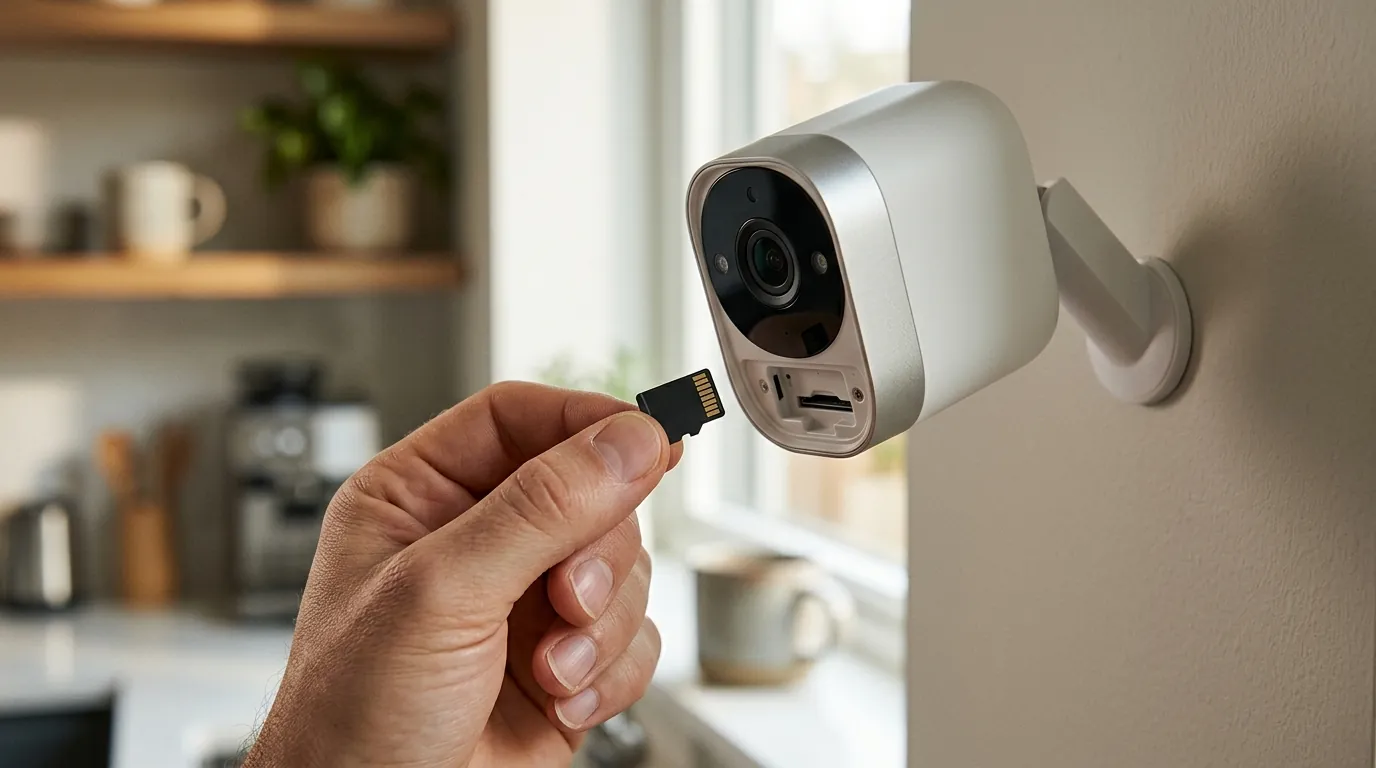
Data sovereignty has become a major selling point. When video is stored in the cloud, manufacturers are often served with “emergency requests” from law enforcement, which may bypass the standard warrant process. By moving to a “Zero-Cloud” footprint—using local SD cards or a Power-over-Ethernet (PoE) NVR—homeowners ensure that they are the only ones with the “keys” to their footage. If the police want to see your video, they must come to your door with a warrant, rather than going to Amazon or Google’s legal department.
Future-Proofing via Matter
Matter-compatible cameras ensure that your investment is protected. If a manufacturer goes out of business or decides to change its terms of service, the hardware remains functional. You can simply point the camera’s stream to a different Matter-compliant hub or software (like Scrypted or Blue Iris).
3-Year Total Cost of Ownership (TCO) Comparison
| Cost Component | Ring/Nest (Cloud-Dependent) | Reolink/Eufy (Local-First) |
|---|---|---|
| Hardware (2 Cameras) | Around $200 | $250 - $300 |
| Subscription (36 Months) | $360 ($10/mo plan) | $0 |
| Additional Storage (SD/NVR) | $0 | Around $50 - $150 |
| 3-Year Total | Around $560 | $300 - $450 |
While the initial hardware cost for local-first systems is often slightly higher due to the need for better internal processors and storage media, the TCO is significantly lower over time.
Impact on existing owners
If you already own a security system, the 2026 shifts may leave you at a crossroads between upgrading and “bridging” your existing tech.
Hardware Obsolescence in the AI Era
There is a growing “Legacy Hardware Gap.” Cameras manufactured between 2020 and 2023 often lack the NPU required for 2026-standard local AI. These devices are effectively “stuck” in the cloud-dependent ecosystem. While they will continue to work, they will not benefit from the speed and privacy of EdgeAgent or Matter 1.4 without a hardware replacement.
The “Great Reset” of Security Settings
Most major brands have transitioned to mandatory Two-Factor Authentication (2FA) and End-to-End Encryption (E2EE) as the default setting. In many cases, manufacturers are pushing firmware updates that require a full device reset to activate these hardened security protocols. If you haven’t updated your camera’s firmware in the last six months, you may find your remote access restricted until you comply with these new NIST-aligned security standards.
Upgrading Your Local Storage
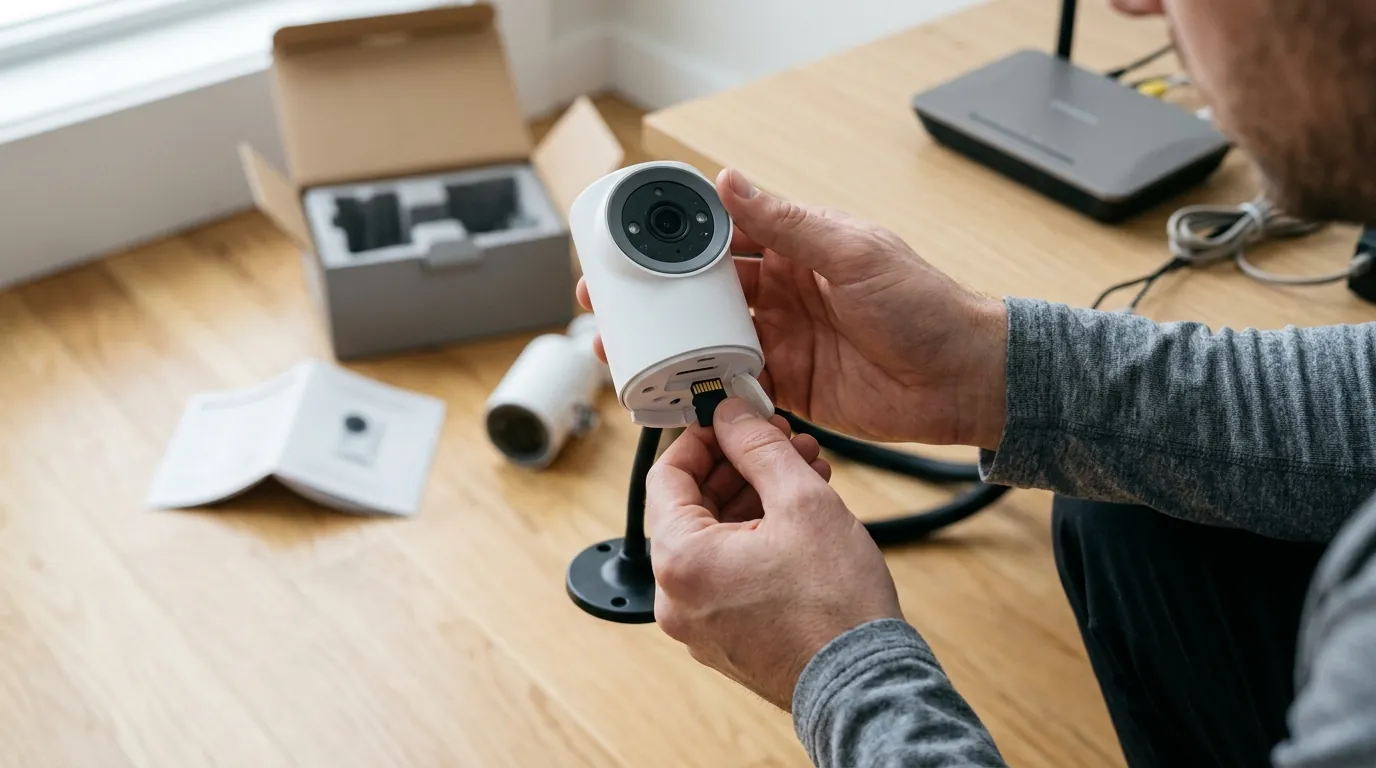
As cameras move toward 4K and even 8K resolutions to improve facial recognition accuracy, the demands on local storage have surged. Owners are moving away from generic “Class 10” SD cards toward high-end cards with V30 or V60 ratings. These cards are designed for the high-bitrate, constant writing cycles required by modern local-first cameras.
Matter 1.4 Compatibility Checklist:
- Does the camera have a Thread radio? (Required for low-power battery cameras).
- Is there a “Matter Code” QR on the back? (Usually located near the serial number).
- Does your hub support Matter 1.4? (Apple TV 4K, HomePod Gen 2, and latest Echo Hubs).
- Is the firmware updated? (Many 2024/2025 models from brands like TP-Link Tapo are receiving “Matter Bridge” updates).
What to do now
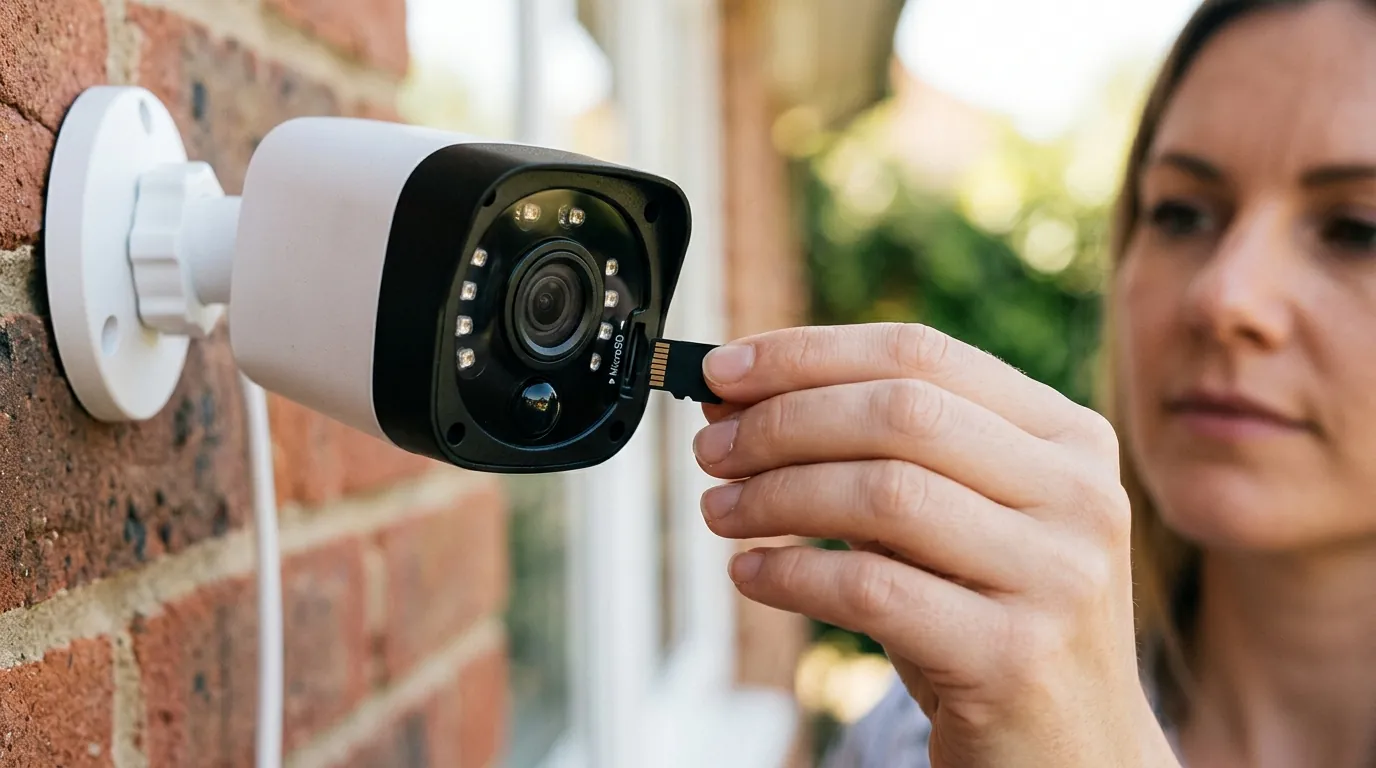
Navigating the 2026 privacy landscape requires a proactive approach to hardware selection and settings management.
The 2026 Privacy Audit
Your first step should be an audit of “Emergency Access” settings. Check your provider’s app (Ring, Arlo, or Nest) to see if you are opted into programs that allow them to share video with authorities without a warrant during “emergencies.” Most of these are now opt-out by law in the 22 states with privacy acts, but you must manually toggle them off in others.
Shopping for “Shield-Certified” Hardware
When shopping for new hardware, prioritize the US Cyber Trust Mark. This logo is your guarantee that the device does not have hard-coded “backdoor” passwords and that the manufacturer has committed to a specific timeline for security patches. You can scan the QR code on the “Shield” label to see a transparency report that lists exactly what data the camera collects and where it is stored.
Building a Zero-Cloud Home Network
For the highest level of privacy, transition from standalone Wi-Fi cameras to a Power-over-Ethernet (PoE) NVR system from brands like Reolink or Ubiquiti UniFi. These systems keep all data on a physical hard drive inside your home. In 2026, these systems have become as “plug-and-play” as Wi-Fi cameras, often requiring only a single cable for both power and data.
Enable Physical Privacy
Finally, look for hardware that offers physical privacy. Many 2026 indoor camera models now include motorized physical shutters that block the lens when you are home (based on your phone’s GPS). This provides a visual confirmation of privacy that software-based “privacy zones” cannot match.
Decision Framework: Which System is Right for You?
- If you are a Renter: Prioritize Matter-compatible Wi-Fi cameras (like the TP-Link Tapo series) with the US Cyber Trust Mark. They are easy to move and can work with any local hub.
- If you are a Homeowner: Invest in a PoE NVR system. This provides the highest resolution (4K/8K) and the most robust “Zero-Cloud” privacy.
- If you have No/Spotty Wi-Fi: Look for “Edge-Heavy” cameras with dual SD card slots and built-in AI (like the Eufy 4G LTE series) that can process everything on-site without a constant internet connection.
- If you are a Small Business: Prioritize systems that offer local AI behavioral analytics (loitering detection, heat mapping) to avoid the massive monthly fees associated with commercial cloud-AI plans.
The shift toward local AI and transparent security marks represents a win for the consumer. While the “mandatory cloud” isn’t entirely dead, it has been relegated to an optional service for those who prioritize convenience over privacy. For the rest of us, the home security of 2026 is faster, cheaper, and more private than ever before.
Sources
- FCC US Cyber Trust Mark Program — https://www.fcc.gov/cybersecurity-label-smart-devices
- Connectivity Standards Alliance (Matter 1.4 Specs) — https://csa-iot.org/all-solutions/matter/
- Eufy Security EdgeAI Technology
- Reolink Local Storage & NVR Guide — https://reolink.com/blog/security-camera-with-nvr/
- IAPP State Privacy Law Tracker — https://iapp.org/resources/article/us-state-privacy-legislation-tracker/
- NIST IoT Cybersecurity Criteria — https://www.nist.gov/itl/applied-cybersecurity/nist-cybersecurity-iot-program
- RTINGS Security Camera Testing Methodology