
Ring Home Assistant Integration Broken: What to Know (July 2026)
The reliance on cloud-dependent smart home ecosystems has reached a critical juncture for thousands of users this month.
Quick Answer: As of July 2026, the Ring integration for Home Assistant is experiencing significant issues, specifically a regression in Home Assistant Core 2026.6.3 where the integration fails with an ‘ImportError: cannot import name ‘connect’ from websockets.asyncio.client’. This prevents users from accessing Ring camera feeds and device controls within Home Assistant.
What happened
Related: Tapo C425 Battery Drain: What the June Update Means for Your Camera · Reolink PoE Camera Firmware: June 2026 Update Status & Common Issues · Reolink Doorbell Two-Way Talk Not Working: Causes & Fixes
The disruption of the Ring integration within the Home Assistant ecosystem is not merely a minor bug; it is a fundamental break in the communication bridge between Amazon’s cloud servers and local smart home controllers. For users who have spent years perfecting their automated environments, the “unavailable” status on their dashboards represents a significant loss of utility.
Technical Details of the Disruption
The root cause of the July 2026 failure is a technical regression introduced in Home Assistant Core version 2026.6.3. Specifically, the integration fails to initialize due to a Python-level error: ImportError: cannot import name 'connect' from websockets.asyncio.client.
This error stems from a mismatch between the Home Assistant Core’s updated websockets library and the underlying python-ring-doorbell library that the integration relies upon to handle API calls to Ring’s servers. In the 2026.6.x release cycle, Home Assistant upgraded its asynchronous networking components to improve performance, but this change inadvertently deprecated or moved the connection methods used by the aging Ring integration code. Because the Ring integration is essentially a “cloud-poller”—meaning it must constantly ask Ring’s servers for updates—any break in the networking handshake renders the entire integration inert.
Timeline of Recent Ring Integration Issues
While the current ImportError is the most severe disruption in recent memory, it follows a pattern of declining stability for the Ring-Home Assistant relationship throughout 2026:
- January 2026: Community developers noted that the official integration was becoming “effectively abandoned” regarding critical fixes for snapshot updates.
- April 2026: Users running Home Assistant 2026.4.1 reported that live snapshots stopped updating entirely, leaving dashboards with stale images from hours or days prior.
- June 2026: The release of Core 2026.6.3 introduced the
websocketsregression, leading to the current total failure where the integration fails to even load.
This timeline illustrates the precarious nature of “unofficial” integrations that rely on reverse-engineered APIs. Because Ring does not provide a public, documented API for third-party local controllers like Home Assistant, developers must constantly play a game of “cat and mouse” with Ring’s server-side changes and Home Assistant’s core architectural updates.
Why it matters for buyers
For those currently shopping for a security camera system, the July 2026 Ring outage serves as a cautionary tale. It highlights the “fragility of the cloud”—a scenario where a device you own can lose its most valuable features overnight due to a software update you may not have even initiated.
The Appeal of Local Control and Automations
Home Assistant users typically prioritize local control because it offers speed and reliability. When a camera supports local protocols, a motion event can trigger a porch light in milliseconds. With the Ring integration broken, that signal must now travel from the camera to Amazon’s cloud, wait for the Ring app to process it, and then… stop. Without the Home Assistant bridge, that motion event can no longer talk to your Zigbee or Z-Wave lights, your smart blinds, or your local NVR (Network Video Recorder).
Avoiding Vendor Lock-in and Cloud Reliance
Ring’s business model is built on a “walled garden” approach. By design, Ring cameras do not support ONVIF (Open Network Video Interface Forum) or RTSP (Real Time Streaming Protocol), which are the industry standards for vendor-neutral video streaming.
When you buy a Ring camera, you are not just buying hardware; you are entering a long-term service agreement with Amazon. If that service—or the community-maintained bridge to that service—fails, your hardware becomes a “dumb” device that only works within the official Ring app. This is the definition of vendor lock-in.
Subscription-Free Security Benefits and Privacy Concerns
Beyond the technical breakage, the shift toward local-first cameras is driven by privacy. Ring’s privacy policies have historically been a point of contention. While Ring updated its policies in early 2024 to stop allowing law enforcement to request footage directly through the Neighbors app, the company maintains the right to share video without a warrant in “emergency” cases involving imminent danger (Ring Privacy Policy).
For many Home Assistant users, the goal is to keep video data off the cloud entirely. Integration failures like the one in July 2026 often act as the final push for users to migrate to brands that offer local storage and private AI processing.
| Feature | Ring (Video Doorbell Pro 2) | Reolink (Video Doorbell WiFi) | Amcrest (AD410) | Eufy (Video Doorbell E340) |
|---|---|---|---|---|
| Resolution | 1536p HD+ | 2K+ (5MP) | 2K (4MP) | 2K (Dual Cam) |
| Local API | None (Cloud Only) | RTSP, ONVIF, API | RTSP, ONVIF | Limited (RTSP on some) |
| Home Assistant | Broken (July 2026) | Highly Stable (Local) | Highly Stable (Local) | Moderate (Cloud/Local mix) |
| Storage | Cloud Subscription | MicroSD / NVR | MicroSD / NVR / NAS | Local Base Station |
| 3-Year TCO | High (Sub required) | Low (No sub) | Low (No sub) | Low (No sub) |
Impact on existing owners
The current breakage is more than an inconvenience; for many, it is a degradation of their home security posture.
Lost Automations and Security Features
If you have built a “smart home” around Ring, your ecosystem is likely paralyzed. Common automations that are currently broken include:
- Visual Alerts: Flashing interior lights or changing LED strip colors when a doorbell is pressed.
- Security Sync: Automatically arming the Ring Alarm when Home Assistant detects everyone has left the house via phone tracking.
- Media Casting: Automatically showing the front door camera feed on an Android TV or smart display when motion is detected.
Without these, the “smart” doorbell reverts to being a standard doorbell that merely sends a notification to your phone—often with a 2-to-5 second delay that local integrations typically avoid.
Forced Reliance on the Official Ring App
Owners are now forced back into the Ring app for basic functionality. This creates a fragmented user experience. Instead of a single “Security Dashboard” in Home Assistant that shows the status of locks, lights, and cameras, users must now jump between apps. Furthermore, the Ring app is increasingly cluttered with “Neighbors” social feeds and subscription upsells, which many power users find intrusive compared to the clean, ad-free interface of a custom Home Assistant dashboard.
The Hidden Costs of Integration Failures
There is a “time tax” associated with these failures. Home Assistant users often spend hours troubleshooting, reading GitHub issue logs, and attempting to roll back versions. When an integration breaks, the Total Cost of Ownership (TCO) of the camera increases—not in dollars, but in the labor required to maintain basic functionality.
3-Year Total Cost of Ownership (TCO) Breakdown (Estimated 2026):
- Ring Camera: Hardware (around $150) + Ring Protect Basic ($50/year x 3) = $300.
- Local Alternative (e.g., Reolink): Hardware (around $100) + High-End SD Card ($25) + $0 Subscription = $125.
- The “Frustration Factor”: Ring owners in July 2026 are paying more for a system that is currently less functional within their preferred smart home platform.
What to do now
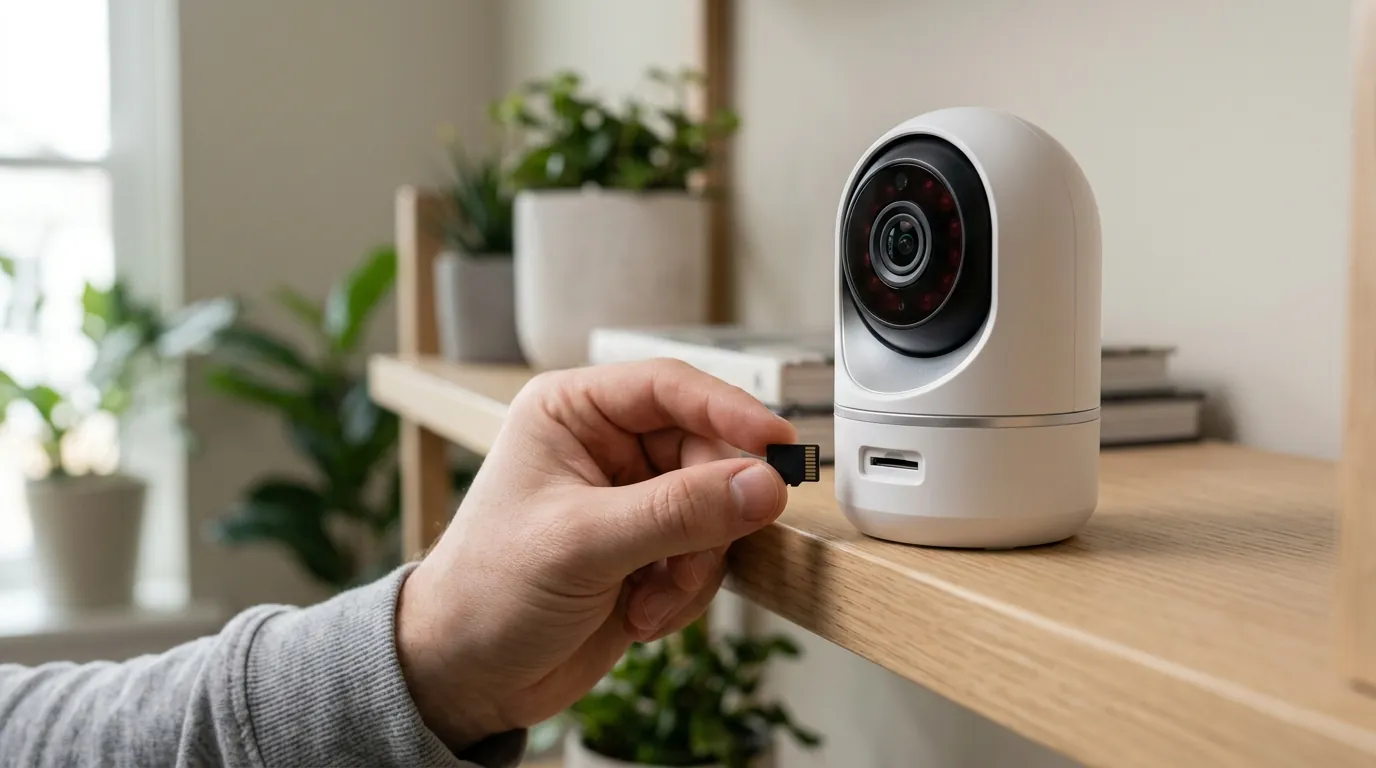
If your Ring dashboard is currently showing “Unavailable,” you have three primary paths forward: wait, work around, or walk away.
Stay Informed and Seek Community Solutions
The Home Assistant community is incredibly resilient. Monitor the official Home Assistant GitHub repository for the specific ImportError bug report. Often, community members will release a “Custom Component” or a patch that can be installed via HACS (Home Assistant Community Store) before the official Core update is released.
Explore Local-First Camera Alternatives
If you are tired of the “cloud-break-fix” cycle, July 2026 is an excellent time to evaluate hardware that supports local protocols.
- Reolink: Their WiFi and PoE doorbells are widely considered the gold standard for Home Assistant because they offer a fully local API. You can block them from the internet entirely at your router, and they will still work perfectly in Home Assistant.
- Amcrest: Known for robust ONVIF support, Amcrest cameras work with almost any NVR or smart home software.
- Eufy: While Eufy has faced its own privacy criticisms in the past, its newer “Edge” ecosystem allows for local AI processing and storage, though its Home Assistant integration still requires some cloud-based authentication.
Decision Framework: Should You Switch?
- If you are a Renter: Stick with Ring for now. The ease of “peel-and-stick” installation and the hope of a software fix usually outweighs the hassle of installing a new system in a temporary residence.
- If you are a Homeowner: Consider a transition. Use the current breakage as an excuse to run an Ethernet cable for a PoE (Power over Ethernet) camera, which offers 24/7 recording and zero reliance on your WiFi signal or Amazon’s servers.
- If you are Privacy-Focused: Switch immediately. Any camera that requires a cloud connection to function is a liability. Look for cameras with “ONVIF Profile S” support.
Re-evaluate Your Smart Home Security Strategy
A robust security strategy should not have a single point of failure. If your home security relies on a single integration working, it is time to diversify. Consider using ring-mqtt as a temporary bridge. This is a separate add-on that connects to Ring and translates the data into MQTT (Message Queuing Telemetry Transport), a universal language for smart homes. It is often more stable than the “official” integration because it bypasses some of the Core library dependencies that caused the current July 2026 failure.
Frequently Asked Questions
Why did Home Assistant update if it was going to break my cameras?
Home Assistant updates frequently to provide security patches and support for new devices. While the developers test extensively, “unofficial” integrations like Ring are difficult to verify because they rely on private APIs that can change without notice.
Can I fix the ‘ImportError’ myself?
Unless you are comfortable editing Python files within the Home Assistant container, it is best to wait for an official patch or a HACS update. Manually changing core libraries can lead to system instability.
Does Ring support RTSP or ONVIF in 2026?
No. As of July 2026, Ring continues to prioritize its subscription-based cloud model and does not provide native support for local streaming protocols like RTSP or ONVIF.
Will my Ring cameras still work in the Ring app?
Yes. The current breakage only affects the bridge between Ring and Home Assistant. Your cameras will continue to record and send notifications through the official Ring app on your smartphone, provided your subscription is active.
Sources
- Ring Privacy and Law Enforcement — https://ring.com/privacy
- Home Assistant Core GitHub Issues — https://github.com/home-assistant/core/issues
- Reolink Product Specifications — https://reolink.com/product/reolink-video-doorbell-wifi/
- Amcrest AD410 Spec Sheet — https://amcrest.com/4mp-wifi-video-doorbell-ad410.html
- Python Websockets Documentation — https://websockets.readthedocs.io/en/stable/
Quvii tracks these trade-offs across the category to help consumers build more resilient, private, and cost-effective security systems.