
Is Your Blink Camera Down? September 2026 Status & Fixes
If you are seeing a “Sync Module Offline” banner or experiencing failed Live View sessions on your Blink Outdoor 4 or Mini 2K+, you are not alone; intermittent connectivity remains the primary hurdle for cloud-dependent security systems in 2026. This guide provides real-time status updates for September 19, 2026, and a technical roadmap to restoring your home’s perimeter defense.
Quick Answer: As of September 19, 2026, Blink cloud servers are operational. If your Outdoor 4 or Mini 2K+ is offline, check your Sync Module for a solid red light or verify your firmware is updated to version 21.1.18.
The symptom

Related: Tapo C210 Camera Offline? September 2026 Outage Fixes · Ring Doorbell Server Outage? September 2026 Status & Fixes · Arlo Ultra Motion Detection Not Working? September 2026 Fixes
When a Blink system fails, the symptoms typically manifest in the Blink Home Monitor app (currently version 59.1 for iOS and Android) before the hardware itself shows obvious signs of distress. Users reporting issues in mid-September 2026 have noted a “cascading failure” where one camera loses connectivity, followed shortly by the entire system.
The most common indicators of a Blink outage or local failure include:
- The “Sync Module is Offline” Banner: A persistent red or grey banner at the top of the app interface. This indicates the bridge between your cameras and the Blink cloud is severed.
- “Camera Busy” or “Thumbnail Failed”: When attempting to refresh a view, the app returns an error. This often occurs when the camera is unable to upload the encrypted media packet to the AWS (Amazon Web Services) ingest server.
- Solid Red LED on Hardware: On the Sync Module 2 or the newer Sync Module XR (released in 2025), a solid red light is the universal signal for “No Internet Connection.”
- Live View Timeout: Even if the camera shows “Online,” the Live View may fail to load, spinning indefinitely before timing out.
Identifying App-Level vs. Hardware-Level Failures
To determine where the break is, you must distinguish between an app that cannot talk to the cloud and a camera that cannot talk to the Sync Module. If you can still access your account settings and view old clips stored in the cloud, the Blink servers are likely healthy, and the issue is localized to your Sync Module’s handshake with your router.
| LED Color | Pattern | Meaning (Sync Module 2 & XR) |
|---|---|---|
| Blue | Blinking | Module is in pairing mode / searching for Wi-Fi |
| Blue | Solid | Module is connected to Blink servers (Normal) |
| Red | Solid | No internet connection; check router and ISP |
| Green | Solid | Power is on, but Wi-Fi handshake is incomplete |
| None | Off | No power or hardware failure |
Source: Blink Support — Understanding the LEDs
What’s likely happening
While a total global outage is rare, the Blink ecosystem relies on a complex chain of authentication and data transfer that can be disrupted by several factors in the 2026 landscape.
AWS Service Interruptions
As an Amazon-owned brand, Blink’s infrastructure is hosted entirely on AWS. Specifically, Blink utilizes the US-East-1 (North Virginia) and US-West-2 (Oregon) regions. While the AWS Health Dashboard showed no major incidents on September 18, 2026, minor “micro-outages” in API Gateway services can prevent the Blink app from authenticating user tokens, leading to login loops.
Firmware Mismatch (v21.1.18)
In August 2026, Blink pushed firmware version 21.1.18 to the Sync Module XR and Core. This update was designed to improve WPA3 security compatibility. However, some users with older Wi-Fi 5 or Wi-Fi 6 routers have reported “handshake failures,” where the module fails to reconnect after a routine IP lease renewal.
Subscription Authentication
Following the October 2025 price adjustment, which saw the Blink Plus plan rise to $11.99/month, the system’s “kill switch” for non-payment has become more aggressive. If your credit card on file expired on the first of the month, Blink may suspend cloud recording and Live View functionality, often without a clear “Payment Failed” notification in the main dashboard.
Local 2.4GHz Congestion and Wi-Fi 7
The 2026 consumer market is flooded with Wi-Fi 7 (802.11be) routers. While these offer incredible speeds for laptops, they often use “Smart Connect” features that merge 2.4GHz, 5GHz, and 6GHz bands into a single SSID. Blink hardware, which remains strictly 2.4GHz for range reasons, can become “confused” by Wi-Fi 7’s Multi-Link Operation (MLO), causing the camera to drop the connection during high-interference periods.
Timeline of Reported Issues (September 2026)
- September 17, 2026: Minor surge in reports from the US Northeast regarding “Sync Module Offline” errors.
- September 18, 2026: Reports peak on third-party status trackers (e.g., Downdetector) at approximately 4:15 PM ET. Blink does not issue a formal service bulletin.
- September 19, 2026 (Today): Incident reports have returned to baseline levels. Most current issues are likely local hardware or configuration errors.
Quick fixes (in order of likelihood)
Before assuming your hardware is defective, follow these steps to force a system-wide reconnection.
- Power Cycle the Sync Module: This is the “Golden Rule” of Blink troubleshooting. Unplug the power adapter from the wall (not just the USB cable from the module) and wait exactly 30 seconds. This clears the local DNS cache and forces the device to request a new IP address from your router.
- Refresh and Update the App: Ensure you are running Blink Home Monitor v59.x or higher. If the app feels sluggish, force-close it (swipe up from the app switcher) and restart your phone.
- Battery Voltage Check: If your Outdoor 4 cameras are offline but the Sync Module is green/blue, check your batteries. Blink cameras require Energizer Ultimate Lithium AA batteries. Alkaline or rechargeable NiMH batteries do not provide the consistent 1.5V-1.7V required to wake the camera from its low-power sleep state, even if the app reports “Battery OK.”
- Router Reboot: Modern routers can sometimes flag the “heartbeat” pings from Blink devices as a “ping of death” or a DoS attack. Restarting your gateway clears these false flags and refreshes the connection to the
prod.immedia-semi.comendpoint, which Blink uses for cloud sync.
Checklist for Proper Battery Replacement
- Brand: Energizer Ultimate Lithium (Blue/Silver packaging).
- Quantity: Two AA batteries per camera.
- Orientation: Ensure the positive (+) and negative (-) terminals match the markings inside the battery compartment.
- Seal: Ensure the back cover is clicked into place to maintain the IP65 weather resistance.
Deeper diagnostics
If the quick fixes fail, you need to look at the signal telemetry provided within the Blink app.
Analyzing Signal Strength (RSSI)
Navigate to Camera Settings > General Settings and look at the “Connection” section. You will see two distinct metrics:
- Camera to Sync Module: This uses a proprietary LFR (Low Frequency Radio) signal.
- Camera to Wi-Fi: This uses your standard 2.4GHz home network.
A “3-bar” signal is the minimum required for stable 1080p or 2K video streaming. If your signal is 1 or 2 bars, the camera may “fall off” the network during peak usage times (e.g., when the family is streaming 4K video elsewhere).
Sync Module XR Range
If you upgraded to the 2025 Sync Module XR, you should theoretically have up to 4x the range of the standard Sync Module 2. However, this range is highly susceptible to metal interference. Ensure your XR module is not placed inside a media cabinet, behind a television, or directly against a brick wall. Elevating the module to a shelf at least 3 feet off the ground often resolves “Thumbnail Failed” errors.
When to Abandon the Cloud
If you find that your ISP (Comcast, AT&T, etc.) is frequently throttling your upload speeds or if you are tired of the $120+ annual subscription cost, it may be time to consider a hardware pivot.
For users who want the reliability of local storage without the “Sync Module” headache, the Reolink Argus 4 Pro has emerged as a top 2026 competitor. Unlike Blink, it offers 4K resolution and a dual-lens 180-degree field of view, and it can record directly to a microSD card without requiring a monthly fee.
| Feature | Blink Outdoor 4 | Reolink Argus 4 Pro |
|---|---|---|
| Resolution | 1080p HD | 4K (8MP) |
| Field of View | 143° Diagonal | 180° Panoramic |
| Power Source | 2 AA Lithium Batteries | Integrated Rechargeable (Solar Opt.) |
| Local Storage | USB via Sync Module 2 | On-device MicroSD (up to 512GB) |
| Subscription | $3/mo (Basic) / $10-12/mo (Plus) | Optional (Rich Notifications) |
| Price Band | Around $100 | $150–$200 |
Source: Reolink Official Specifications
When to contact support
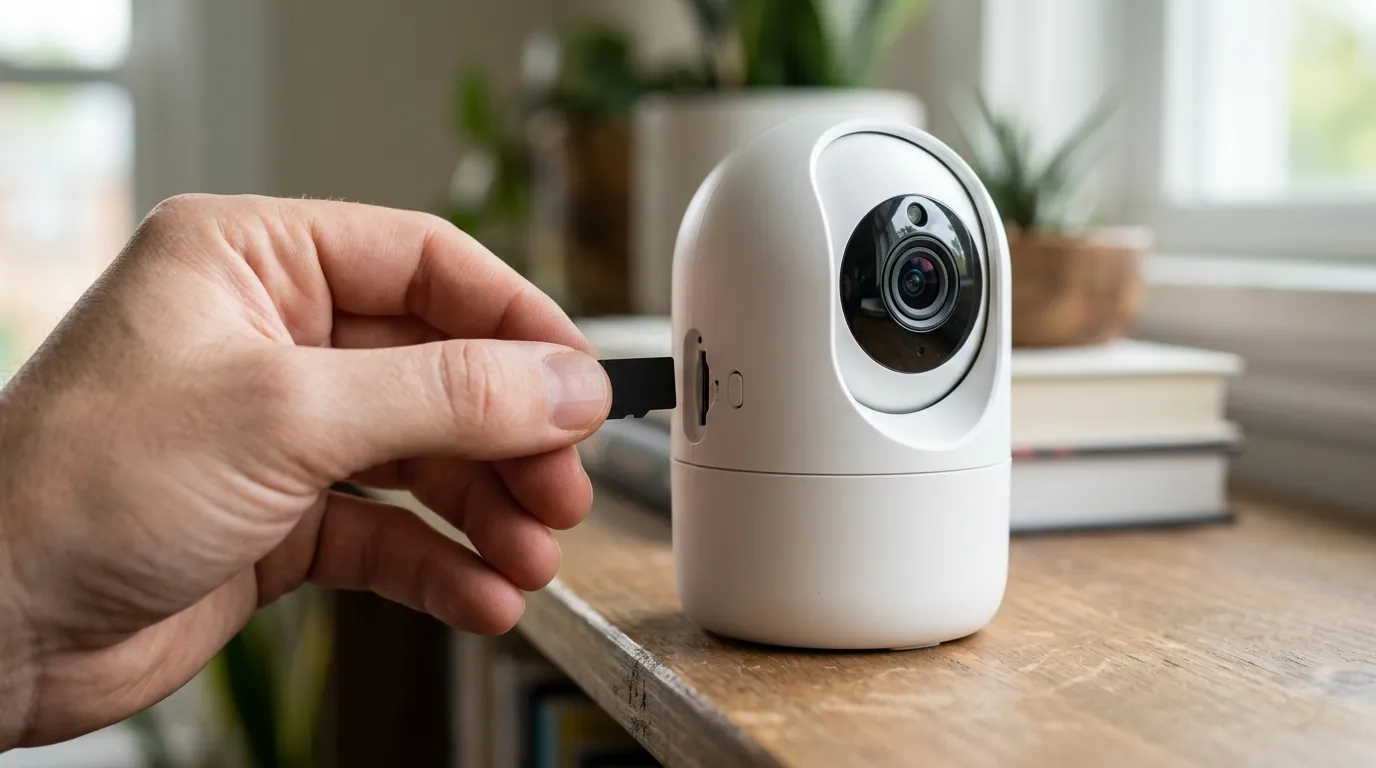
If your Sync Module remains solid red even after a factory reset (using a paperclip in the reset hole for 5 seconds), the internal Wi-Fi radio may have suffered a hardware failure.
- Warranty Status: Blink Outdoor 4 and Mini 2K+ units typically carry a 1-year limited warranty. You can verify your purchase date by checking your Amazon “Your Orders” section. In some regions, Amazon provides extended 2-year coverage for “Blink Subscription Plus” members.
- Account Lockouts: If you are not receiving your 2FA (Two-Factor Authentication) codes, do not keep requesting them. This can trigger a 24-hour lockout. Check your “Spam” folder or ensure the verification shortcode is not blocked on your phone.
Blink Support Contact (September 2026):
- Phone (US): 1-781-332-5465 (Available 24/7 technical support)
- Live Chat: Available via the Blink Support Portal from 10:00 AM to 10:00 PM ET.
How to prevent it
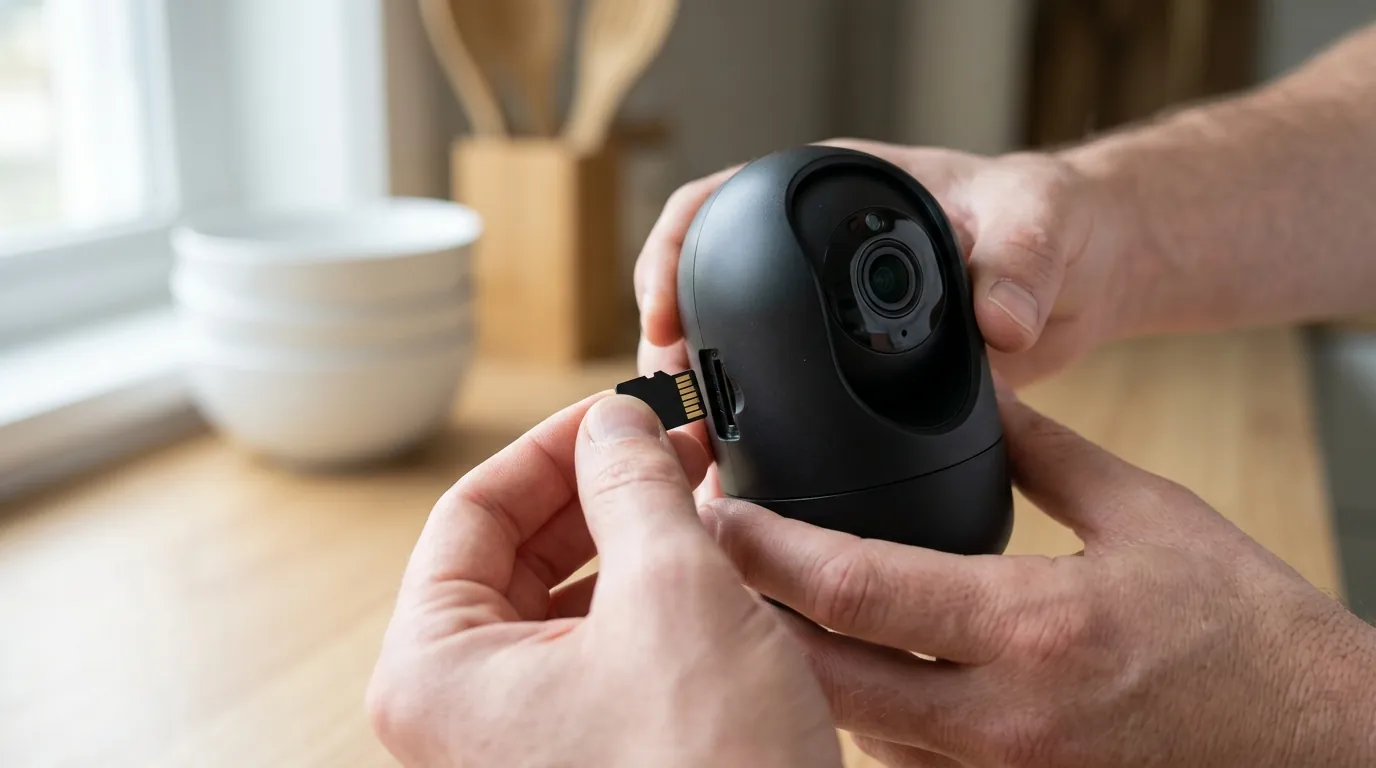
The most resilient Blink systems are those that do not rely exclusively on a perfect, 24/7 internet connection.
Enable Local Storage (Sync Module 2/XR)
By inserting a USB 2.0 or 3.0 drive (up to 256GB) into the side of your Sync Module, you enable Local Storage. If the Blink servers go down, the cameras can still save clips to the physical drive.
- Insert the USB drive.
- Open the Blink App > Sync Module Settings.
- Tap Local Storage.
- Ensure the drive is formatted (the app will prompt you). Note: Viewing local clips is slower than cloud clips because they must be fetched from your home’s upload bandwidth.
Static IP Assignment
To prevent the “Sync Module Offline” error caused by IP conflicts, log into your router’s admin panel and assign a Static IP (or DHCP Reservation) to the Sync Module’s MAC address. This ensures that even if the power goes out, the router always gives the Sync Module the same internal address, preventing handshake errors.
Dedicated IoT SSID
If you have a Wi-Fi 6E or Wi-Fi 7 router, create a guest network or a dedicated “IoT” network that is locked to 2.4GHz only. Connect all your Blink hardware to this specific SSID. This prevents the cameras from trying to jump to the 5GHz band—a common cause of the “Camera Busy” error.
Frequently Asked Questions
Why is my Blink camera showing a red light on the front?
A small red LED on the front of a Blink Outdoor 4 usually indicates that the camera is recording or that the motion sensor has been triggered while the system is in “Armed” mode. However, if it flashes during a Live View attempt and then fails, it typically signifies a low-battery condition or a failed connection to the Sync Module.
Do Blink cameras work if the Wi-Fi is down?
No. Blink cameras require a constant 2.4GHz Wi-Fi connection to communicate with the Sync Module and the Blink cloud. While they can record to local USB storage via the Sync Module 2/XR if the internet is out (but Wi-Fi is still active), they cannot function if the router itself is powered off or the Wi-Fi signal is lost.
How do I fix the “Sync Module Not Found” error?
This error usually means the app cannot find the module on your local network. First, ensure your phone is on the same Wi-Fi network (and same frequency, if possible) as the module. If that fails, toggle your phone’s Bluetooth off and on, as the Blink app uses Bluetooth for the initial discovery of the Sync Module during setup and reconnection.
Is there a monthly fee for Blink in 2026?
Yes, unless you rely solely on Local Storage. As of late 2025, the Blink Basic plan is around $3 per month per camera, while the Plus plan (covering unlimited cameras) is approximately $11.99 per month. Without a subscription, you lose features like person detection, cloud video sharing, and extended warranty coverage.
Sources
- Blink for Home — Official Sync Module Troubleshooting
- AWS Health Dashboard — Service Status Archive
- Reolink — Argus 4 Pro Product Specifications
- Amazon Privacy — Blink Terms of Service and Privacy Policy
- Energizer — Ultimate Lithium Battery Technical Data Sheet