
The No-Drill Revolution: New 2026 Ways to Mount Outdoor Cameras
Home security no longer requires a power drill or a permanent commitment to your home’s exterior siding.
Quick Answer: In 2026, you can install outdoor cameras without drilling using industrial adhesive mounts (Wyze Cam v4), magnetic bases (Reolink Argus MagiCam), or tool-free gutter and vinyl siding clips from brands like Wasserstein. For those in strict HOAs, interior-mounted window cameras like the ShowMo WinEye (2026) eliminate exterior hardware entirely by recording through glass.
What happened
The security camera market underwent a significant shift in early 2026. For years, “no-drill” was an afterthought—a third-party accessory you bought on Amazon to fix a manufacturer’s oversight. Today, major manufacturers including Eufy, Reolink, and Wyze have pivoted to include renter-friendly mounting hardware in the box as a standard feature. This change acknowledges the reality of the US housing market, where a high percentage of camera buyers are either renters or homeowners bound by restrictive HOA “no-modification” clauses.
The Rise of the ‘Zero-Impact’ Standard
The standard out-of-the-box experience has evolved. In 2026, opening a flagship outdoor camera no longer reveals a packet of plastic anchors and steel screws as the primary mounting option. Instead, brands are prioritizing systems that utilize high-bond adhesives and magnetic tension. This “zero-impact” standard ensures that the camera can be removed at the end of a lease without leaving behind structural damage or requiring siding repairs.
New 2026 Hardware: Reolink MagiCam and Eufy S4 Options
Two major releases in mid-2026 have redefined the weight-bearing capacity of no-drill mounts. The Reolink Argus MagiCam, released in June 2026, introduced a high-strength magnetic adhesive plate system. This system uses a thin, weather-treated metal disc that adheres to the mounting surface; the camera then snaps onto the disc with a neodymium magnetic array capable of supporting up to 2.6 lbs—well above the weight of the camera itself.
Similarly, the Wyze Cam v4 has standardized a mounting system that utilizes a metal plate backed by 3M VHB (Very High Bond) adhesive. This allows the camera to be “stuck” to almost any flat surface, while the magnetic base of the camera allows for easy removal for charging. For those who cannot mount anything to the exterior at all, the ShowMo WinEye (2026) launched as a specialized 4K interior-mounted window camera. It uses a proprietary suction and light-seal technology to sit flush against the inside of a window pane, eliminating the glare issues that previously plagued interior cameras looking out.
Table 1: 2026 ‘In-the-Box’ Mounting Hardware Comparison
| Brand / Model | Primary No-Drill Method | Max Weight Support | Surface Compatibility | Power Type |
|---|---|---|---|---|
| Wyze Cam v4 | 3M VHB Adhesive Plate | 2.0 lbs | Smooth Siding, Metal, Glass | Wired (USB) |
| Reolink Argus MagiCam | Magnetic Adhesive Plate | 2.6 lbs | Wood, Brick (Smooth), Metal | Battery/Solar |
| Eufy S4 | Multi-Surface Adhesive | 2.2 lbs | Vinyl, Stucco (Smooth), Wood | Battery (Solar Integrated) |
| Ring Stick Up Cam | Optional Adhesive Mount* | 1.8 lbs | Smooth Surfaces Only | Battery/Plug-in |
| Nest Cam (Battery) | Magnetic Base | 1.5 lbs | Metal Surfaces (Native) | Battery |
*Sold as a separate bundle or accessory in some regions.
Why it matters for buyers
The move toward no-drill technology is not just about convenience; it is a response to legal and environmental pressures facing modern residents.
Protecting Your Security Deposit
HOA regulations and rental lease agreements in the US have become significantly stricter regarding “structural modifications.” According to community consensus on platforms like r/HomeSecurity, drilling into brick or vinyl siding is frequently cited as a reason for security deposit deductions or HOA fines. No-drill options provide a legal safety net, allowing users to maintain security without violating the terms of their residency.
Improved Reliability in Extreme Weather
A common criticism of early adhesive mounts was their tendency to fail during summer heatwaves or winter freezes. Modern adhesive technology has caught up. The 2026 variants of 3M Command Outdoor and VHB tapes are now rated for extreme temperatures ranging from -20°F to 125°F. This reliability is verified through independent testing by RTINGS, showing that industrial-grade adhesives can maintain their bond even under the high UV exposure typical of south-facing outdoor installations.
The Solar-Friendly Advantage
The rise of solar-powered cameras has introduced a new challenge: “seasonal positioning.” As the sun’s path changes between summer and winter, a solar panel mounted in July may be in total shade by December. No-drill mounts allow users to reposition their cameras and solar panels to track optimal sun patterns without leaving a “trail of holes” across their home’s exterior. This flexibility ensures that battery-powered cameras like the Eufy S4 remain at 100% charge year-round.
Table 2: 2026 Adhesive vs. Traditional Screw Benchmarks
| Feature | 3M VHB / Industrial Adhesive (2026) | Traditional Steel Screws |
|---|---|---|
| Installation Time | < 2 Minutes | 10–15 Minutes |
| Weight Capacity | 2–5 lbs (Surface dependent) | 20+ lbs |
| Temp Range | -20°F to 125°F | Unlimited |
| Surface Damage | Zero (if removed correctly) | Permanent holes |
| Required Tools | None (Alcohol wipe only) | Power Drill, Bits, Screwdriver |
Impact on existing owners
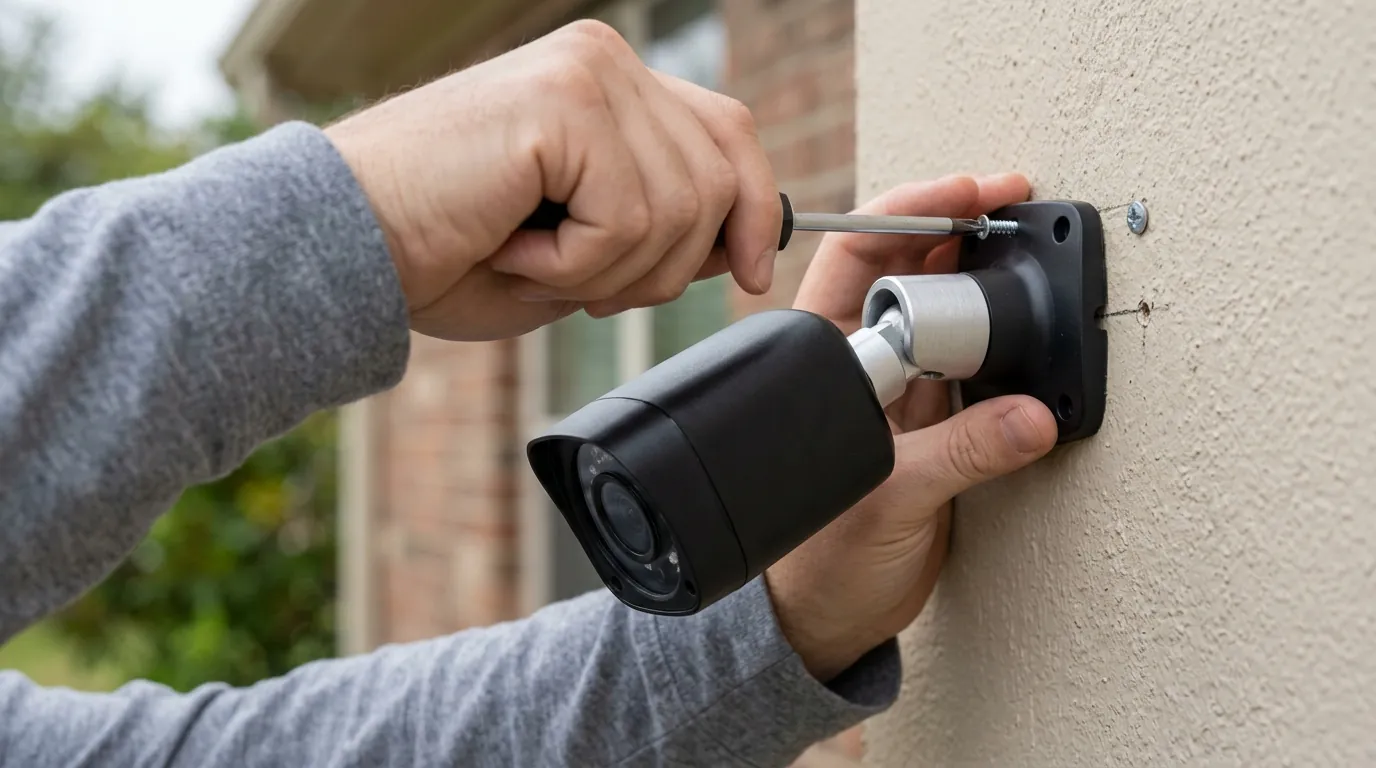
If you already own a camera system from 2023 or 2024, you are not excluded from the no-drill revolution. The accessory market has matured to provide retrofitting options for legacy hardware.
Retrofitting Your Current Setup
Owners of older Ring Stick Up Cams or Arlo Pro models can now utilize “Universal 1/4-inch Thread” adhesive brackets. These brackets, typically priced in the $15-$25 range, feature a standard tripod screw that fits almost every major camera brand. By attaching a 3M VHB-backed plate to your wall and screwing your legacy camera into the bracket, you can convert a drill-only unit into a renter-friendly one.
2-in-1 Gutter Mounts
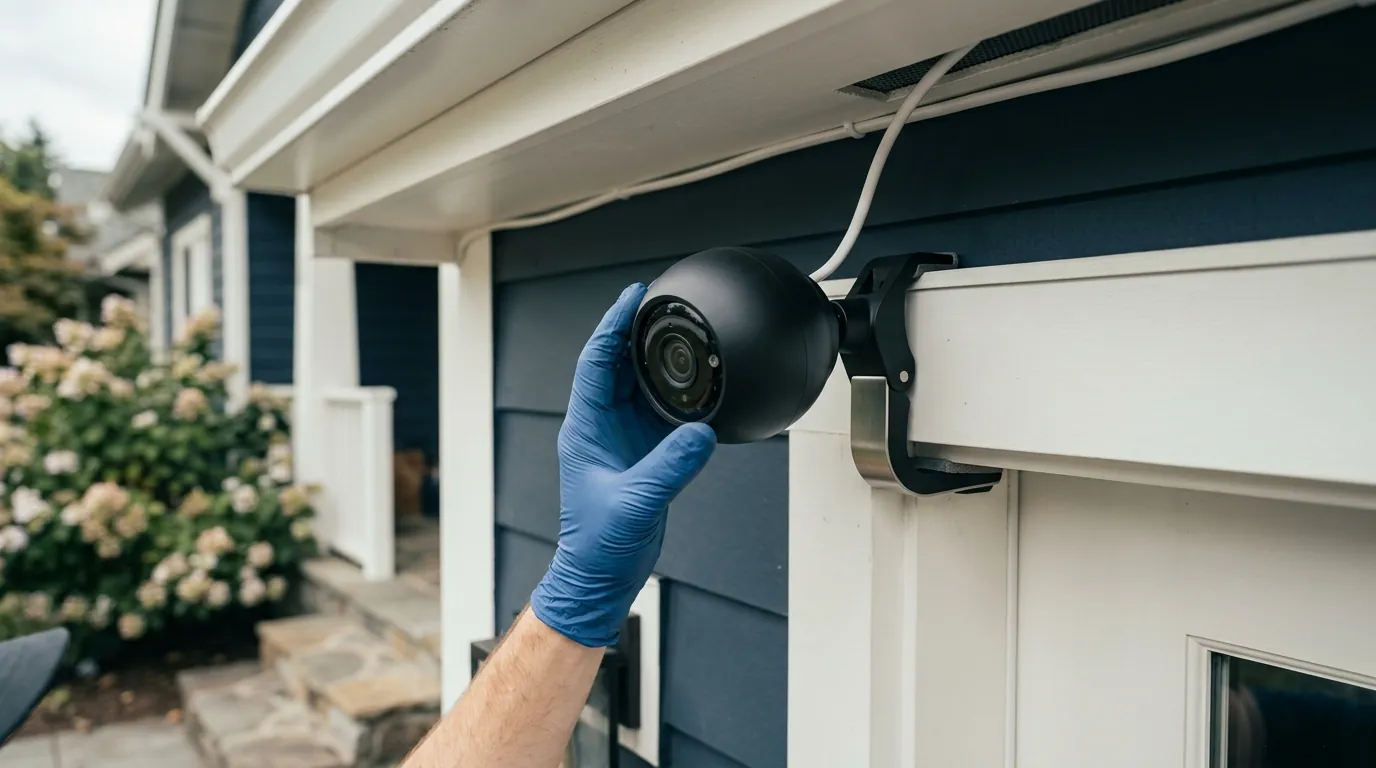
Gutter mount compatibility has expanded significantly in 2026. Specialized manufacturers like Wasserstein have released “2-in-1” mounts that support both the camera and a solar panel on a single, tool-free clamp. These clamps grip the edge of standard rain gutters using a thumb-screw mechanism, providing a high vantage point without touching the house’s siding or fascia boards. This is particularly useful for cameras like the Nest Cam (Battery), which benefit from the height but require a sturdy mounting point to support their weight.
Legacy Compatibility: Universal No-Drill Accessories (2026)
- Adhesive Swivel Mounts: Compatible with Ring, Arlo, and Eufy (1/4” thread).
- Vinyl Siding Clips: Stainless steel clips that tuck under siding slats; compatible with any camera under 2 lbs.
- Magnetic Wall Plates: Designed for cameras with built-in magnetic bases (Nest, Wyze).
- Suction Window Mounts: Specifically for lightweight indoor cameras being repurposed as window-facing units.
What to do now
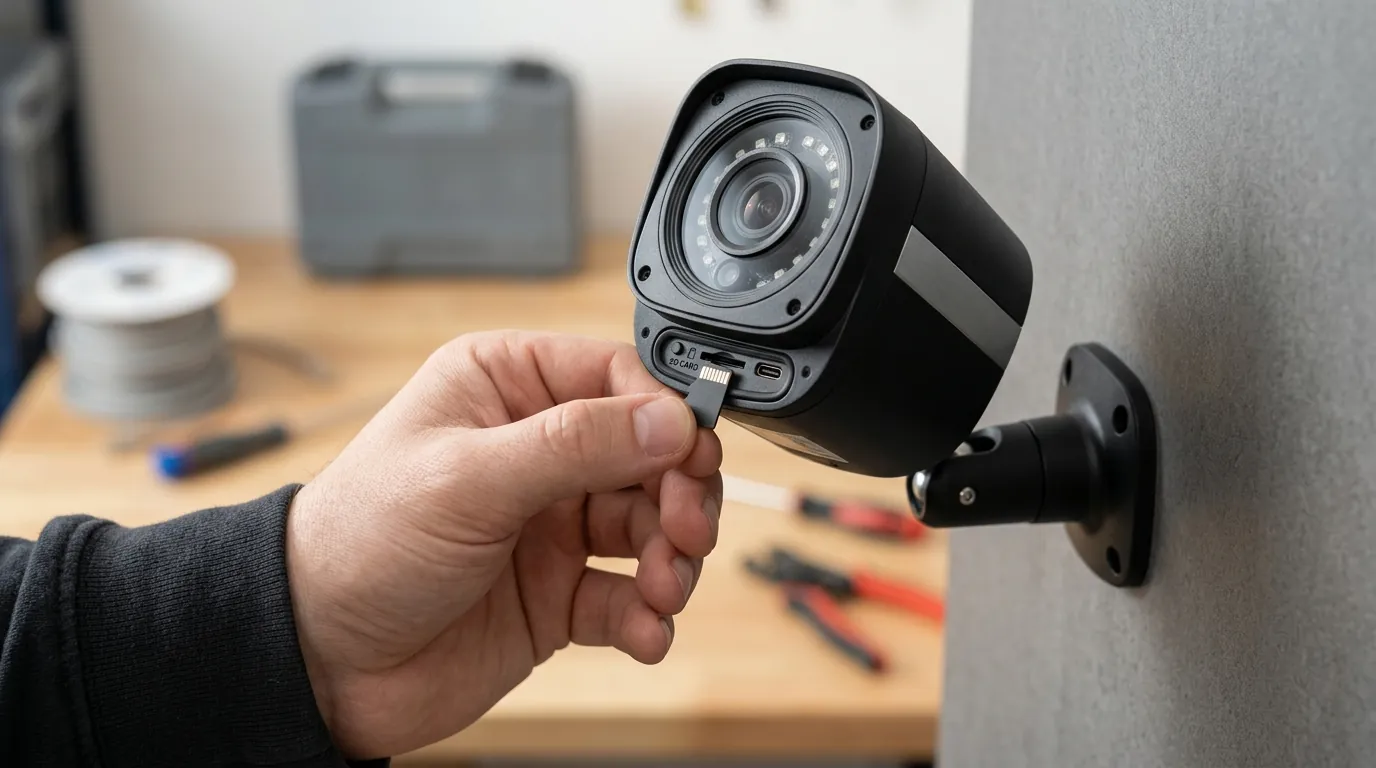
Before purchasing a new camera or an adhesive kit, you must perform a site audit to ensure the mounting method matches your home’s physical environment.
Step 1: The 3-Pound Weight Test
Most 2026 adhesive mounts are rated for a maximum of 3 lbs. While most modern cameras (like the Wyze Cam v4) weigh less than 1 lb, larger battery-powered units with integrated floodlights can approach the limit. Weigh your camera with its battery pack included. If it exceeds 3 lbs, skip adhesives and move directly to gutter clamps or siding clips, which provide mechanical support rather than relying on chemical bonding.
Step 2: Choosing the Right Clip or Adhesive
Surface compatibility is the most common point of failure for no-drill installations. Use the following guide to match your surface to the correct hardware:
Table 3: Surface Compatibility Chart
| Surface Material | Recommended No-Drill Method | Avoid This |
|---|---|---|
| Vinyl Siding | Stainless Steel Siding Clips | Adhesives (can warp in heat) |
| Smooth Wood/Metal | 3M VHB Adhesive / Magnetic Plates | Suction Cups |
| Brick / Stone | Gutter Clamps or Pole Mounts | Adhesives (too porous) |
| Glass / Windows | Interior Suction Mounts (WinEye) | Heavy Magnetic Mounts |
| Stucco | Specialized Tension Mounts | Standard Adhesive Tape |
Step 3: The 24-Hour ‘Cure’ Rule
For any adhesive-based installation, 2026 best practices require a two-step preparation:
- Clean: Use a 70% isopropyl alcohol wipe on the surface to remove oxidation, dirt, and oils.
- Cure: Once the adhesive plate is applied, do not attach the camera yet. Modern industrial adhesives require a “cure” period—usually 24 hours—to reach maximum bonding strength. Attaching a heavy camera immediately is the leading cause of mount failure.
Decision Framework: Which No-Drill Setup is for You?
- If you are a Renter in an Apartment: Prioritize the ShowMo WinEye or a window-suction mount. These are 100% internal and cannot be contested by a landlord.
- If you have Vinyl Siding: Use Wasserstein Siding Clips. They require zero tools and can be moved in seconds.
- If you need a Solar Setup: Look for the Eufy S4 or Reolink MagiCam with integrated solar, paired with a gutter mount to maximize sun exposure.
- If you are on a Budget: The Wyze Cam v4 with its included adhesive plate remains the most cost-effective entry point into no-drill security.
Total Cost of Ownership (3-Year Analysis)
When choosing a no-drill camera, the “sticker price” is often misleading. Some brands include the no-drill hardware but lock essential recording features behind a subscription paywall.
Table 4: 3-Year TCO (Hardware + Subscription + Mounts)
| Camera Model | Hardware Price Band | 3-Year Sub Cost (Estimated) | Mount Cost | Total 3-Year Cost |
|---|---|---|---|---|
| Wyze Cam v4 | Under $50 | ~$120 (Cam Plus) | $0 (Included) | ~$170 |
| Eufy S4 | $150–$200 | $0 (Local Storage) | $0 (Included) | ~$180 |
| Ring Stick Up | Around $100 | ~$150 (Protect) | ~$20 (Adhesive) | ~$270 |
| Reolink MagiCam | $150–$200 | $0 (SD Card) | $0 (Included) | ~$175 |
While the initial cost of a Eufy or Reolink unit is higher, their reliance on local storage (via HomeBase 3 or SD cards) often makes them cheaper over a three-year period compared to “budget” cameras that require monthly cloud fees. Quvii tracks these trade-offs across the category to ensure buyers understand that the most “renter-friendly” camera is the one that is easy to install and easy on the monthly budget.
Sources
- Reolink Official Site — Argus Series Specifications
- Wyze Labs — Wyze Cam v4 Product Page
- Eufy Security — S4 Series and HomeBase 3 Technical Support
- 3M Support — VHB Tape and Command Outdoor Weight Limits
- Wasserstein Home — No-Drill Mount Compatibility Guide
- RTINGS — Security Camera Testing and Adhesive Reliability Reports
- FCC ID Search — Wireless Power and RF Exposure Filings