
Grounded Labs Oasis Device Server Outage: Smart Home Impact (Not Security Cameras)
The recent server failure at Grounded Labs highlights a growing concern for smart home enthusiasts: the fragility of cloud-dependent hardware.
Quick Answer: The Grounded Labs Oasis device server experienced an outage on July 3, 2026, primarily due to security certificate renewal issues, affecting the functionality of its kinetic sand art devices. While impactful for Oasis owners, it’s crucial for Quvii.com readers to note that Grounded Labs Oasis products are not security cameras, and this specific outage does not directly affect home/small-business security camera systems.
What happened
Related: Tapo C210 Pan/Tilt Motor Noise After Firmware Update: What to Know · Ring Camera Not Notifying or Streaming in July 2026: What to Know · Arlo Doorbell Motion & Recording Issues: What to Know in July 2026
On July 3, 2026, Grounded Labs experienced a significant server outage that disrupted its entire Oasis product line. This includes the Oasis Mini, the Coffee Table, the Side Table, and the newer Aura models. For several hours, users reported that their kinetic sand art displays—which rely on a mobile app and cloud connectivity to download “paths” (patterns) and receive commands—became unresponsive or failed to initialize.
This incident was particularly frustrating for the community as it marked the third connectivity-related disruption in approximately a month. According to technical updates shared via the official Grounded Labs support portal, the root cause was identified as a failure in the automated security certificate renewal process.
The “Functional DDoS” Effect
The outage was exacerbated by the way the device firmware handles connection failures. When the security certificates expired or failed to authenticate, thousands of Oasis devices worldwide began continuously “pinging” the Grounded Labs servers to re-establish a secure handshake. This created a functional distributed denial-of-service (DDoS) effect. Even after the software team identified the certificate error and applied a fix, the sheer volume of simultaneous requests from “hungry” devices prevented a smooth recovery.
While the core issue was resolved within a few hours, it took a significant portion of the day for the server cluster to process the backlog of authentication requests and bring all global units back to a “green” status.
Data Comparison: Oasis Product Line Impact (July 2026)
| Model | Primary Connectivity | Cloud Dependency | Impact of July 3 Outage |
|---|---|---|---|
| Oasis Mini | Wi-Fi (2.4GHz) | High (Pattern Library) | Total loss of remote control |
| Oasis Coffee Table | Wi-Fi (2.4GHz) | High (Scheduling) | Pattern playback stuck on last loop |
| Oasis Side Table | Wi-Fi (2.4GHz) | High (App Control) | Unable to change LED or Sand settings |
| Oasis Aura (2026) | Wi-Fi 6 / Bluetooth | Moderate (Local Cache) | Limited playback; no new downloads |
Why it matters for buyers
For the Quvii.com audience, the most important takeaway is a matter of product identification: Grounded Labs Oasis devices are kinetic sand art displays, not home security cameras. If you are currently shopping for a surveillance system to protect your porch or small business, this specific outage does not represent a failure of a security brand. You will not find Grounded Labs products in our Wireless Security Camera Buying Guide.
However, this incident serves as a vital case study for anyone investing in the “Smart Home” ecosystem. The mechanics of the Oasis failure are nearly identical to the risks faced by owners of cloud-dependent security cameras.
Cloud Dependency in Smart Home Devices
Many modern security cameras from brands like Ring, Arlo, and Google Nest rely heavily on manufacturer-hosted servers. When these servers go down, the “smart” features often vanish. This includes:
- Remote Access: The ability to view your live feed while away from home.
- AI Notifications: Person, pet, and vehicle detection often happens in the cloud, not on the camera hardware.
- Cloud Storage: The ability to review footage of a break-in that occurred during the outage.
- Firmware Updates: The delivery of critical security patches.
Assessing Manufacturer Reliability
When choosing a security camera, the Grounded Labs incident reminds us to look beyond the hardware specs (like 4K resolution or night vision range) and evaluate the manufacturer’s infrastructure. A brand’s track record for server stability is as critical as its lens quality. For security applications, a “functional DDoS” caused by a certificate error isn’t just an inconvenience—it’s a window of vulnerability for your property.
Decision Framework: Choosing Your Level of Cloud Dependency
| If you are a… | Prioritize… | Why? |
|---|---|---|
| Renter | Plug-and-Play Cloud (e.g., Ring/Arlo) | Easy setup and portability; server outages are rare but acceptable trade-offs for ease of use. |
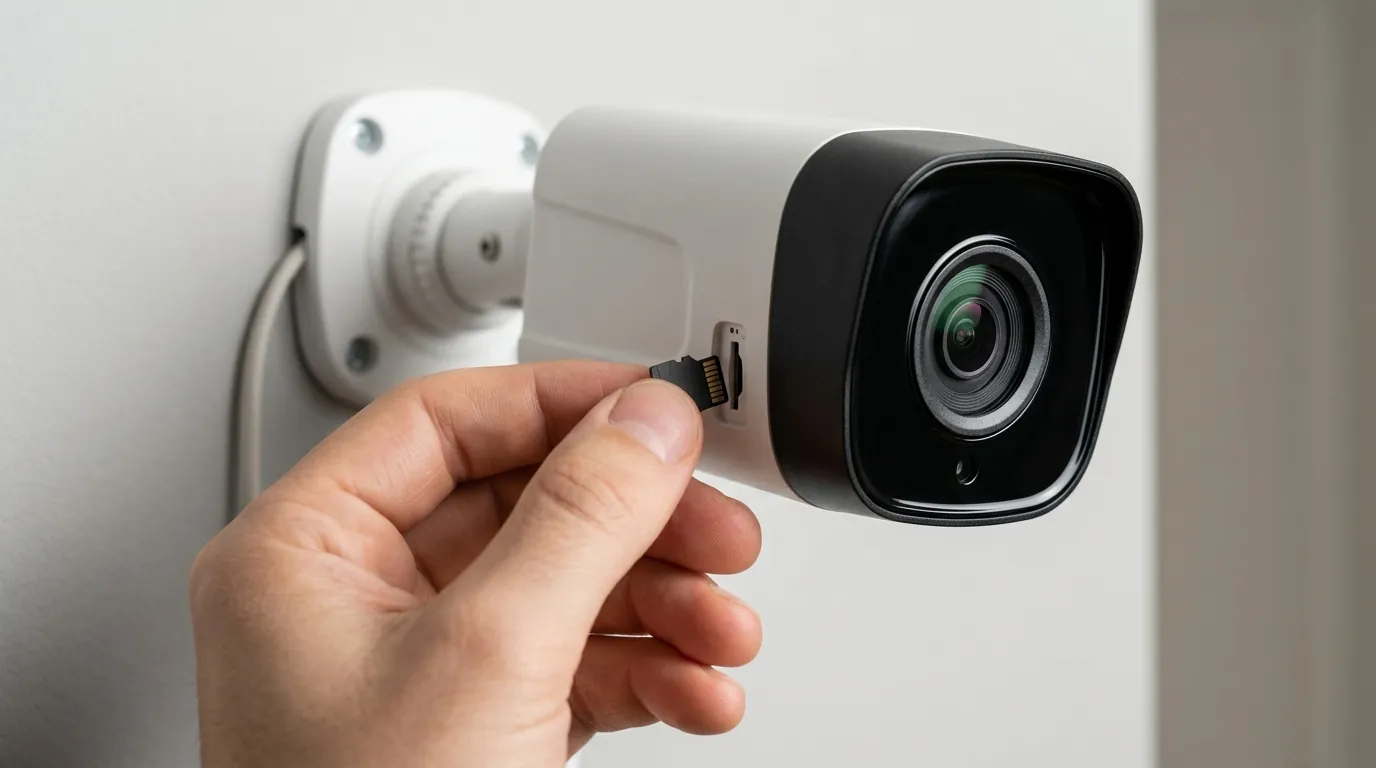
| Homeowner | Hybrid Systems (e.g., Eufy/Reolink) | Local storage (SD card/HomeBase) ensures recording continues even if the internet or servers go down. |
| Small Business | Local-First / NVR (e.g., Amcrest/Lorex) | Zero reliance on external servers for 24/7 recording; protects against company closures or outages. |
| No-Wi-Fi User | LTE/Cellular Cameras | Independent of home network stability; often used for construction sites or remote cabins. |
Impact on existing owners
Owners of Grounded Labs Oasis devices experienced a near-total loss of essential functionalities during the July 3 window. Because the Oasis app acts as a bridge between the user’s pattern library and the device, the server outage rendered the app useless. Users could not transfer new patterns, change the lighting “moods,” or adjust the speed of the kinetic ball.
Loss of Core Functionality
For many, the frustration stemmed from the “brick” factor. Unlike a traditional mechanical clock or a piece of static art, the Oasis requires an active handshake with Grounded Labs to perform its primary function. Community discussions on r/OasisMini highlighted a growing concern: what happens to these expensive furniture pieces if the company ever ceases operations?
Grounded Labs’ Response and Future Plans
Grounded Labs co-founder Zach issued a formal apology shortly after the services were restored. In a move to rebuild trust, the company outlined several technical pivots intended to prevent a repeat of the July 3 event:
- Strategic Rate Limiting: Improving how servers handle “reconnection storms” so that the system doesn’t crash itself when coming back online.
- Firmware Hardening: Updating the on-device software to handle expired certificates more gracefully.
- The “Secure Local Mode” Initiative: Perhaps most importantly for long-term owners, Grounded Labs announced they are actively investigating a local-only mode. This would allow the Oasis to communicate directly with a smartphone over a local Wi-Fi network without needing to “phone home” to a central server for every command.
What to do now
If you own a Grounded Labs Oasis device, your immediate priority should be ensuring your firmware is current. The company is rolling out patches specifically designed to mitigate the “ping storm” issue discovered during the July 3 outage.
Troubleshooting for Oasis Owners
If your device is still showing connectivity issues:
- Power Cycle: Unplug the device for 30 seconds and plug it back in to force a fresh DHCP request.
- Check the App Store: Ensure you are running the latest version of the Oasis app, as the API endpoints may have been updated during the fix.
- Soft Reset: Use the physical reset button (consult your manual for the specific model’s location) if the device remains unresponsive to Wi-Fi pairing.
- Monitor Official Channels: Follow the Grounded Labs Reddit community for real-time status updates from other users and staff.
Lessons for Security Camera Shoppers
For the Quvii.com reader, this incident is a timely reminder to audit your own security setup. If your cameras are 100% dependent on the cloud, you are one certificate error away from a blind spot.
Total Cost of Ownership (TCO) Analysis: The “Feature Paywall” & Cloud Risk When buying a security camera, the sticker price is only the beginning. Consider the 3-year cost of a typical cloud-dependent camera (like those in the $150-200 range) compared to a local-storage model.
- Cloud-Dependent Camera:
- Hardware: ~$150
- Subscription (3 years at ~$120/yr): $360
- 3-Year Total: ~$510 (Risk: Total loss of function during outages)
- Local-Storage Camera:
- Hardware: ~$180
- High-End Endurance SD Card: ~$30
- Subscription: $0
- 3-Year Total: ~$210 (Benefit: Continues recording during outages)
Before your next purchase, research whether the camera supports RTSP (Real Time Streaming Protocol) or ONVIF. These standards allow you to use the camera with third-party software or local recorders, ensuring that even if the manufacturer’s servers go dark—or the company goes out of business—your security system remains operational.
Frequently Asked Questions
Can the Grounded Labs Oasis work without an internet connection?
Currently, Oasis devices require an internet connection to access the pattern library and receive commands via the app. However, Grounded Labs has announced they are developing a “Secure Local Mode” to allow for basic functionality and pattern playback over a local network without server dependency.
How do I know if my security camera is cloud-dependent?
A camera is likely cloud-dependent if it lacks a microSD card slot and does not support NVR (Network Video Recorder) integration. If you cannot view your camera’s feed through a third-party app (like VLC or a generic IP camera viewer), it likely requires the manufacturer’s servers to function.
What is a “certificate renewal issue” in smart devices?
Digital certificates are like ID cards that devices use to prove they are talking to the correct, secure server. These cards have expiration dates. If a manufacturer forgets to “renew” these cards or the update fails, the device will refuse to connect to the server for security reasons, often resulting in an outage.
Should I avoid all cloud-based smart home devices?
Not necessarily. Cloud devices offer convenience, easy remote access, and advanced AI features that are difficult to run locally. The key is to choose “hybrid” devices that offer local backup (like an SD card) so that the core function of the device—such as recording security footage—continues even during a server outage.
Sources
- Grounded Labs Official Support — https://support.grounded.so
- Grounded Labs Community (Reddit) — https://www.reddit.com/r/OasisMini/
- RTINGS: Privacy and Security in Smart Home Devices
- The Verge: The Problem with Cloud-Only Hardware — https://www.theverge.com/smart-home
- FCC ID Search (Grounded Labs Filings) — https://apps.fcc.gov/oetcf/eas/reports/GenericSearch.cfm