
Google Nest Cam's Familiar Faces Gets Major June 2026 AI Update
Google’s long-standing Familiar Faces feature is moving beyond simple facial geometry to identify household members by their attire and physical build. This shift marks a significant pivot in how consumer AI handles person identification when the subject is not looking directly at the lens.
Quick Answer: In June 2026, Google rolled out a significant AI update to its Nest Cam Familiar Faces feature, aiming to improve recognition accuracy by automatically updating face libraries and, for Google Home Premium Advanced subscribers, by using additional signals like clothing when a face is not visible. This update is currently rolling out to Early Access program participants.
What happened
Related: Eufy Cloud Sync Failure June 2026: What Buyers Need to Know · Google Nest Camera Offline After June 2026 Updates: What You Must Know · Eufy EdgeAgent: Local AI Security Platform Announced for H2 2026
In June 2026, Google initiated a fundamental architectural update to the computer vision engine powering its Nest Cam lineup. This update, delivered via the Google Home app (version 4.20 and newer) and server-side firmware patches, transforms “Familiar Faces” from a static biometric matching tool into a dynamic, multi-signal identification system.
The core of the update focuses on the “automatic refreshing” of the Familiar Faces library. Previously, the system relied on a set of reference images often captured during a single encounter. The new logic continuously analyzes high-quality clips of recognized individuals, replacing older, lower-resolution reference frames with more current and accurate examples. This ensures the system adapts as family members age or change their appearance (e.g., growing a beard or changing hair color).
The most technically significant change is reserved for the new Google Home Premium Advanced subscription tier. For these users, the AI now incorporates non-biometric signals—specifically clothing patterns, colors, and body size—to maintain “person persistence.” If a recognized individual enters the frame, the system identifies them via facial recognition; if they subsequently turn their back to the camera or move into a shadow where their face is obscured, the AI uses the “clothing signal” to maintain the identification.
Furthermore, this update integrates with Google’s broader “Gemini for Home” initiative, enhancing sound detection. The cameras can now provide more descriptive event summaries, such as “Recognized [Name] entered the kitchen while the dog was barking,” rather than a generic “Person detected” notification. This update is currently being deployed to users enrolled in the Google Home Premium Early Access program, with a general release expected later in the summer.
Why it matters for buyers
For those currently shopping for a security ecosystem, this update shifts the value proposition of the Google Nest Cam. While hardware specs like resolution and field of view remain stagnant, the software’s ability to interpret a scene is becoming the primary differentiator.
Improved Recognition Accuracy
The primary pain point for AI-driven cameras has always been the “false unknown” alert—where a family member is identified as a stranger because they were wearing a hat or looking down at a phone. By refreshing the library with the most recent data and using body-shape signals, Google is attempting to minimize these friction points. For a buyer, this means a more “quiet” system that only alerts you when someone truly unfamiliar is on the property.
The Subscription Paywall
The introduction of the “Premium Advanced” tier (approximately $200/year) creates a clear hierarchy in the Nest ecosystem. Buyers must now decide if “clothing-based recognition” and advanced sound analytics are worth a recurring cost that is significantly higher than competitors like Reolink or Eufy, which often offer local AI processing without monthly fees. This update reinforces Google’s position as a subscription-heavy incumbent in the market.
Competitive Positioning
This update is a direct response to the “Pro” AI features seen in the latest Arlo and Ring releases. By leveraging Google’s massive TPU (Tensor Processing Unit) infrastructure in the cloud, the Nest Cam can perform more complex temporal analysis—looking at how a person moves over several seconds—than cameras relying solely on edge-based chips.
Privacy and Biometrics
Buyers should be acutely aware that these features rely on the processing of biometric data. Google’s privacy policies emphasize that Familiar Faces is an opt-in feature and can be disabled by region (which is mandatory in states like Illinois or in certain EU jurisdictions). The addition of “clothing and body size” signals adds a new layer of data harvesting that sits just outside traditional biometric definitions but still contributes to a highly specific “digital fingerprint” of household residents.
| Feature | Nest Aware (Standard) | Google Home Premium Advanced |
|---|---|---|
| Familiar Faces | Basic Facial Matching | Multi-Signal (Face + Clothing + Body) |
| Library Management | Manual Updates | Automatic AI Refresh |
| Event Summaries | Basic (Person/Vehicle) | Enhanced AI Descriptions |
| Sound Detection | Smoke/CO Only | Contextual Sound Analysis |
| Storage | 30-Day Event | 60-Day Event + 10-Day 24/7 (Wired) |
| Annual Cost | Around $80 | Around $200 |
Impact on existing owners
If you already own a Google Nest Cam, the June 2026 update may change how you interact with your Google Home app daily.
Tier-Based Benefits
The impact is bifurcated by your subscription status. If you are on the standard Nest Aware plan, you will see improved accuracy in facial recognition thanks to the new library management logic, but you will not see “Person identified by clothing” tags in your timeline. To access the full suite of “persistence” features, an upgrade to the Premium Advanced tier is required.
Reduced Notification Fatigue
One of the most significant impacts for existing owners is the expected reduction in false alerts. By refining the recognition logic, the system is less likely to trigger a “Stranger at the front door” alert when it is actually a family member whose face was partially obscured by a package or a hood. This makes the notifications you do receive more actionable and less likely to be ignored.
Actionable Steps for Owners
To take advantage of these changes, owners should navigate to the Google Home App > Settings > Nest Aware > Familiar Faces. You will likely see a prompt to “Clean up your library.” The new AI refresh tool will highlight “low-quality” reference images that can now be replaced by higher-quality clips captured by the camera during recent events.
Privacy Re-evaluation
Existing owners should re-read the updated biometric privacy disclosures within the app. The use of non-biometric signals like “body size” and “clothing” to track individuals across frames is a departure from simple face-matching. If you are uncomfortable with the camera “learning” the gait or wardrobe of your family members, you may need to adjust your settings to “Facial Recognition Only” or disable the feature entirely.
What to do now
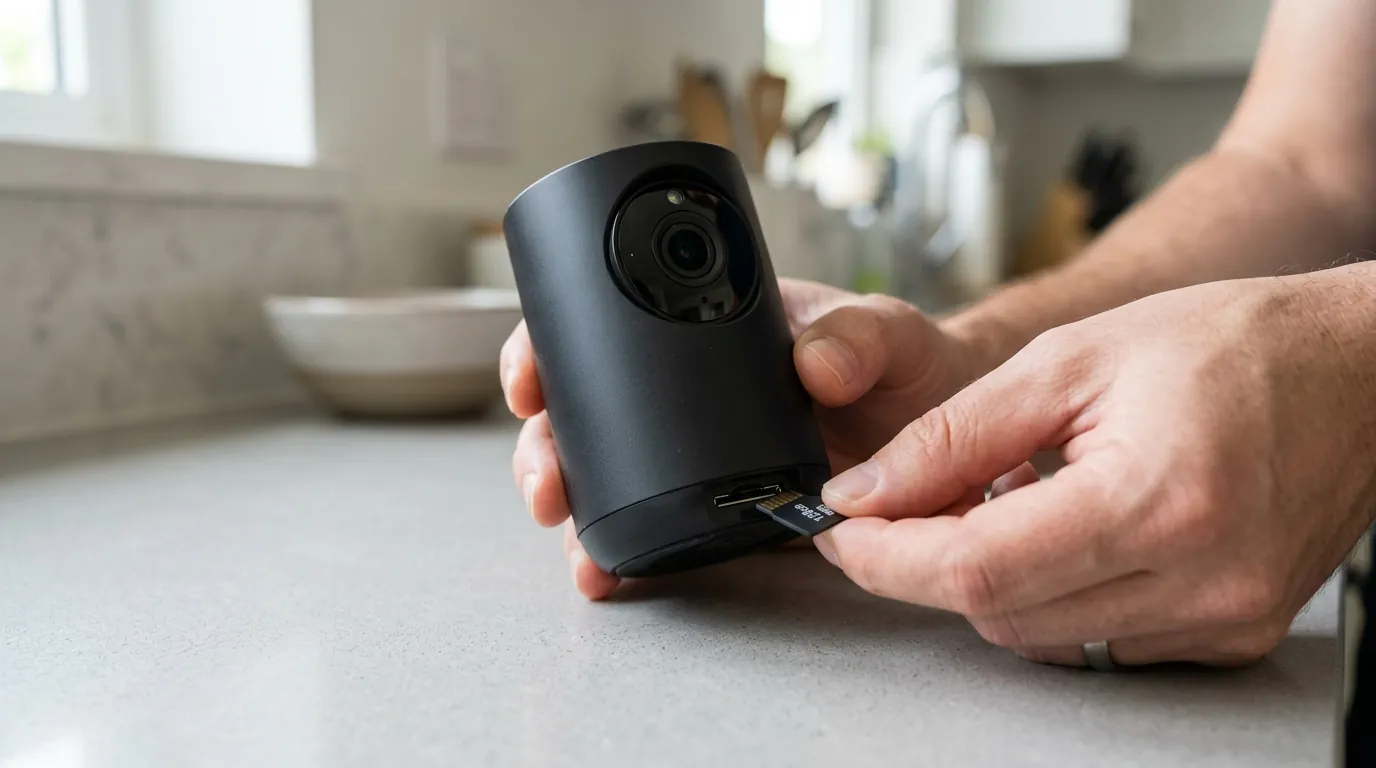
The decision to lean into the Google Nest ecosystem or look elsewhere depends largely on your tolerance for recurring costs and your need for high-accuracy AI alerts.
For Prospective Buyers
- Evaluate Subscription Needs: If you don’t plan to pay for the Premium Advanced tier (around $20/month), you are buying a camera that is effectively “locked” out of its best features. If you want high-end AI without the fee, consider local-processing brands.
- Model Selection: Ensure you are buying the 2nd Generation Nest Cam (Wired) or the Nest Cam (Battery). Older Nest IQ cameras may support Familiar Faces but often lack the processing power for the newer multi-signal “clothing” updates.
- Check Local Laws: Before buying, verify that Familiar Faces is legally available in your state or country. Google geofences this feature based on local biometric privacy regulations.
For Existing Owners
- Update the App: Check the App Store or Play Store for Google Home version 4.20 or higher.
- Verify Subscription: Check your “Subscriptions” tab in the Google Home app to see if the Premium Advanced upgrade is available to you.
- Audit Your Library: Spend 10 minutes reviewing your Familiar Faces list. Delete any “unnamed” faces that are actually just blurry shots of people already in your library; this helps the new AI refresh tool work more efficiently.
- Monitor Accuracy: Over the next two weeks, pay attention to “Person Detected” alerts. If the camera is still failing to recognize a frequent visitor, manually tag them in the app to “seed” the new AI library with better data.
Decision Framework: Is the Update Worth the Upgrade?
| If you are… | Priority | Recommendation |
|---|---|---|
| A Renter | Portability & Ease | Stick to the Standard Nest Aware plan; the advanced body-tracking is overkill for small apartments. |
| A Homeowner | High Security/Accuracy | Upgrade to Premium Advanced. The clothing-persistence feature is a game-changer for large driveways/yards. |
| Small Business | Liability & Identification | Use the Advanced tier for better “Event Descriptions” to quickly scrub through footage of deliveries or staff. |
| Privacy-Focused | Data Sovereignty | Disable Familiar Faces and use the camera for “Person Detection” only, or switch to a local-storage brand. |
Total Cost of Ownership (3-Year Estimate)
When calculating the cost of a Google Nest Cam (Battery) under the new June 2026 guidelines, the hardware price is only the beginning.
- Hardware: Around $180
- Subscription (Premium Advanced): $200/year x 3 years = $600
- Estimated Power/Battery Replacement: $30
- 3-Year Total: $810
In comparison, a “no-subscription” camera with a local NVR (Network Video Recorder) would typically cost around $300-$400 over the same period. The $400+ premium for the Nest system is essentially the “AI Tax” for the Familiar Faces and Gemini-powered event descriptions.
Frequently Asked Questions
Does the June 2026 update work on older Nest IQ cameras?
While Nest IQ cameras (the models with the blue rings) still support basic Familiar Faces, they generally do not support the new clothing-based recognition or Gemini-enhanced sound descriptions. Those features require the local processing power found in the 2nd Generation (2021 and later) Nest Cam models.
Can I use clothing recognition without a subscription?
No. While basic person detection is available on most Nest Cams, the Familiar Faces feature—including the new 2026 multi-signal updates—requires an active Nest Aware or Google Home Premium subscription. The specific “clothing and body size” persistence is exclusive to the Premium Advanced tier.
How does the camera “know” my clothes if I change them?
The system uses “temporal consistency.” It identifies you by your face when you first enter the frame. As you move around, it “locks onto” your clothing and body shape for that specific session. It does not “remember” your favorite shirt for the next day; rather, it uses the clothing to keep track of you while your face is turned away during a single event.
Is Familiar Faces available in Illinois or Portland?
Due to strict biometric privacy laws (like BIPA in Illinois), Google has historically disabled Familiar Faces in certain jurisdictions. While the 2026 update includes more “non-biometric” signals, the core of the feature still relies on facial geometry, meaning it remains unavailable in regions with restricted biometric processing laws.
Sources
- Google Nest Support
- Google Safety Center
- 9to5Google
- Android Headlines
- PCWorld