
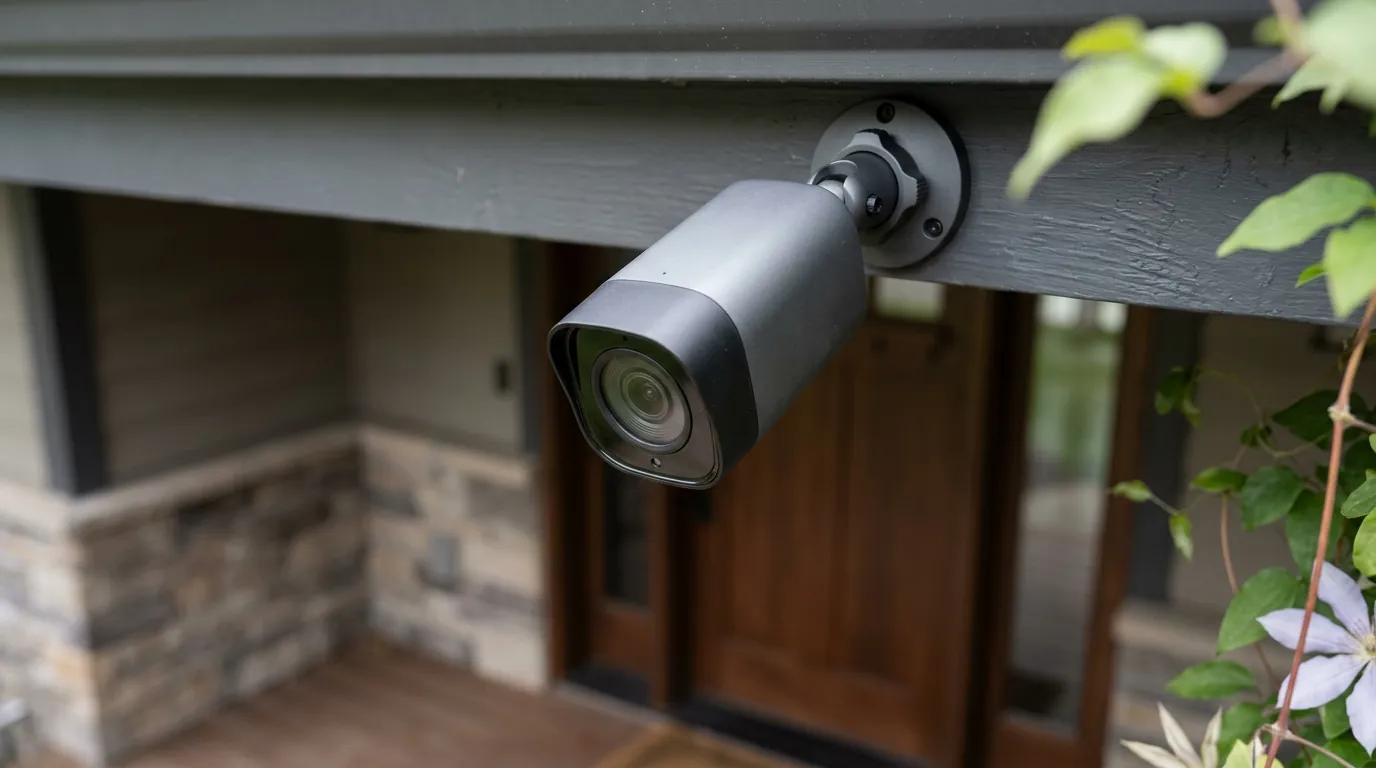
Best Wireless Cameras That Work Without Wi-Fi (2026 Guide)
For remote properties, construction sites, and off-grid cabins, Wi-Fi isn’t just unreliable—it’s often non-existent. In 2026, the market has finally solved this “remote compromise” by standardizing 4K resolution and solar-integrated cellular hardware that operates entirely independent of a home network.
Quick Answer: For 2026, the best wireless cameras without Wi-Fi are the Reolink Go PT Ultra and Eufy 4G LTE Cam S330. Both offer 4K resolution, solar power, and local storage via LTE, bypassing the need for home internet or subscriptions.
Choosing a security camera for a location without Wi-Fi used to mean settling for grainy 1080p footage and expensive, proprietary data plans. However, 2026 has marked a “Cellular Pivot” in the industry. The gap between standard home Wi-Fi cameras and off-grid cellular models has effectively closed, with flagship LTE models now matching the 4K clarity and AI-driven detection of their indoor counterparts.
For buyers looking to secure a perimeter where the router cannot reach, the decision no longer hinges on whether the camera is “good enough,” but rather on how the data is managed and how the hardware survives the elements.
What happened
The landscape of off-grid security underwent four major shifts over the last 24 months. These changes have collectively made cellular cameras more accessible to the average homeowner while simultaneously frustrating owners of legacy hardware.
The Rise of 4K LTE Standard
Until recently, cellular cameras were capped at 1080p or 2K to conserve bandwidth. In 2026, manufacturers like Reolink and Eufy have standardized the 4K (8MP) sensor across their flagship LTE lines. This shift is driven by more efficient H.265+ video compression, which allows high-resolution streams to travel over 4G and 5G networks without consuming significantly more data than old 1080p streams.
The Arlo Subscription Squeeze
A significant point of friction in the 2026 market involves Arlo’s firmware strategy. Recent updates to legacy models, specifically the Arlo Go 2, have reportedly restricted certain local-only features that were previously standard. Users are increasingly reporting that “Arlo Secure” subscriptions are now required to access basic motion zones and high-resolution playback, even when using a local microSD card. This has pushed a large segment of the “privacy-first” community toward brands like Reolink and Vosker that prioritize local-first storage.
The Death of 1080p Off-Grid
Entry-level 1080p cellular cameras are rapidly disappearing from major retailers. The industry consensus is that 1080p is insufficient for off-grid use, where identifying a license plate or a face at a distance is the primary goal. By phasing out these lower-resolution sensors, brands have moved the “entry level” price point up, but the utility of the hardware has tripled.
Carrier Expansion
The friction of “finding the right SIM card” has been largely eliminated. Most 2026 flagship models now ship with pre-activated 3-in-1 SIM cards that automatically seek the strongest signal from AT&T, T-Mobile, or Verizon.
Comparison: 2024 vs. 2026 Cellular Camera Baseline
| Feature | 2024 Baseline | 2026 Standard |
|---|---|---|
| Resolution | 1080p or 2K | 4K (8MP) |
| Battery Capacity | 5,000 - 7,000 mAh | 9,000 - 13,000 mAh |
| AI Features | Basic Motion | On-Device Vehicle/Animal/Person |
| Data Compression | H.264 / H.265 | H.265+ (High Efficiency) |
| Solar Integration | Optional Add-on | Integrated or Bundled |
Why it matters for buyers
The shift to 4K LTE hardware isn’t just a spec bump; it changes the “Total Cost of Ownership” (TCO) and the reliability of remote monitoring.
True Cost of Ownership: LTE Data vs. Cloud Subscriptions
When buying a camera that works without Wi-Fi, you are managing two recurring costs: the data plan (to get the video to your phone) and the cloud storage fee (to save the video).
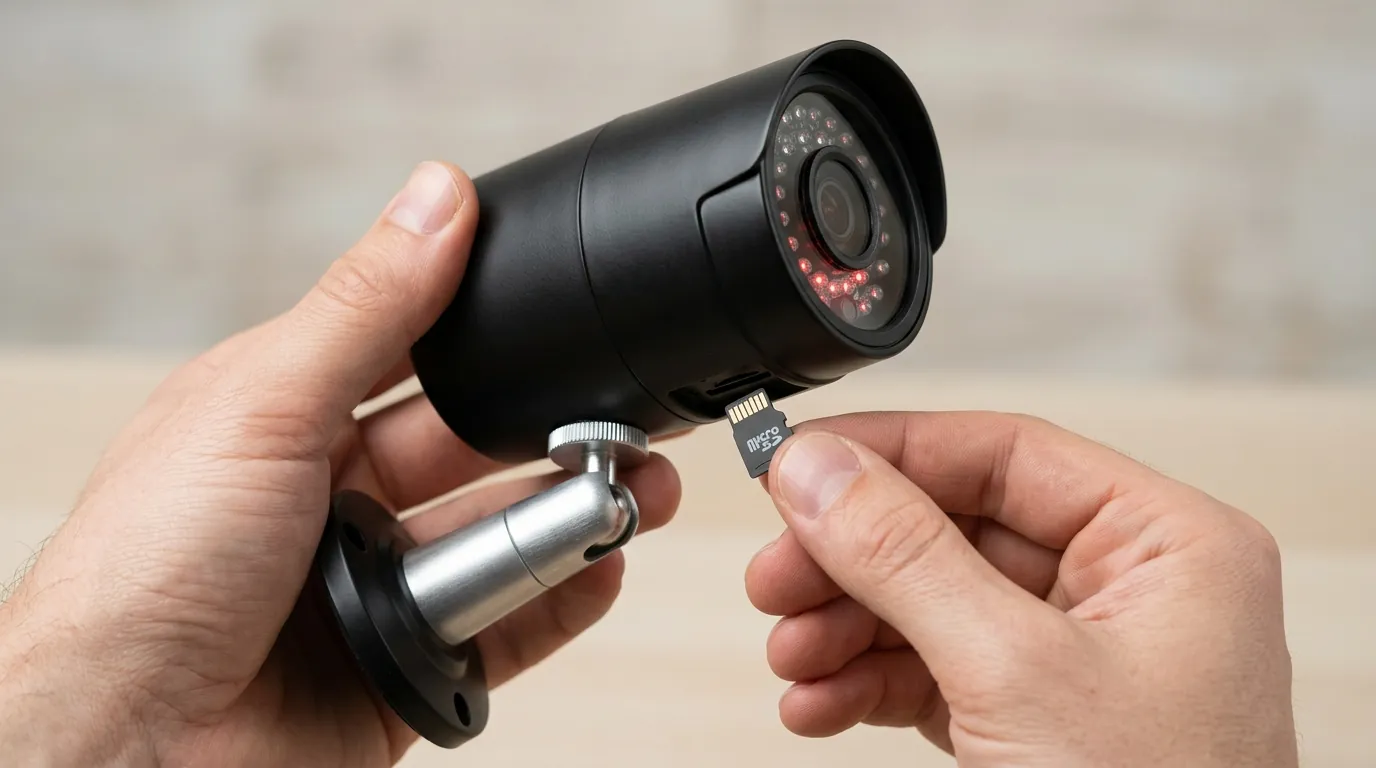
In 2026, the most cost-effective strategy is to buy hardware with high-capacity local storage (up to 256GB microSD support) and use a flat-rate IoT SIM card. According to Reolink’s technical specifications, the Go PT Ultra can operate on roughly 1.3GB to 2GB of data per month for standard motion-triggered monitoring. By avoiding “Cloud Subscriptions” like Arlo Secure or Ring Protect, which can cost $120–$200 per year, buyers can redirect those funds into a higher-tier data plan or a larger solar array.
The Solar-Cellular “Forever Power” Reality
2026 models have optimized the “Solar-to-Battery” ratio. Improved 5G/LTE antennas provide approximately 30% better signal retention in rural “dead zones” compared to 2023 hardware. This is critical because a camera struggling to find a signal is the #1 cause of battery drain. When a camera has a stable connection and an integrated solar panel (like the Eufy S330), it can theoretically stay at 100% charge indefinitely, even in high-traffic areas.
Benchmark: Data Usage per 100 Motion Events
Calculated based on 15-second clips at 15fps.
- 1080p (H.264): ~450 MB
- 4K (H.265+): ~320 MB
Note: Counter-intuitively, 2026’s 4K cameras often use less data than older 1080p cameras because the H.265+ codec is significantly more efficient at compressing static backgrounds common in rural settings.
Impact on existing owners
If you already own a cellular camera from 2023 or earlier, you may be noticing a decline in performance that isn’t necessarily related to hardware failure.
Legacy Hardware Degradation
As cloud infrastructures pivot to support massive 4K streams, owners of 1080p LTE cameras (like the original Reolink Go or Arlo Go) are reporting slower app response times. The servers are optimized for the newer codecs, often leaving older devices with “handshake” delays that can take 10-15 seconds to pull up a live view.
The “SIM Lock” and Frequency Trap
Carriers are aggressively sunsetting specific 4G frequency bands to make room for 5G-standalone (5G-SA) networks. Some older cellular cameras that lack “Band 71” (T-Mobile) or “Band 13” (Verizon) support are becoming “zombie” devices—they power on, but they can no longer find a signal in areas where they once worked perfectly.
Resale Value
The market for used 1080p cellular cameras has cratered. With new 4K models entering the $150–$250 range, older 1080p units have little resale value beyond $40–$50, making them “run-to-failure” assets rather than something you can trade in.
Carrier Band Compatibility Checklist for 2026
If you are buying a SIM card separately, ensure the camera supports these essential bands for US coverage:
- Verizon: Bands 2, 4, 13
- AT&T: Bands 2, 4, 5, 12, 17
- T-Mobile: Bands 2, 4, 12, 66, 71
What to do now
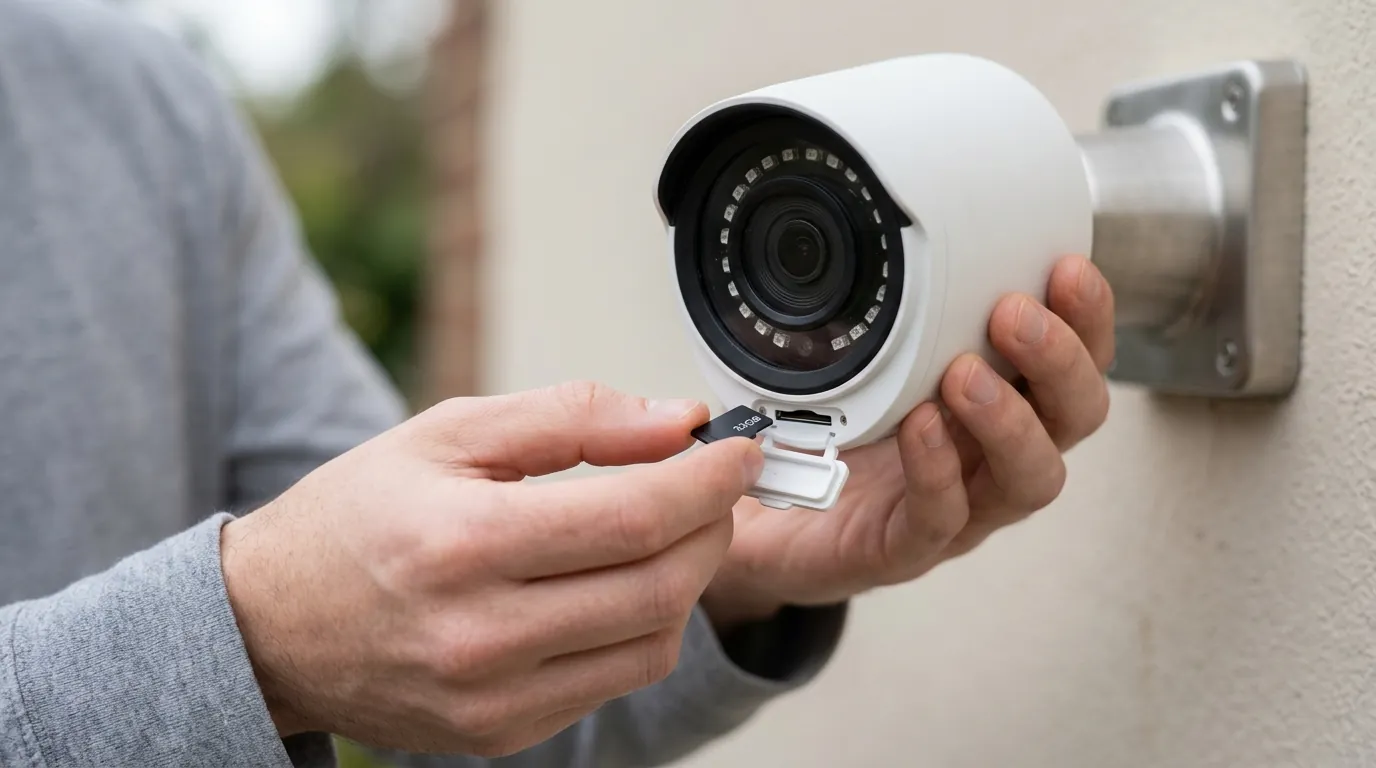
The “best” camera depends on your specific deployment scenario. In 2026, we categorize the top choices into three distinct use cases.
Top 3 Recommendations for 2026
1. Best Overall: Reolink Go PT Ultra
- Price Band: $200–$250
- Why: It is the most versatile “set and forget” camera. It offers 4K resolution and a 355° pan/tilt range, allowing you to scan an entire job site or pasture from your phone. It supports microSD cards up to 128GB, meaning you don’t need a subscription to view your recordings.
- Source: Reolink Go PT Ultra Official Specs
2. Best Hybrid: Eufy 4G LTE Cam S330
- Price Band: Around $250
- Why: Ideal for construction sites that will eventually have Wi-Fi. This camera can switch between LTE and Wi-Fi automatically. It also features a massive 13,000 mAh battery and an integrated solar panel, reducing the footprint of the installation.
- Source: Eufy S330 Product Page
3. Best Rugged/Pro: Vosker V300 Ultimate
- Price Band: $400–$500
- Why: For extreme environments (northern winters or deep forests), Vosker remains the gold standard. The V300 Ultimate includes a 15,000 mAh external power bank and is designed for long-term autonomy where human intervention is impossible for months at a time.
- Source: Vosker V300 Ultimate Specs
Decision Framework: Which should you prioritize?
- If you are a Renter or Temporary User: Prioritize the Eufy S330. The integrated solar panel means you don’t have to drill multiple holes for a separate panel, and the Wi-Fi/LTE switching makes it useful when you move back to a connected home.
- If you are a Property Owner (Farm/Ranch): Prioritize the Reolink Go PT Ultra. The pan/tilt function is essential for checking on livestock or multiple gates with a single camera.
- If you are a Business/Remote Site Manager: Prioritize the Vosker V300 Ultimate. The reliability of their proprietary “Vosker Sense” AI and the massive battery bank outweighs the higher initial hardware cost.
How to Choose the Right Data Plan
Avoid adding a “tablet” or “wearable” line to your existing Verizon or AT&T personal account. These are often throttled or overpriced for the small, bursty data needs of a camera. Instead, use third-party IoT SIMs:
- EIOTClub: Offers flat-rate, pre-paid plans (e.g., $100 for a full year of data). They use “Triple-Network” switching to find the best signal.
- Simbase: Best for technical users who want to manage multiple cameras from a single dashboard with “pay-as-you-go” data.
Installation Tips for Maximum Solar Efficiency
Even the best 2026 solar cameras fail if the panel is poorly positioned.
- South-Facing is Mandatory: In the Northern Hemisphere, your panel must face true South.
- The 45-Degree Rule: Tilt the panel at a 45-degree angle. This prevents snow buildup in winter and dust accumulation in summer.
- Clear the “Micro-Shadows”: Even a single leaf casting a shadow across 10% of a solar panel can reduce its output by 50%. Ensure the “arc of the sun” is clear of branches throughout the day.
Total Cost of Ownership (3-Year Projection)
| Model | Hardware Cost | 3-Year Data/Sub Cost | Total 3-Year TCO |
|---|---|---|---|
| Reolink Go PT Ultra | ~$230 | ~$180 (Prepaid SIM) | ~$410 |
| Eufy S330 | ~$250 | ~$180 (Prepaid SIM) | ~$430 |
| Arlo Go 2 | ~$200 | ~$540 (Data + Arlo Secure) | ~$740 |
| Vosker V300 Ult. | ~$450 | ~$360 (Vosker Plan) | ~$810 |
While the Arlo Go 2 appears cheaper upfront, the “feature paywall” and mandatory subscription for 4K/AI features make it nearly double the cost of the Reolink or Eufy over a three-year period. For most users in 2026, the Reolink Go PT Ultra provides the best balance of high-end 4K performance and long-term fiscal sanity.
Sources
- Reolink Go PT Ultra Product Page — https://reolink.com/product/reolink-go-pt-ultra/
- Eufy 4G LTE Cam S330
- Vosker V300 Ultimate
- Arlo Go 2 Technical Specs — https://www.arlo.com/en-us/cameras/go/arlo-go-2.html
- EIOTClub Data Plans — https://www.eiotclub.com/
- FCC ID Search (RF Compliance) — https://www.fcc.gov/oet/ea/fccid