
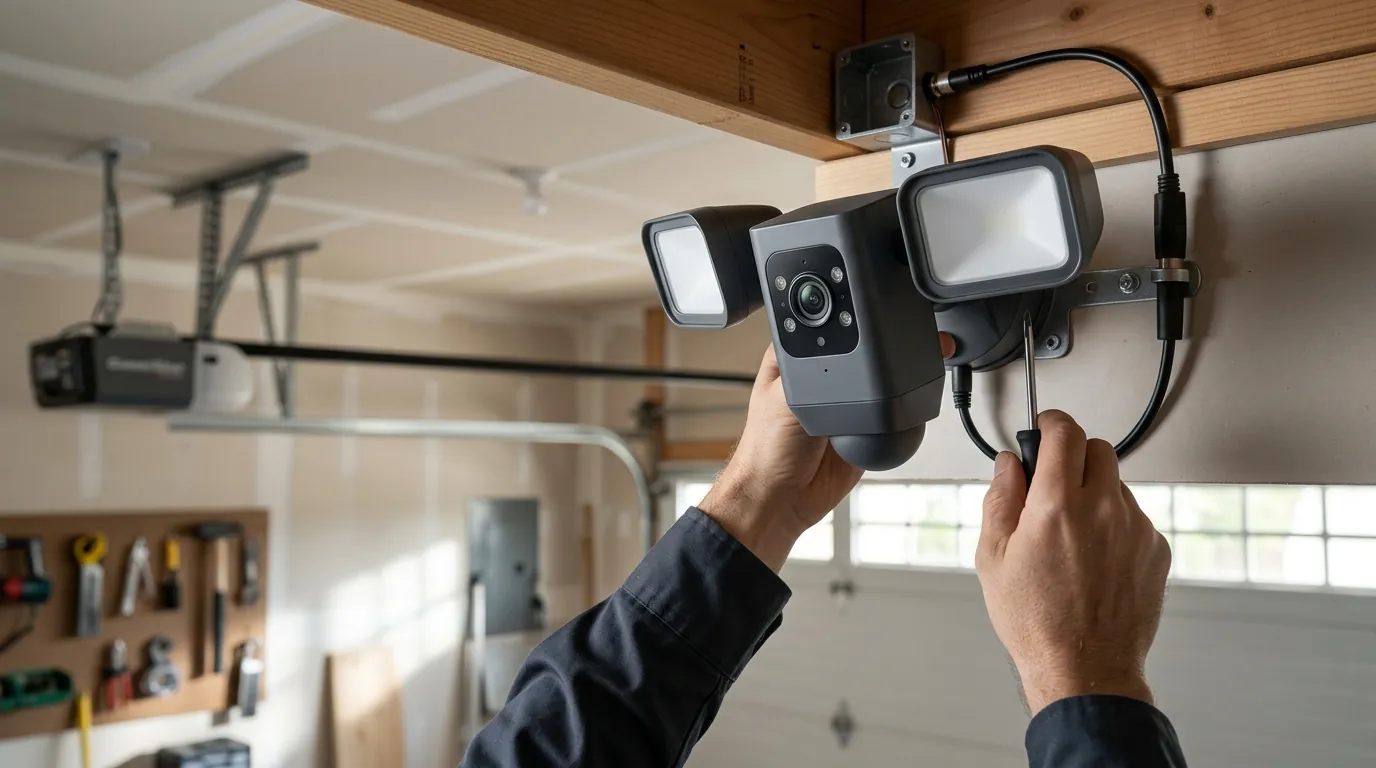
Best Floodlight Camera for Driveway 2026: The 16MP Local Shift
The era of grainy 1080p driveway footage has ended as 2026 brings 16MP panoramic sensors and subscription-free local AI to the forefront of home security.
Quick Answer: In 2026, the Reolink Duo 3 (16MP panoramic) and Eufy E340 (Dual-Lens) are the top driveway picks. Both offer ultra-high resolution and $0-subscription local storage, outclassing legacy cloud-only brands.
What happened
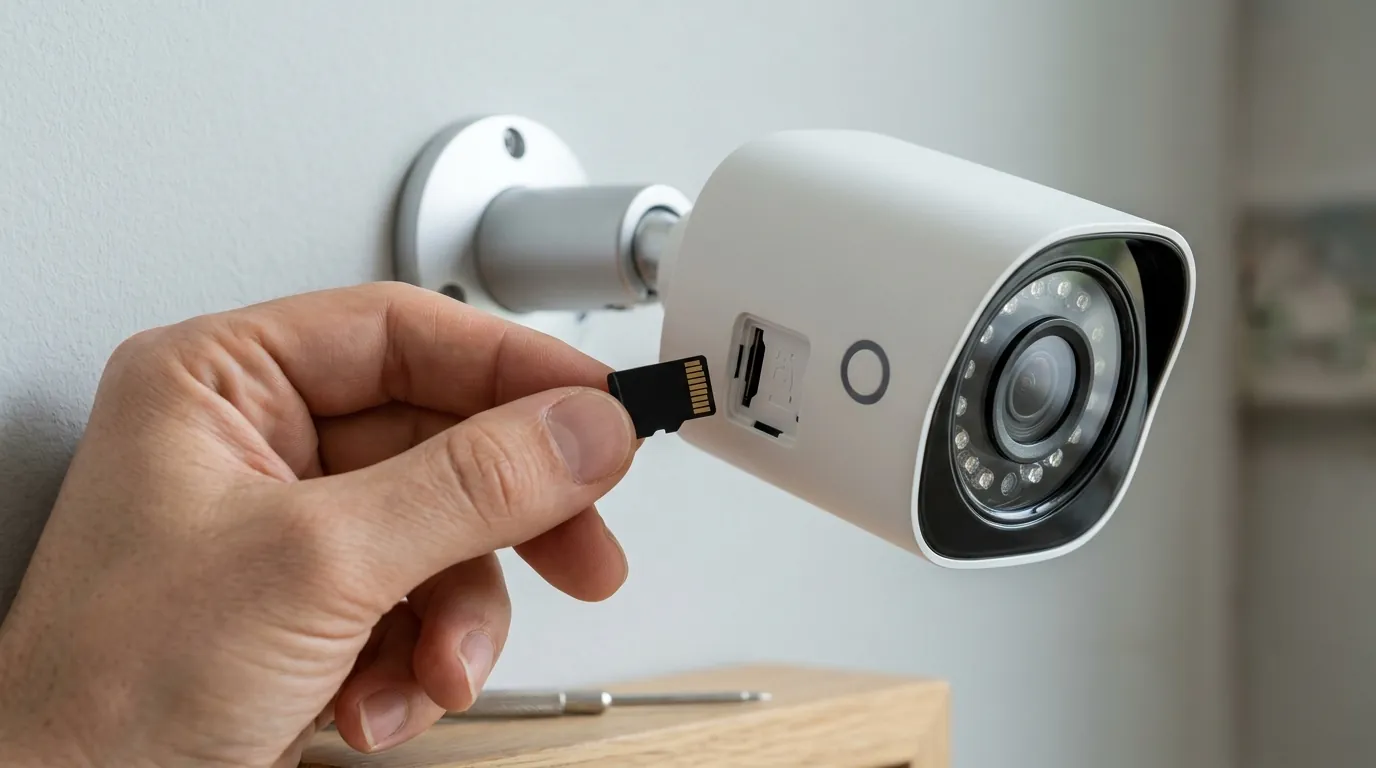
The landscape of driveway security underwent a fundamental shift in early 2026. For years, the industry hit a “4K ceiling” where increasing pixel counts didn’t necessarily translate to better identification due to digital noise and compression. That changed with the mainstream adoption of 16MP panoramic sensors and specialized dual-lens arrays designed specifically for the long, wide geometry of a residential driveway.
The Death of the 1080p Driveway Camera
In 2026, 1080p resolution is no longer considered “security grade” for outdoor use. The primary driver for this obsolescence is the Reolink Duo 3 PoE/WiFi, which utilizes two 8MP sensors to create a seamless 16MP (7680x2160) panoramic view. Unlike traditional cameras that fish-eye the image to achieve wide angles, these 16MP units maintain a flat perspective, allowing for license plate legibility at distances previously impossible for consumer hardware.
Standard 4K cameras (8MP) typically lose the ability to identify a face or plate beyond 20-25 feet. The 16MP shift extends this “identification zone” to nearly 50 feet, covering the full length of most suburban driveways.
Matter 1.4 and the End of Walled Gardens
The release of the Matter 1.4 specification in late 2025 and its subsequent rollout into 2026 firmware has finally addressed the “walled garden” problem. Previously, if you owned a Ring floodlight, triggering your porch lights (of a different brand) required complex third-party workarounds like IFTTT or Home Assistant. Matter 1.4 introduces standardized camera events, meaning a Reolink or Eufy floodlight can now natively trigger any Matter-enabled smart bulb or siren across your ecosystem with sub-second latency.
Furthermore, solar technology has reached a parity point. Models like the Reolink Duo 3 Solar now utilize high-efficiency panels and optimized LED arrays to output over 3,000 lumens. This matches the brightness of traditional hardwired halogen replacements, removing the “dimness” penalty previously associated with wire-free installs.
Table 1: 2026 Resolution & Identification Standards
| Resolution | Typical Pixel Count | Effective ID Distance (Face/Plate) | Recommended Use Case |
|---|---|---|---|
| 1080p | 2.1 Megapixels | 5–10 feet | Indoor/Doorbell only |
| 2K (QHD) | 4.0 Megapixels | 12–18 feet | Small patios / Side entries |
| 4K (UHD) | 8.3 Megapixels | 20–25 feet | Standard driveways |
| 16MP (Dual) | 16.6 Megapixels | 45–55 feet | Large driveways / Street monitoring |
Why it matters for buyers
For the consumer, the 2026 market is defined by a rebellion against “subscription fatigue.” As cloud-based brands like Ring and Nest have incrementally raised prices, the “Total Cost of Ownership” (TCO) has become the primary metric for savvy buyers.
The Real Cost of ‘Cheap’ Subscription Cameras
Legacy brands often sell hardware at a lower entry point (frequently in the $150–200 range) but require mandatory monthly fees to unlock basic AI features like vehicle detection or to view recorded footage. By 2026, these costs have compounded. A multi-camera household using Ring Protect or Nest Aware can expect to pay $120 to $180 annually.
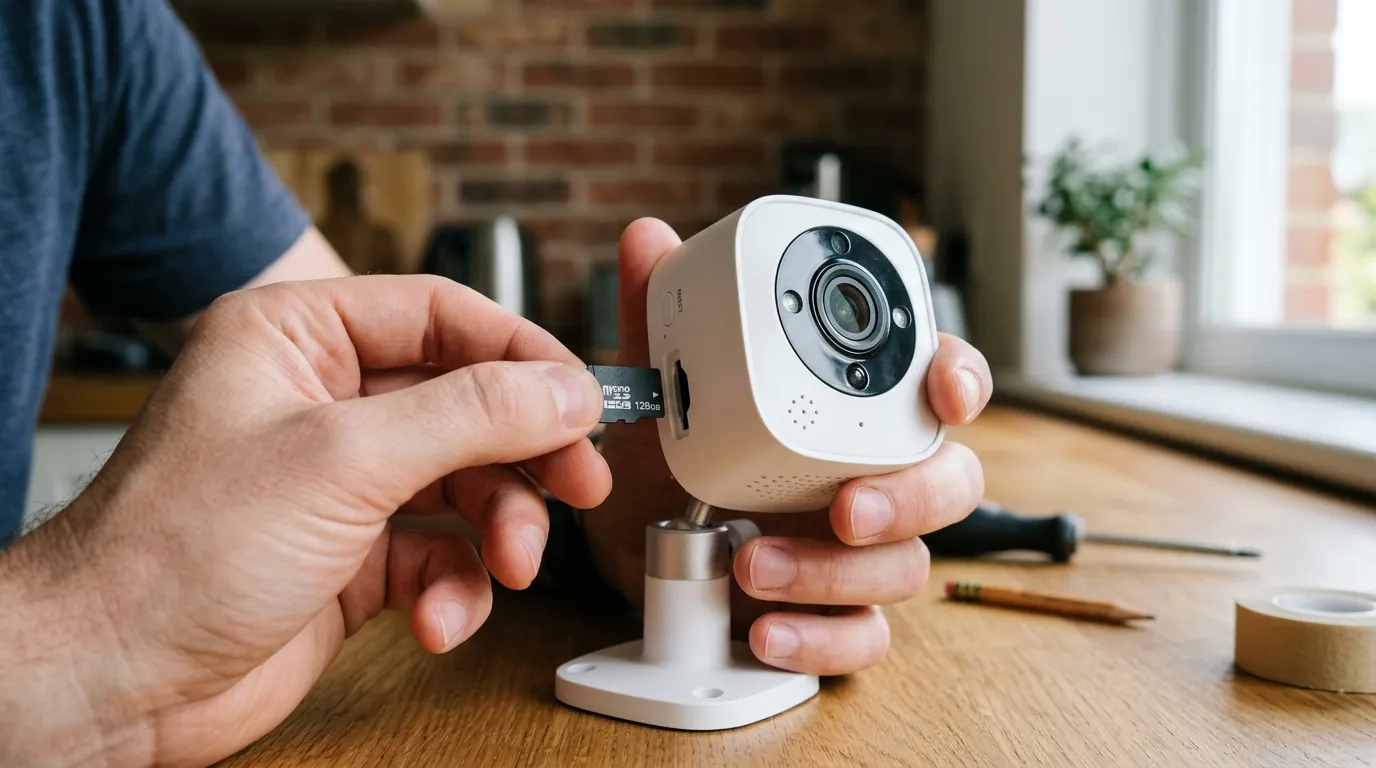
In contrast, the “Local Shift” led by Eufy and Reolink allows users to store 4K and 16MP footage on internal microSD cards or dedicated home servers (NVRs). These cameras process AI detections locally on the device’s chip rather than in the cloud, resulting in faster notifications and zero monthly overhead.
Total Cost of Ownership (TCO) Over 5 Years
| Component | Subscription Model (e.g., Ring/Nest) | Local-Storage Model (e.g., Eufy/Reolink) |
|---|---|---|
| Hardware Cost | Around $200 | Around $250 |
| Storage Media | $0 (Cloud) | $40 (High-End 512GB SD) |
| Monthly Fees (5 yrs) | $600 ($10/mo avg) | $0 |
| Total 5-Year Cost | Around $800 | Around $290 |
Privacy as a Performance Feature
Privacy is no longer just an ethical concern; in 2026, it is a performance metric. Cloud-dependent cameras suffer from “latency lag”—the time it takes for a motion event to travel to a server, be processed, and send an alert to your phone. This can result in a “tail-light” clip, where the camera only starts recording after a vehicle has already passed through the frame.
Newer models like the Eufy Floodlight Cam E340 use edge-computing chips to analyze video frames locally. This reduces notification lag to under one second and ensures that sensitive video of your home never leaves your local network unless you choose to view it remotely. This architectural change also mitigates the risk of law enforcement accessing footage without a warrant, a point of significant contention in previous years.
Impact on existing owners
If you currently own a floodlight camera purchased between 2020 and 2023, 2026 is a year of technical friction. Legacy hardware is struggling to keep up with modern software demands, and the transition to Matter 1.4 has left many older units behind.
The 2026 Firmware Crisis
The push for advanced AI and Matter compatibility has led to “firmware bloat.” Community reports on platforms like r/EufyCam have highlighted issues with recent updates (specifically the 1.6.x.x series for the E340 and HomeBase 3). Some users have experienced “bricking” or unpairing events where cameras mounted 15 feet high on a garage gable suddenly require a manual button press to reconnect after a mandatory update.
For owners of the Reolink Duo series, firmware stability has been better, but the high bandwidth of 16MP streams has exposed weaknesses in older Wi-Fi 5 (802.11ac) home routers. If you upgrade the camera without upgrading your network, you may experience significant “spinning wheel” lag when trying to view a live stream.
When to Upgrade Your Legacy Hardware
Owners of 1080p hardware should consider 2026 the “end of life” for their equipment for three reasons:
- Evidence Standards: Law enforcement agencies are increasingly requesting high-resolution footage. 1080p video often lacks the pixel density required for facial recognition or plate reading at night, making it less useful as evidence.
- Connectivity: As Wi-Fi 7 becomes standard in 2026, older 2.4GHz-only cameras are facing increased interference and congestion in suburban environments.
- Resale Value: Non-Matter compatible cameras have seen a sharp decline in the secondary market. If you plan to sell your old gear, the window is closing as buyers prioritize interoperable ecosystems.
What to do now
Choosing a driveway camera in 2026 requires a “network-first” mindset. You are no longer just buying a light fixture; you are installing a high-bandwidth data node.
The Best 2026 Driveway Setup: PoE vs. WiFi
For the most reliable 16MP experience, Power over Ethernet (PoE) is the professional’s choice. The Reolink Duo 3 PoE uses a single Cat6 cable to provide both power and data. This eliminates Wi-Fi dropouts and allows for a constant high-bitrate stream that Wi-Fi often throttles to save power.
However, most US homes are pre-wired with a standard round junction box for a floodlight. In this scenario, the Eufy E340 is the most logical “drop-in” replacement. It uses existing 110V wiring but features a dual-lens system: one 3K wide-angle lens for context and one 2K telephoto lens that automatically zooms in on and tracks people or vehicles.
Installation Checklist for High-Resolution Cameras
- Verify Upload Speed: A 16MP stream requires at least 15–20 Mbps of upload bandwidth at the install site. Use a speed test app on your phone while standing on a ladder at the camera’s intended location.
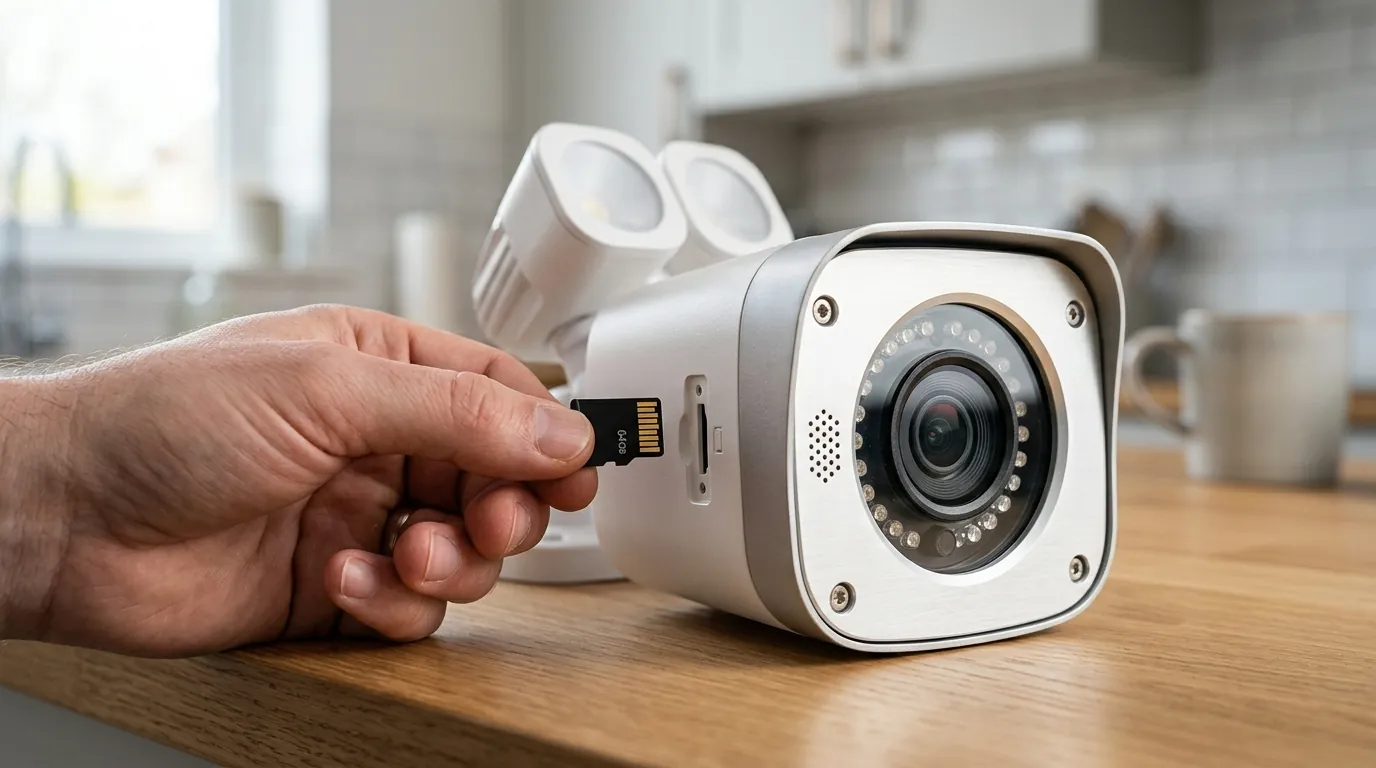
- Storage Selection: If using local storage, do not use standard “Value” SD cards. High-resolution 24/7 recording will burn through a standard card in months. Look for “High Endurance” or “Max Endurance” cards (e.g., SanDisk Max Endurance or Samsung PRO Endurance) rated for thousands of write hours.
- Lighting Calibration: 2026 floodlights are incredibly bright. Ensure you use the “Area Masking” feature in the app to prevent the floodlight from blinding your neighbors or reflecting off your own white gutters, which can “wash out” the camera’s night vision.
Decision Matrix: Which Camera is Right for You?
| If your priority is… | Choose… | Why? |
|---|---|---|
| Maximum Detail | Reolink Duo 3 (16MP) | The highest pixel density available; 180-degree seamless view. |
| Tracking/Zoom | Eufy Floodlight E340 | Dual-lens system allows for “telephoto” zoom on moving targets. |
| No Wiring Access | Reolink Duo 3 Solar | 3,000 lumens and 16MP resolution with zero wires. |
| Lowest TCO | Tapo C720 | Competitive pricing (around $150) with no required subscription. |
The 2026 market offers a clear path away from the monthly “security tax” of the previous decade. By prioritizing high-resolution local storage and Matter-compatible hardware, homeowners can secure their driveways with equipment that is both more capable and more private than ever before. Quvii continues to track these firmware shifts and hardware releases to ensure your security investment remains relevant in an accelerating market.
Sources
- Reolink — Reolink Duo 3 PoE 16MP Spec Sheet
- Eufy Security — Floodlight Cam E340 Dual-Lens Specifications
- Connectivity Standards Alliance — Matter 1.4 Specification Announcement
- Reddit — r/EufyCam Community Discussion on Firmware 1.6.x
- Reddit — r/ReolinkCam 16MP Panoramic Performance Reviews
- FCC ID Search — Verification of Wi-Fi 6/6E Radio Frequency Filings for Security Hardware