
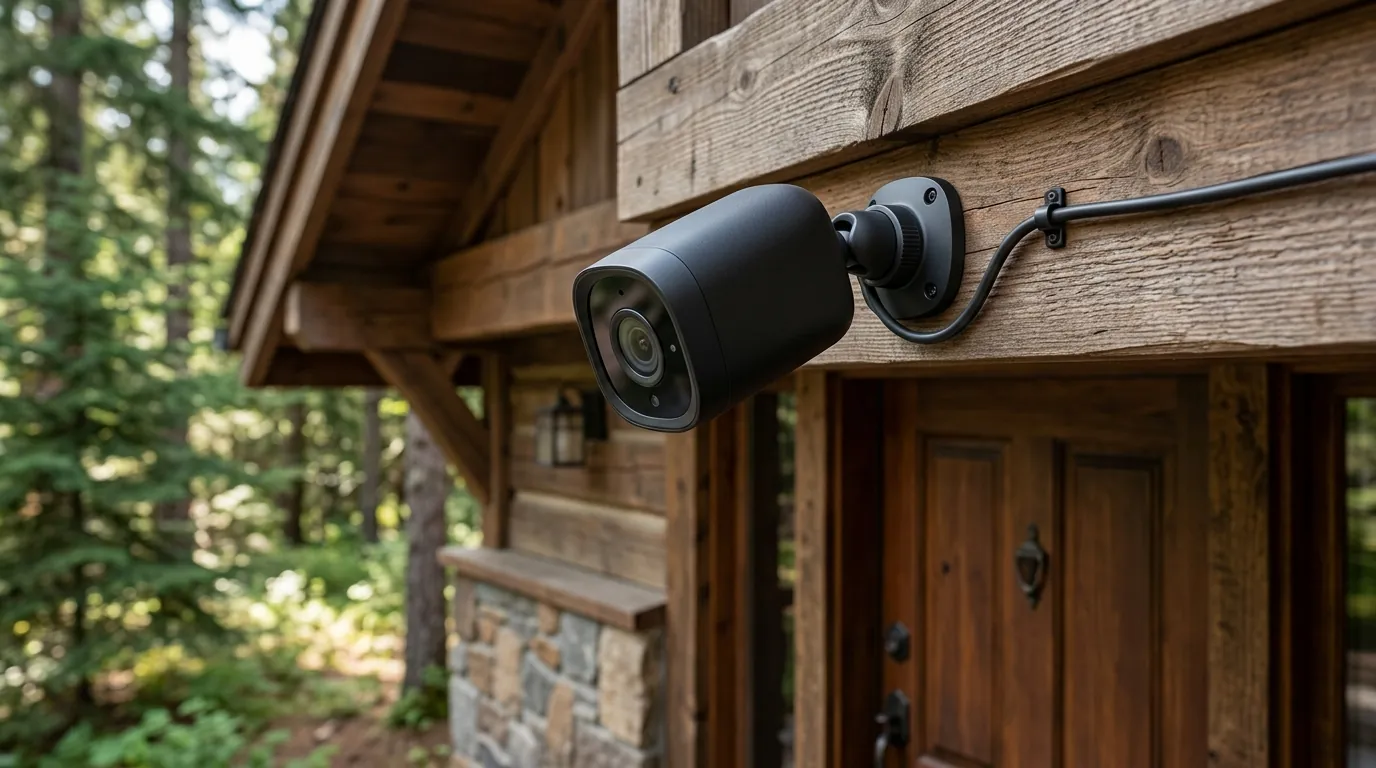
Best Battery Powered Outdoor Cameras for Cabins (2026 Guide)
Securing a remote property requires a shift in strategy from standard suburban setups, prioritizing energy efficiency and reliable local storage over high-bandwidth cloud dependencies. For 2026, the landscape of cabin security has been redefined by the arrival of continuous-recording battery units that finally bridge the gap between wire-free convenience and professional-grade surveillance.
Quick Answer: For 2026, the Reolink Altas PT Ultra is the best cabin camera due to its breakthrough continuous battery recording. For off-grid sites without Wi-Fi, the 4K Reolink Go Ultra remains the gold standard for LTE-based security.
What happened
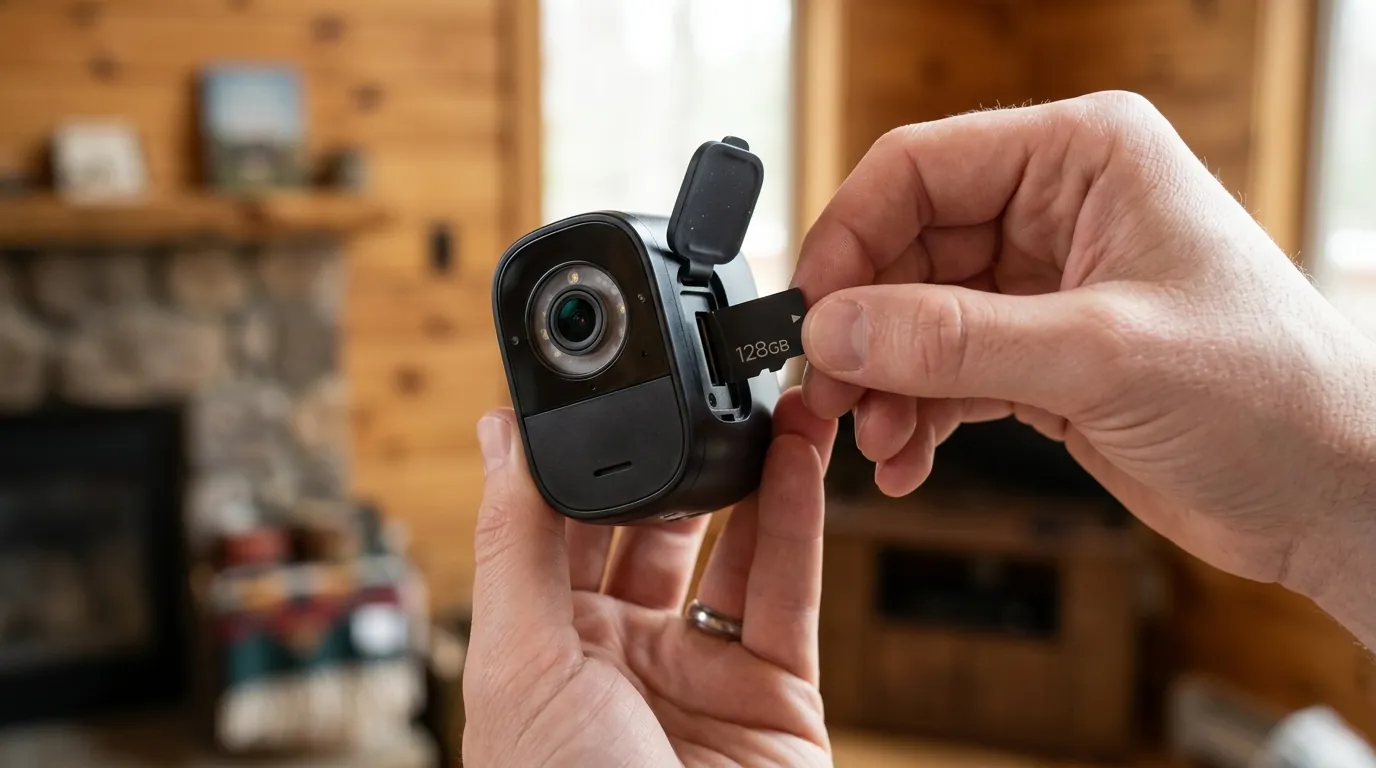
The “Battery Recording Gap” has officially closed in early 2026 with the mainstream adoption of continuous recording on battery-powered units. Historically, battery cameras were limited to “event-based” recording, meaning they only woke up when a PIR (Passive Infrared) sensor detected heat-based motion. This often resulted in missed seconds at the start of an event. New high-capacity battery architectures and low-power image processors have fundamentally changed this limitation.
Reolink’s Altas PT Ultra has set a new industry benchmark, offering 4K resolution and the ability to record 24/7 for up to 14 days on a single charge (or indefinitely with a sufficiently sized solar panel). This is achieved through a massive 20,000mAh internal battery and the “ColorX” ultra-low-light sensor, which captures full-color video in near-total darkness without requiring power-hungry spotlights.
Eufy has expanded its “Edge” ecosystem, allowing cabin owners to link remote solar cameras like the SoloCam S340 to a central HomeBase 3 for unified AI detection without monthly fees. This ecosystem approach allows for “Cross-Camera Tracking,” where a person detected by one cabin camera is automatically followed by others in the network, creating a seamless security perimeter.
Furthermore, 4K resolution has moved from a premium feature to the baseline for outdoor battery cameras. In the rural context of a cabin, where an intruder or a vehicle might be 50 to 100 feet away, the pixel density of 4K is necessary for identifying license plates or facial features that 1080p sensors simply blur into noise.
The End of “Clip-Only” Battery Cameras
For over a decade, the trade-off for going wireless was the loss of “pre-roll” or continuous footage. If a thief ran past a camera, the user often saw only the back of their head as they exited the frame. In 2026, the Altas PT Ultra and similar flagship models utilize a “Pre-Record” buffer or full continuous recording modes. According to Reolink’s official specifications, the camera can maintain a continuous stream to a local microSD card, providing the same level of forensic detail previously reserved for hardwired PoE (Power over Ethernet) systems.
Solar Efficiency Breakthroughs in 2026
Solar panels for security cameras have evolved from 2W or 3W trickles to 6W and 12W high-efficiency modules. This is critical for cabins located in high-latitude or heavily forested areas where “peak sun hours” are limited. Eufy’s integrated solar panels on the SoloCam S340 series now require as little as two hours of direct sunlight per day to maintain a full charge under standard operating conditions, according to Eufy’s support documentation.
2026 Flagship Comparison Table
| Feature | Reolink Altas PT Ultra | Eufy SoloCam S340 | Arlo Pro 5S 2K |
|---|---|---|---|
| Resolution | 4K (8MP) | Dual-Lens 3K/2K | 2K with HDR |
| Recording Mode | Continuous or Event | Event-Based | Event-Based |
| Battery Capacity | 20,000 mAh | [Information unavailable] | [Information unavailable] |
| Night Vision | ColorX (No IR needed) | Color (via Spotlight) | Color (via Spotlight) |
| Primary Storage | Local MicroSD (up to 512GB) | 8GB Local / HomeBase 3 | Cloud (Subscription req.) |
| Subscription | Optional (Cloud backup) | None required | Required for AI/Cloud |
| Price Band | Around $200 | $150–$200 range | $150–$200 range |
Why it matters for buyers
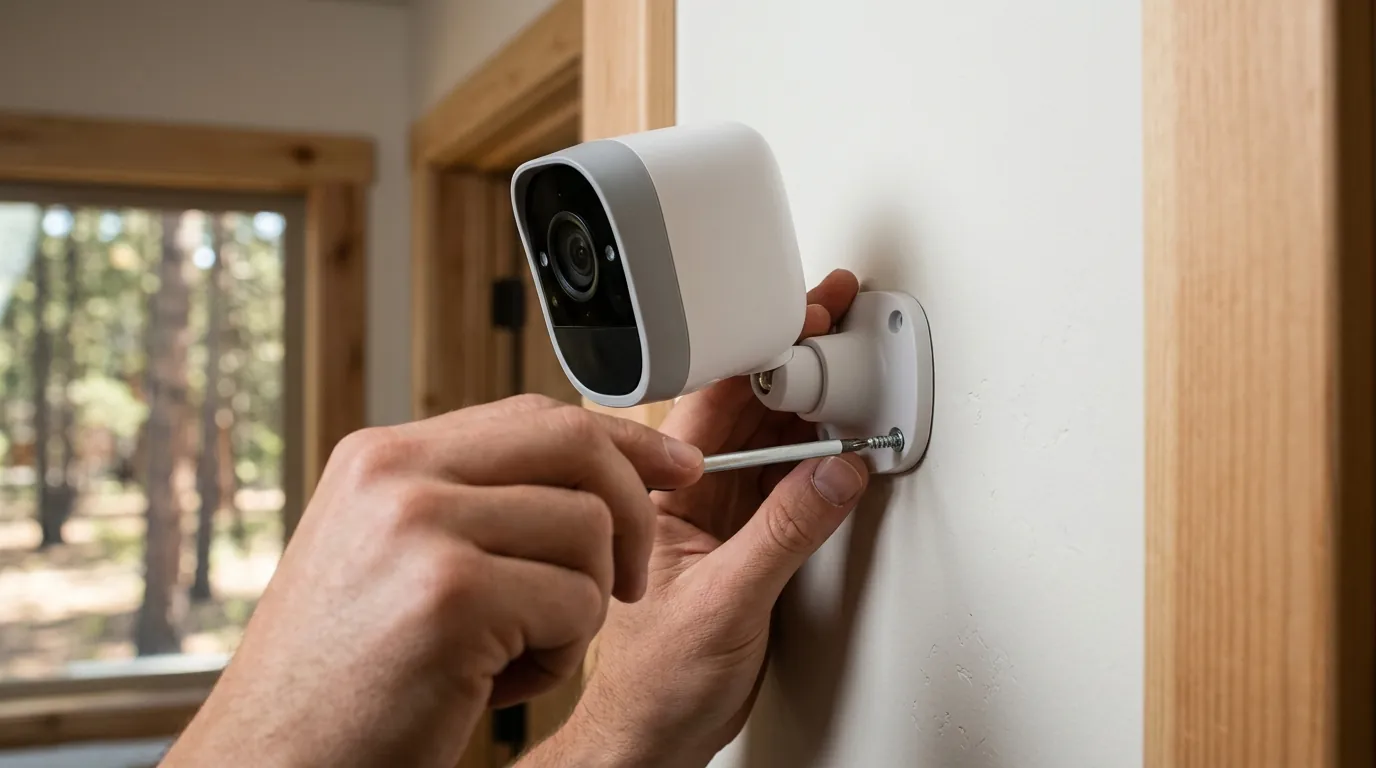
Cabin owners often deal with “slow” PIR sensors that miss the first few seconds of an event; 2026’s continuous-ready battery cameras eliminate this “pre-roll” problem. When a camera is installed at the end of a long cabin driveway, the time it takes for a traditional battery camera to “wake up” can be the difference between capturing a license plate and seeing an empty road.
Subscription fatigue is at an all-time high among consumers. New local-storage models save cabin owners $120–$200 per year compared to Ring or Nest plans. For a seasonal property, paying a monthly fee for a camera that may only see motion from a passing deer for six months of the year is increasingly unpalatable. Brands like Reolink and Eufy have capitalized on this by offering robust AI (Person, Vehicle, and Animal detection) directly on the device’s processor rather than offloading it to a paid cloud server.
Improved LTE integration in models like the Reolink Go Ultra (around $250 range) makes high-res security viable for truly remote “black hole” properties without Wi-Fi or Starlink. While many cabin owners are adopting Starlink for remote connectivity, the power draw of a Starlink dish (typically 50W–75W) makes it difficult to run 24/7 on a small solar setup. An LTE camera, which only draws milliwatts in standby, remains the more resilient choice for off-grid security.
Enhanced AI now distinguishes between “Wind in Trees” and “Intruder,” a critical fix for rural areas where wildlife frequently triggers older, dumber sensors. In 2026, the false-alarm rate for flagship battery cameras has plummeted, as on-device neural networks are now trained specifically on rural movement patterns.
Solving the “Remote Connectivity” Puzzle
For cabins with Starlink, the primary challenge is the “reboot cycle.” When Starlink loses signal due to heavy snow or obstruction, some older cameras struggle to reconnect without a manual power cycle. Modern 2026 units feature more aggressive Wi-Fi reconnection logic. If you are operating without any internet, the Reolink Go Ultra’s ability to record to an internal SD card while occasionally “checking in” via a 4G/5G LTE signal (using a SIM card from carriers like T-Mobile or Verizon) ensures the cabin is never truly dark.
The True Cost of Subscriptions in 2026
The “sticker price” of a camera is often a fraction of its lifetime cost. Arlo and Ring have moved more features—including high-resolution cloud recording and advanced AI filtering—behind monthly paywalls.
3-Year Total Cost of Ownership (TCO) Comparison:
- Reolink Altas PT Ultra: ~$200 (Hardware) + $30 (High-endurance 256GB SD card) + $0 (Subscription) = $230 Total.
- Arlo Pro 5S 2K: ~$180 (Hardware) + $155/year (Arlo Secure Plus for 4K/2K Cloud) = $645 Total.
For a cabin owner, that $415 difference over three years could be better spent on a more robust solar array or additional hardware.
Impact on existing owners
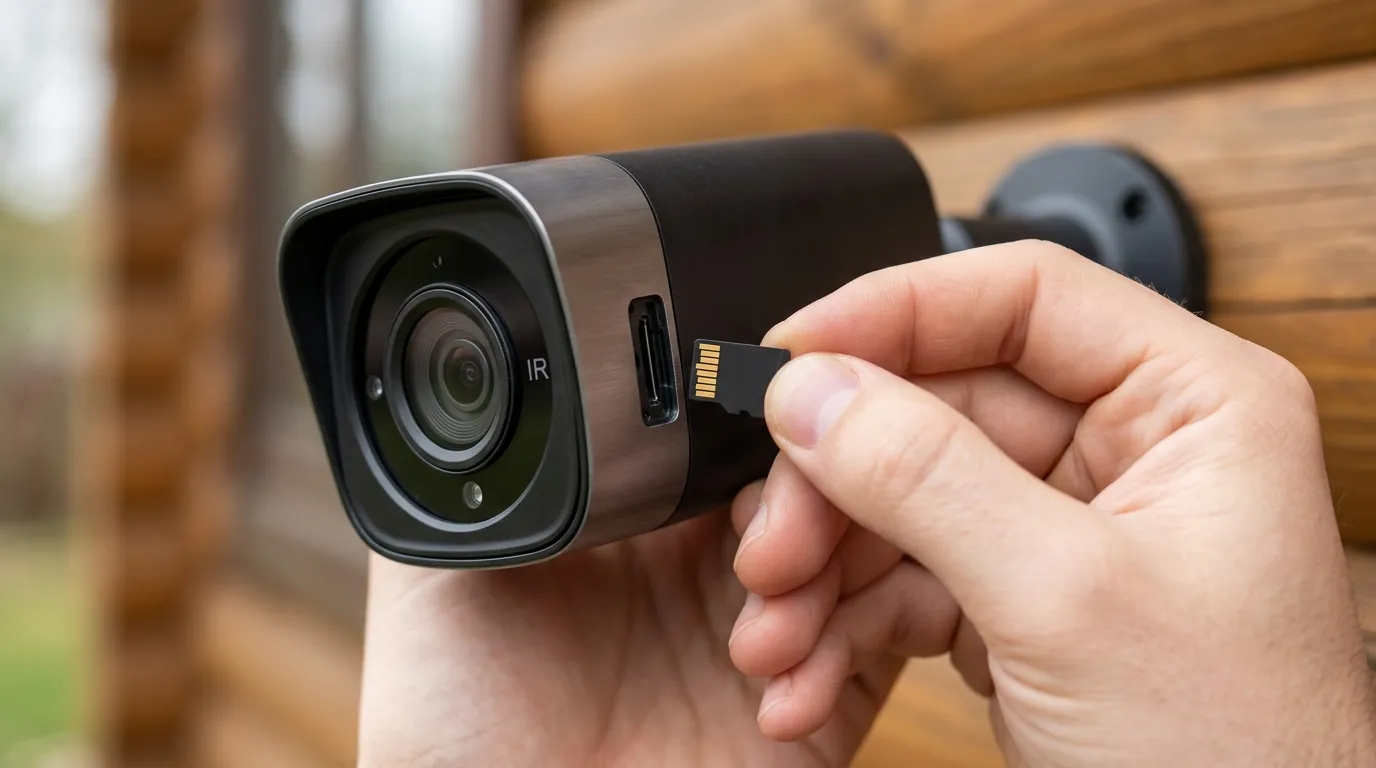
Owners of legacy 1080p battery cameras (like the original Arlo Pro or Ring Stick Up Cam) are finding their hardware increasingly obsolete as 4K becomes the standard for evidence. The gap in clarity is most noticeable when zooming in on a subject. On a 1080p sensor, a person’s face at 30 feet is often a blur of 10-15 pixels; on a 4K sensor, that same face contains enough detail for law enforcement to use in an investigation.
Recent firmware updates for the Reolink Altas series have refined the “Post-Motion Record” feature. This allows the camera to continue recording for a set duration (often up to 1 or 2 minutes) after the motion has ceased. This provides much better context for motion events, such as seeing where an intruder went after they stepped out of the primary detection zone. According to community discussions on r/HomeSecurity, this has significantly reduced the “choppiness” of recorded events compared to 2023-era firmware.
Battery degradation is a rising concern for 3-4 year old units. Lithium-ion batteries lose capacity over time, especially in extreme cabin winters where temperatures drop below -4°F (-20°C). 2026 models now feature more robust thermal management and, in some cases, internal heaters that use solar excess to keep the battery within a safe charging range.
Cross-brand compatibility remains low, forcing owners to decide between sticking with an ecosystem or performing a “rip-and-replace” for better local storage features. If you already have four Ring cameras, adding a Reolink Altas means managing two separate apps—a significant friction point for many users.
Is Your 1080p Camera Obsolete?
While a 1080p camera still provides “presence detection” (knowing that someone is there), it often fails at “identification” (knowing who is there). For a cabin where the police response time might be 30-60 minutes, the camera’s primary job is to provide high-quality evidence after the fact. In this regard, 1080p is increasingly viewed as insufficient for outdoor perimeter security.
Winter Battery Performance Realities
If your cabin is in a region like Minnesota or the Canadian Rockies, standard battery cameras will stop charging when the battery temperature hits 32°F (0°C), even if the sun is shining. Owners of older units often find their cameras dead by January. The 2026 flagship models from Reolink and Eufy have improved their “low-temperature hibernation” modes, which preserve the remaining charge by shutting down non-essential AI tasks until the solar panel can warm the unit back to a functional state.
What to do now
Assess your connectivity: If you have Starlink or stable Wi-Fi, prioritize the Reolink Altas PT Ultra (around $200 range) for its 360-degree coverage and 24/7 battery recording. The ability to “pan and tilt” the camera remotely is a massive advantage for cabins, as it allows you to check on different areas of the property (e.g., the woodpile, the boat dock, and the front door) with a single device.
Go solar-first: For cabins only visited monthly, ensure you choose a model with a detachable 6W or 12W solar panel to maintain 100% charge through the off-season. Integrated panels, like those on some Eufy models, are convenient but limit your mounting options. A detachable panel allows you to mount the camera under a shaded eave while placing the panel 10 feet away in direct sunlight.
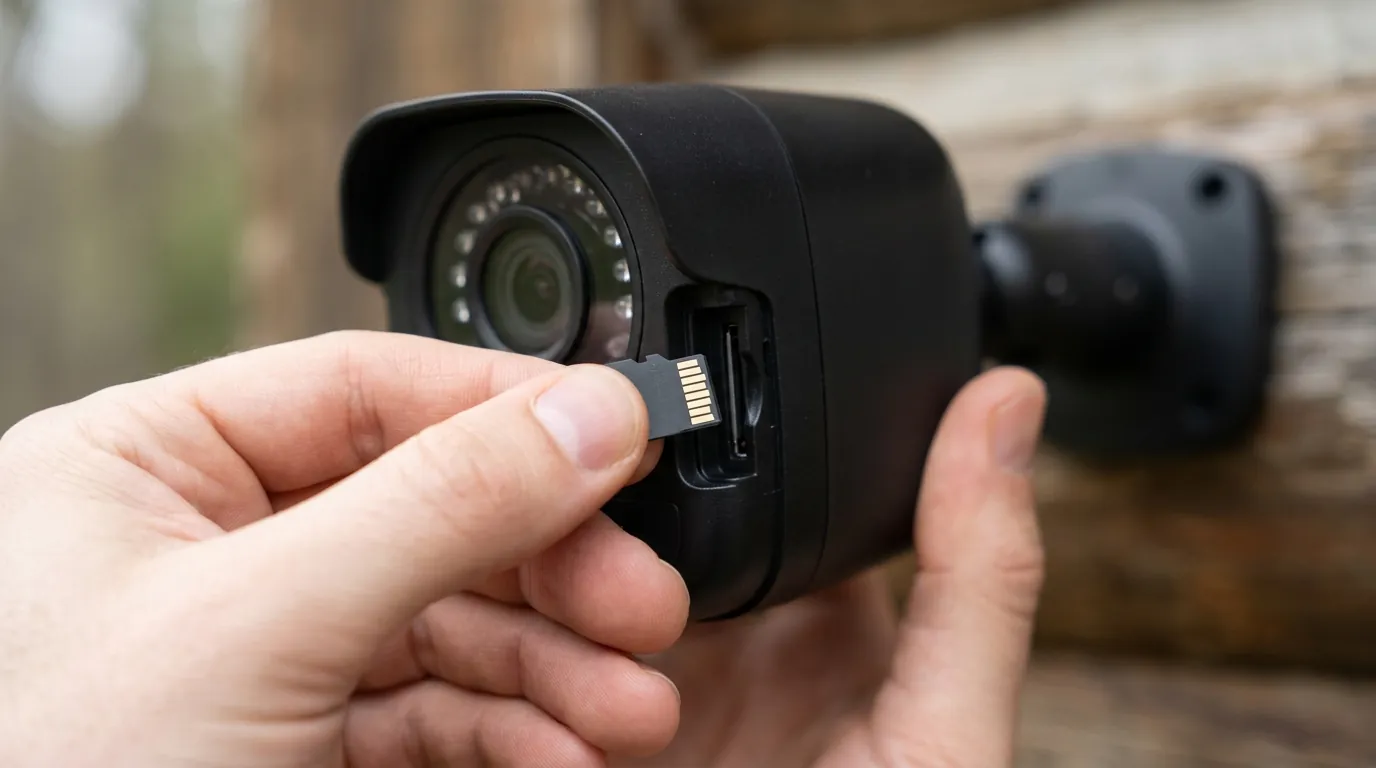
Audit your storage: Move away from cloud-only brands. Look for cameras with high-endurance microSD support (up to 512GB) or local hub integration. High-endurance cards (specifically marketed for dashcams and security cameras) are essential for the continuous recording features found in 2026 models, as standard “Ultra” cards will burn out their write-cycles within months of 24/7 use.
Check the “LTE Gap”: If your cabin is off-grid, the Reolink Go Ultra is the recommended 4K LTE pick, but verify carrier coverage (Verizon/AT&T) at your specific GPS coordinates before buying. An LTE camera with a weak signal will drain its battery rapidly as it constantly tries to re-establish a handshake with the cell tower.
Decision Matrix: Which Camera Fits Your Cabin?
| If your cabin has… | And your priority is… | Recommended Camera |
|---|---|---|
| Stable Wi-Fi / Starlink | Maximum evidence/24-7 recording | Reolink Altas PT Ultra |
| No Wi-Fi (Off-Grid) | Remote live-view & 4K alerts | Reolink Go Ultra |
| Limited Sunlight | High-efficiency solar/No fees | Eufy SoloCam S340 |
| Deep Ecosystem | Ease of use/Cloud backup | Arlo Pro 5S 2K |
Top Pick for Wi-Fi Cabins: Reolink Altas PT Ultra
The Altas PT Ultra is the first battery camera that doesn’t feel like a compromise. By offering a 20,000mAh battery, it solves the longevity issue, and by offering 4K continuous recording, it solves the security gap. For a cabin with a reliable Wi-Fi signal, it provides the most comprehensive coverage per dollar spent. Its ColorX technology is particularly useful in wooded areas where traditional IR night vision often reflects off leaves and branches, causing “white-out” in the image.
Top Pick for No-Wi-Fi Cabins: Reolink Go Ultra
The Go Ultra remains the benchmark for LTE security. It delivers true 4K resolution over a cellular connection. While it does require a data plan (usually around $10–$20 per month from a carrier), it is the only way to get real-time alerts from a property that lacks an internet backbone. It is compatible with the Reolink 6W solar panel, which is essential for maintaining the high power demands of 4K cellular transmission.
The Best Solar-Integrated Value: Eufy SoloCam S340
The SoloCam S340 is ideal for users who want a “set it and forget it” installation. The dual-lens system provides both a wide-angle view of the cabin grounds and a zoomed-in telephoto view of the main entry point. Because the solar panel is built into the top of the unit (though it can be adjusted), the installation is extremely clean. When paired with a HomeBase 3, it offers some of the most advanced AI detection on the market, including the ability to recognize specific family members and ignore them in your alert feed.
Sources
- Reolink Altas PT Ultra Product Page — https://reolink.com/product/altas-pt-ultra/
- Eufy SoloCam S340 Specifications
- Arlo Pro 5S 2K Datasheet — https://www.arlo.com/en-us/cameras/pro/arlo-pro-5.html
- RTINGS Security Camera Reviews
- Reddit r/HomeSecurity Wiki — https://www.reddit.com/r/homesecurity/wiki/index/
- FCC ID Search (RF/Wi-Fi Verification) — https://www.fcc.gov/oet/ea/fccid